



Ryan Stephens, Senior member of the Bird Team at the Hawk Conservancy Trust, has been the lucky chap working most closely with Mamba recently, one of our very impressive White-headed Vultures. Ryan reflects on how things have been going lately, as she reaches a poignant stage in her life. Mamba celebrated her 8th birthday with us this year, which means that she arrived at the point in her life where we would like to explore potential breeding opportunities for her. Listed as a Critically Endangered species under the IUCN (International Union for Conservation of Nature), the preservation of this species within the zoological community is vital work we are a part of.
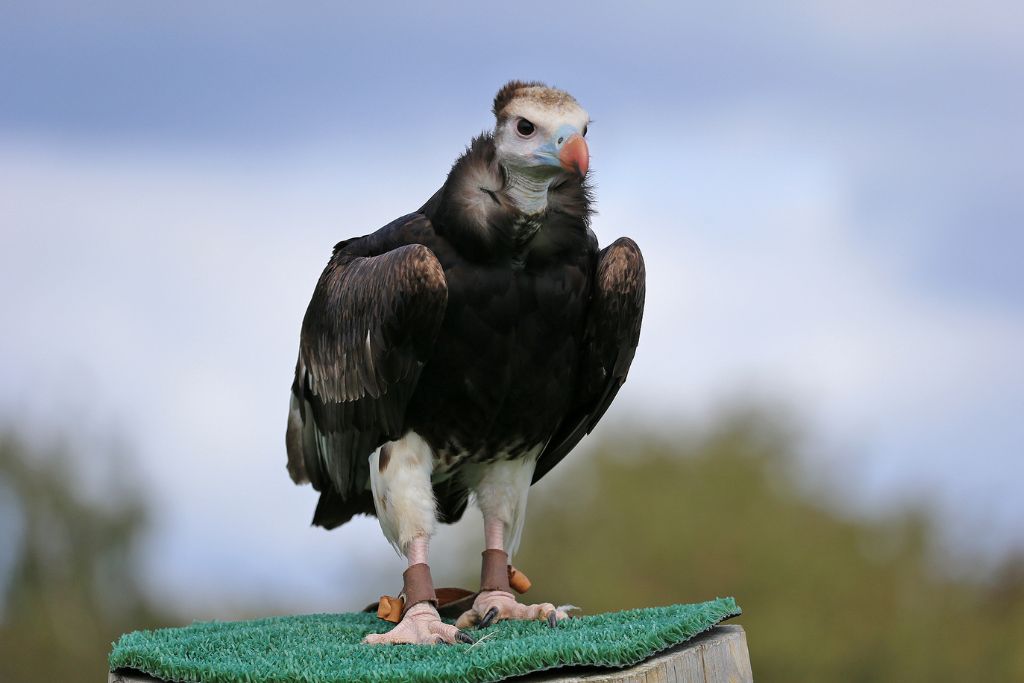
Mamba belongs to the EAZA Ex-Situ Breeding Programme (EEP), this a programme which manages species across EAZA organisations (European Association of Zoos and Aquaria), maximising breeding success and sharing vital knowledge between its participants. Whilst this may seem like a dating agency for birds, it is a highly organised, thorough and important programme that connects organisations to maintain a healthy population, when their counterparts in the wild are facing increasing threats to their status.
As part of this programme, for the past few years Mamba has been paired up with a Male named Arthur. The pair got on relatively well, but it was clear that it was not a budding romance; this may have been because of Arthur’s age (he is an elderly gentleman). So, Arthur has now joined an older female at another EEP participating zoo, and our plan is to plant the seeds of romance between Mamba and one of our home-grown boys, Ravenclaw. Both Mamba and Ravenclaw are roughly the same age, he is a touch more confident than Arthur and he has a little more energy for the job to keep up with his potential younger partner.
After many years of breeding success with vultures at the Trust, we have found one of the best ways to build a relationship between individual birds is for them to fly side by side during our demonstrations. Mamba is now becoming a regular sight in our ‘Masters of the Sky’ demonstration where she is learning the ropes and building confidence alongside Ravenclaw. We believe that we may be witnessing the ‘Milk Tray’ stage of the relationship beginning to unfold; tentative glances, quiet moments, and a growing awareness of one another. All being well, 2026 will be the year their bond truly develops — not just side by side, but in flight. There is something truly magical about seeing a partnership form in the air, and we are hopeful that visitors may get to see this romance unfolding before their eyes.
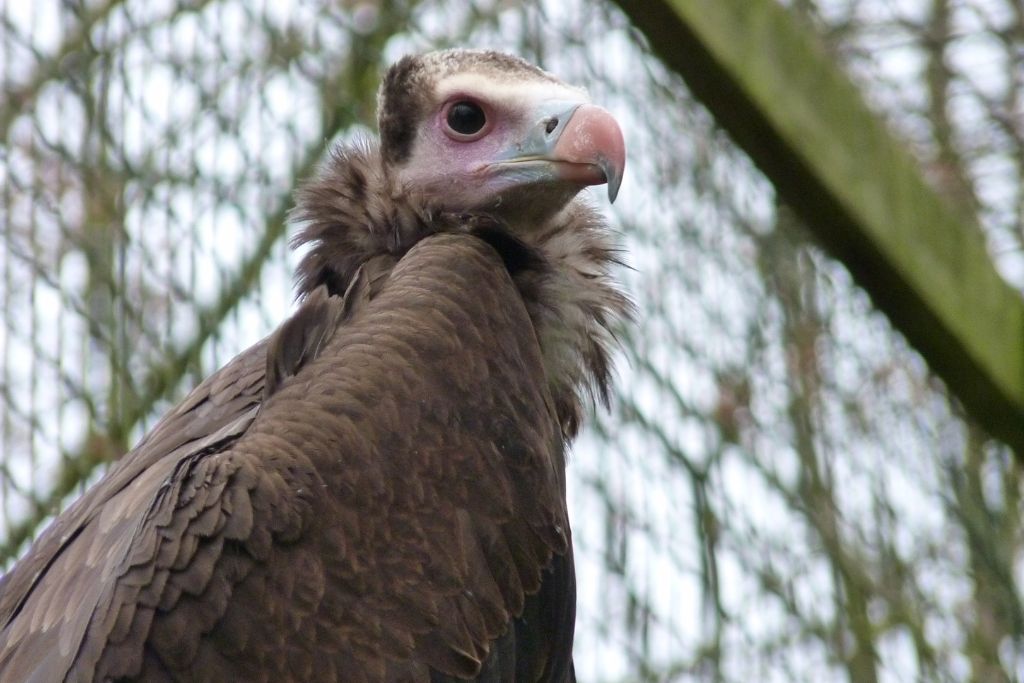
With our established breeding pairs of White-headed Vultures now starting to get on a little in years, it is really exciting to start introducing a new generation into the team. Our birds Mamba and Ravenclaw were both born here at the Trust, so it will be a truly magical moment if we get to see this pair carry the torch for the next generation. Book your next visit to the Trust to see Mamba fly in our Masters of the Sky demonstration.