




Africa update for July 2026
At the end of May and into June, our Conservation and Research Coordinator, Dr Jamie McKaughan, spent several weeks visiting two of our field sites in South Africa. Once he got back to the Trust later in June, we caught up with him to find out all about his trip.
“It was so great to be back in South Africa! I only realised as I was getting on the plane at Heathrow, that I was returning six years to the day that I had last left South Africa (after living and working there for several years right up in the north of Limpopo Province). While I wouldn’t be returning to where I had been before, it left me with a small smile as I reflected on another one of life’s small coincidental quirks as I embarked on my trip to places new.
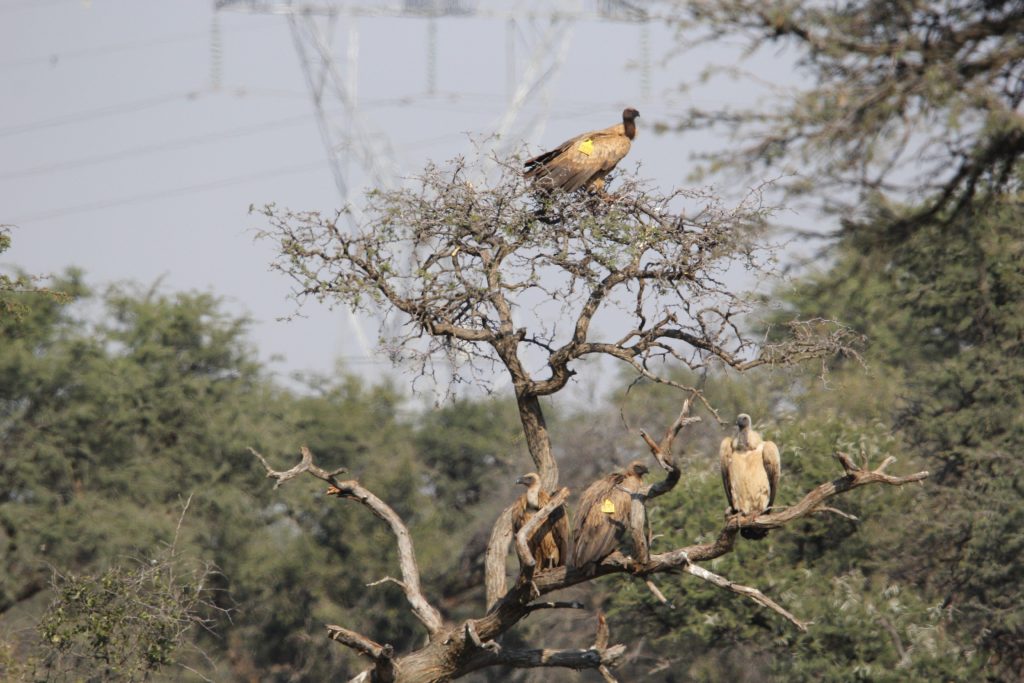
The first part of the trip was to the Kimberley area, where I linked up with our African Projects Manager, André Botha, and local ornithologist Angus Anthony, whose work has long been supported by the Trust. Angus had been collecting data in the area since 1993, and his wealth of knowledge and experience is incredible. We spent a few days in the field collecting data on signs of nesting by African White-backed Vultures and resighting previously tagged birds to track returning individuals to the area and perhaps to specific nests too! Angus introduced me to several people that we have worked with closely over the decades of our involvement in the Kimberley area and also showed me around the area, taking me to different properties he surveys nests on, various different individual nest sites, feeding locations, and the ever-present looming scars of man littering the skyline of the Kimberley area – the energy infrastructure of huge pylons and trains of powerlines long into the distance.
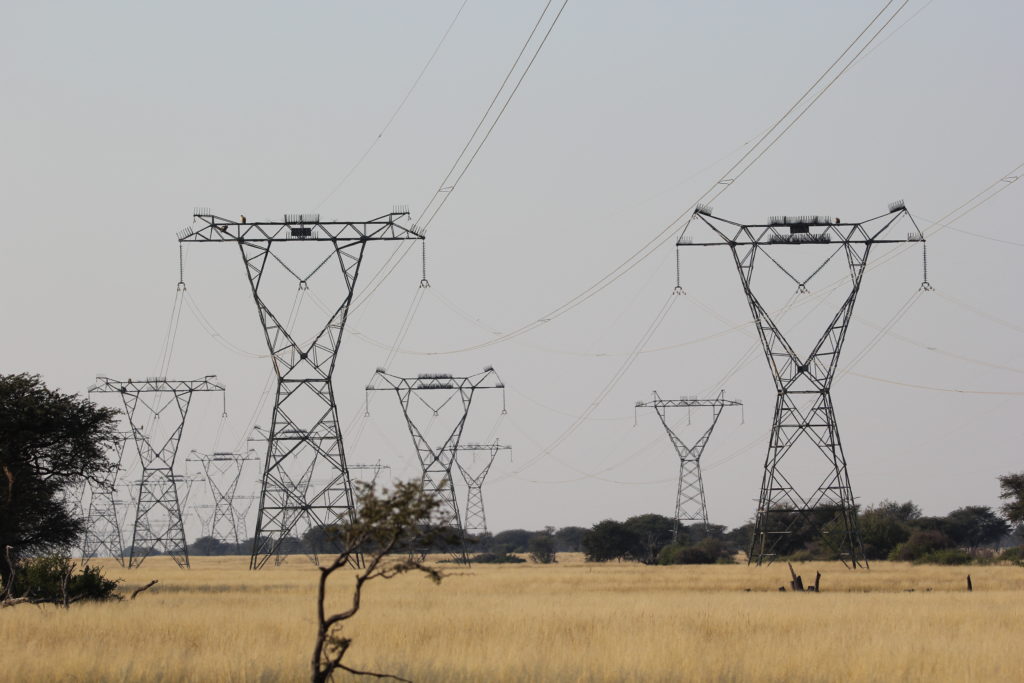
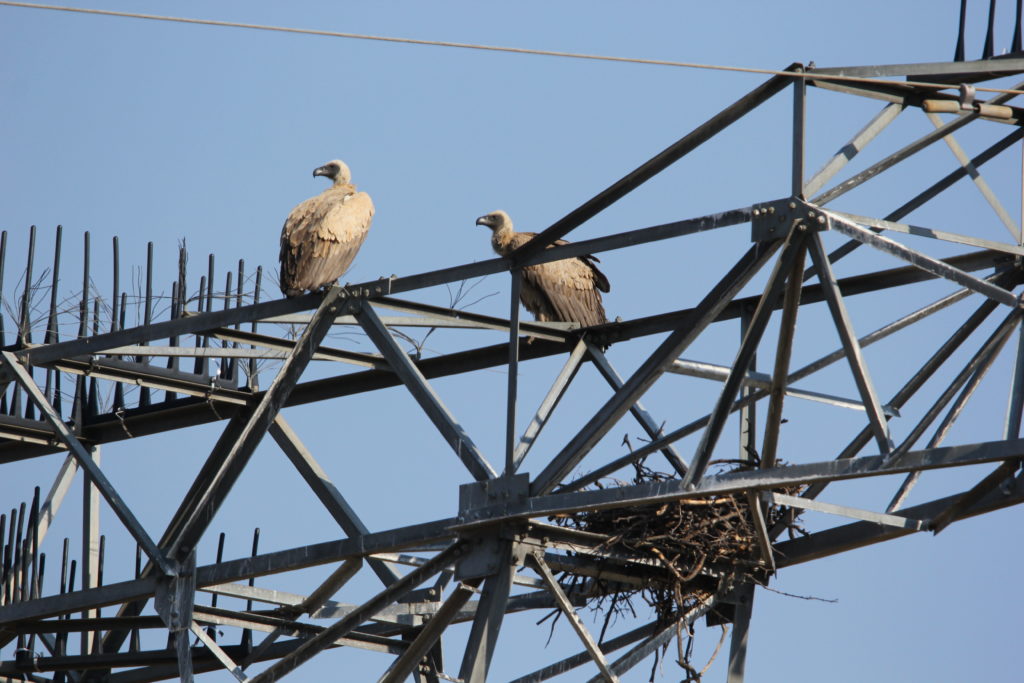
It was a wonder how these vultures could make such large-scale use of the area with such hazards stretching far and wide and of course… high. Angus was a fountain of knowledge and picking his brain on all sorts about these incredible birds, this amazing landscape and just all his life and career stories so far was very enjoyable. It was not a landscape I had seen before – a semiarid transitional mix with savanna, grassland, Kalahari Thornveld and Nama Karoo biomes intersecting, while the properties themselves straddle two provinces – the Northern Cape and the Freestate. And then, as I touched on already… the powerlines. They’re virtually inescapable – visible in almost every direction you look. What was also incredible to see were these vultures making use of these pylons for nesting. I saw a few of them, and it was a scene that gave me a mix of thoughts and emotions… firstly, just how much we impact this world for the worse in so many different ways; secondly, the incredible adaptability of nature to try and make the best of it when we continue to make it harder and harder for species to survive (although notable to say that it is not without increased risks – I wouldn’t fancy the consequences of the voltage that one small wrong step or wing placement could bring); and thirdly, I couldn’t really draw my eyes or mind away from what I still find quite hard to describe now – a kind of almost sombre beauty of these majestic birds perched on this industrial metal scene across the skyline… quite depressingly remarkable.
Having come from a large terrestrial carnivore background, I also found the ecosystem of the Kimberley area very interesting. While we were out and about, we followed a huge kettle of vultures in the sky and sadly found a Giraffe carcass that appeared to have died of natural causes – perhaps falling victim to one of their powerful mating battles. The carcass had drawn in huge numbers of vultures, including a Lappet-faced Vulture and several Cape Vultures, along with the masses of White-backed Vultures and the seemingly compulsory presence of Pied Crows too. Such occasion can provide a great opportunity to resight many tagged individuals in a short amount of time – incredibly valuable data. Regardless, the reason I mention it, is that despite the huge numbers of vultures in the area and at the Giraffe carcass, they had hardly eaten any of it – ultimately a reflection of the environment they inhabit here. Some animals have too thick a skin for the vultures to penetrate with their beaks – even the Lappets, despite the common quip that they are needed to open up a carcass for other vultures, this just isn’t the case. What it is reflective of however, is the lack of terrestrial carnivores in the area – I found this element really fascinating. This huge carcass was there and available as a food source, but they were unable to access so much of it without the strong jaws of some mammals first tearing it open for them… the interweaving of relationships between species in nature front and centre – incredible. We lent a helping hand for the vultures, creating some openings, and within a couple of days the carcass was cleared to a skeleton, quite the contrast.
Next it was time to travel overland with André (a two-day drive!), east to Kruger National Park, where our Lappet-faced Vulture nesting tree project is underway, spending a further week carrying out fieldwork and meeting a few different people we have worked with in the area, including Martin – a game ranger in the park who has long assisted Campbell, in his time off duty, with monitoring some of the vulture nest trees, including some of the very few Lappet-faced Vulture nest trees. The landscape was quite the contrast, with instead of the pylons and powerlines being the most noticeable thing, the lack of trees but also, of the trees that were present, just how many of them were stripped of branches or torn down and lying on the floor from elephants foraging was the overwhelming vision! The landscape of Kruger differs markedly from that of Kimberley anyway – although being such a large park, naturally has some variation – but even so, it felt quite bleak in a way.
Due to the accessibility issues still impacting Kruger following the devastating flooding faced earlier in the year– it made it in some ways, hard to grasp the positivity of our efforts so far and plans for more. Nonetheless, observing some African White-backed Vultures on nests and also through the binoculars some Lappet-faced Vultures on some other trees felt positive, and renewed my enthusiasm for the worthwhileness of our cause in spite of their declining numbers and the numerous challenges these birds face. I was also very lucky to get a few other enjoyable spots – with a couple of vulture feeding frenzies, a Secretary Bird stamping through the long grasses, and nesting Bataleurs and Verreaux’s Eagle Owls some major highlights!
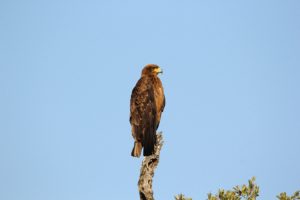
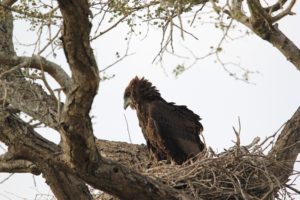
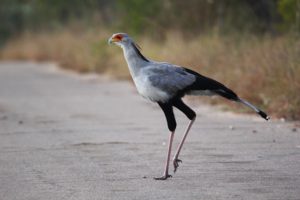
These sightings were particularly pleasing given the huge amount of flooding Kruger had and the general disruption and chaos this might have caused… Although perhaps, it was us who felt the impacts of the weather more than the animals – here’s hoping eh?!
Now that I am back, I am very much looking forward to further discussions with André and Angus on proceeding with various different plans we discussed while I was in South Africa – there are exciting times ahead, and hopefully these can have some really tangible outputs in our mission to conserve these awesome birds and their habitats.”