



As ever, July brought with it Global BirdFair, and we went along, joining thousands of fellow bird enthusiasts to celebrate and discuss all things birds!
As an international bird of prey conservation charity, we couldn’t miss the opportunity to share the work we’re doing around the world. Our Conservation and Research Coordinator, Dr Jamie McKaughan, gave two talks over the weekend. The first highlighted the status of vultures in Pakistan and the conservation challenges they face, reflecting on nearly 30 years of our work in the country. The second explored the challenges falcon conservation faces from the illegal wildlife trade, drawing on our recent publication on digital trade (watch this space for more on that!).
We caught up with Jamie when he was back…
“It was great being back at Global BirdFair this year. One of the best things about BirdFair is catching up with friends from around the country, and sometimes the world, and often making new friends there too – the joy of being surrounded by so many like-minded individuals with similar passions can be infectious. It was also great to catch some members of the Trust there again, whose support of the Trust generally, but also attendance at my talks and the live podcast episode we recorded was greatly appreciated as always!
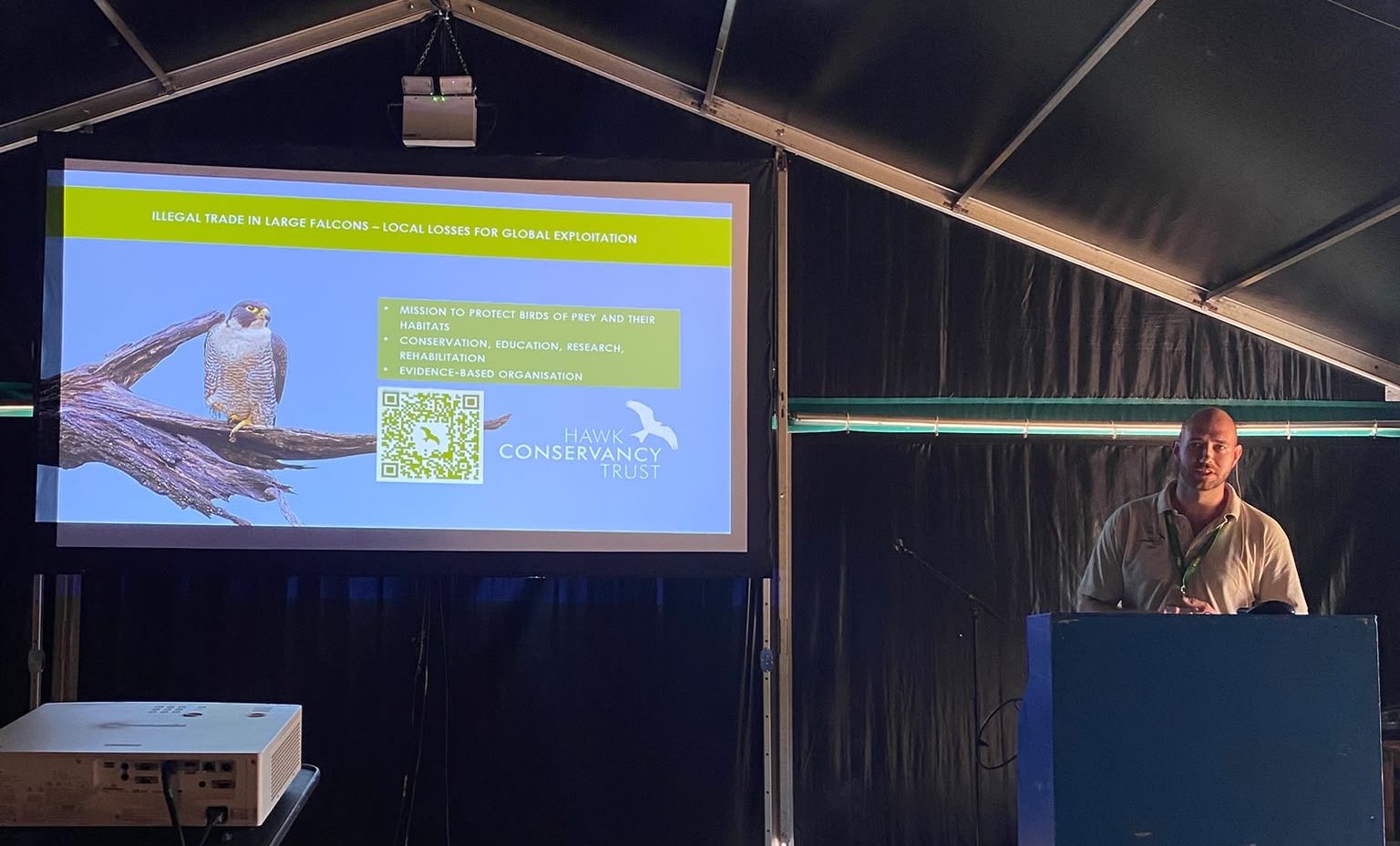
Jamie talking at Global BirdFair 2026
Catching up with others is not just good for the soul in a conservation world that can be disheartening if you think about it too long, but it also gives an opportunity to check in with the bigger picture. Last year for example, everyone I spoke to in the proverbial raptor nest box game(!) was experiencing terrible nesting numbers and success rates countrywide. While that was not a positive for the species we are striving to conserve – it is valuable information and context when it comes to these types of occasions and trends, and allows us to broaden our questions or considerations to reasons beyond the borders of our own study areas. Thankfully this year, that scenario has been turned on its head and cavity nesting birds of prey appear to be doing extremely well in many parts of the country, so long may that continue!
This year we were lucky to have colleagues from SAVE (Saving Asian Vultures from Extinction) at the event, some of which had travelled from India to be there, so it was really great to see them and catch up with them in person. Having long been part of the SAVE consortium to help conserve and recover vultures across South Asia, it is great to have such opportunities to touch base in person with some fellow vulture lovers! It was especially well-timed too, given my talk on day one was on the progress and challenges of vulture conservation in Pakistan!
On that topic, BirdFair also provides a great opportunity to talk about the conservation work we are doing to an audience that we may not always reach. We do a good job of communicating our work to our members and visitors, but it can be more difficult to share those stories more widely with people who may be less familiar with who we are and the impact of our work. We often let the work speak for itself, but events like BirdFair give us the chance to showcase the longevity of our commitment to what we do and the difference our conservation efforts are making. It also helps to raise awareness of the challenges and successes across the countries and species we work with, and engage with people who could become future supporters, partners or advocates for birds of prey and our conservation work. Ultimately, broadening that awareness helps strengthen support for our conservation ambitions and enables us to achieve even more for birds of prey in the years ahead.”
Jamie also joined Tom Morath, host of the Hawk Conservancy Trust’s Nature’s a Hoot podcast, for a live episode in front of an audience of fellow bird lovers drawing in the audience with some myth-busting fun and games!
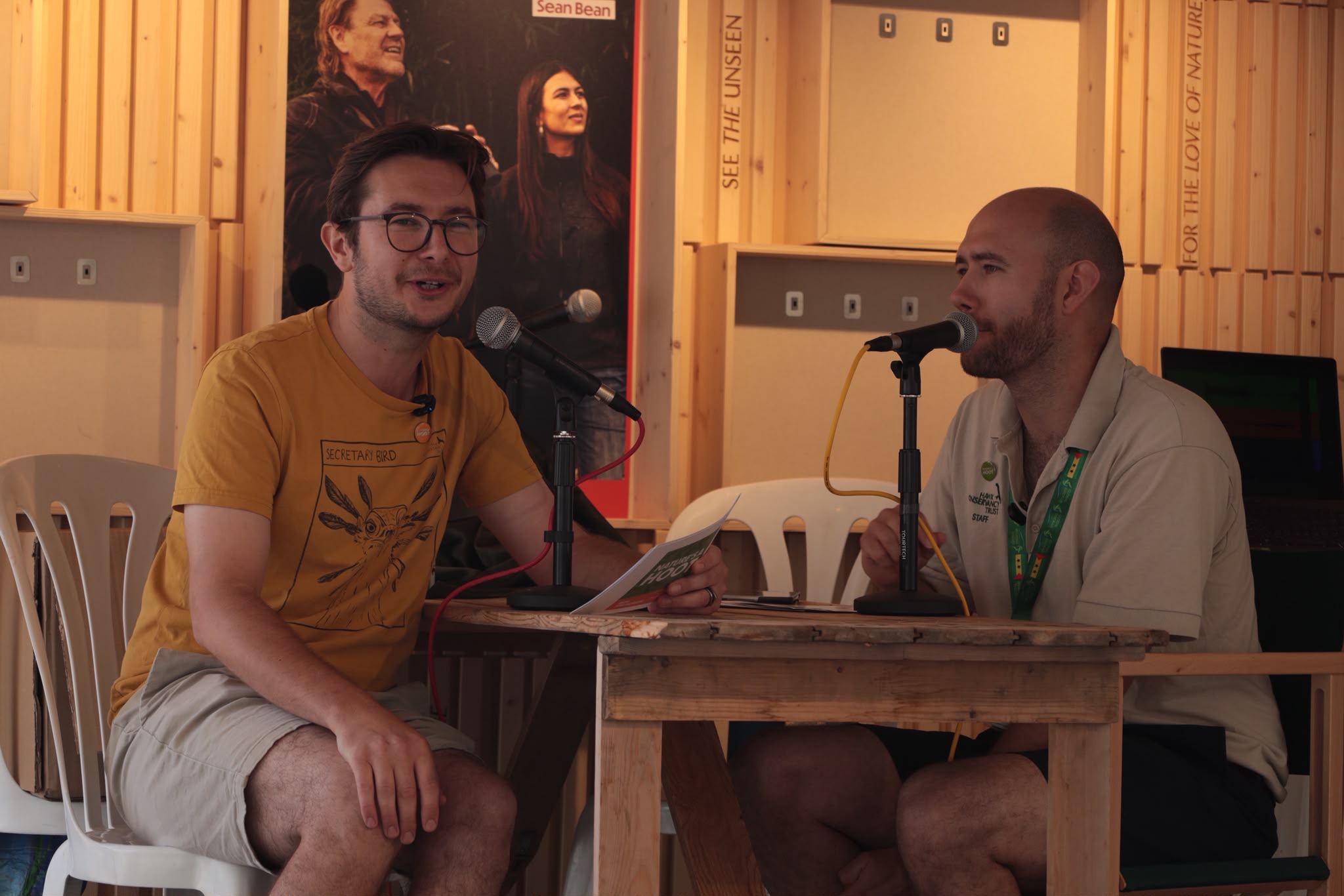
Nature’s a Hoot live from Global BirdFair 2026
“As part of the myth busting, we talked about owl eye colour, bird of prey vision and the nuances of some long-spoken myths! For example, it is likely that many hawks have similar vision to ours, but also some are very different to us and to each other, like Harris’ Hawks, Red-tailed Hawks and Cooper’s Hawks, that vary in their visual acuity despite all being hawks – being hawk-eyed means different things depending on the hawk! Meanwhile, a similarly nuanced topic is owl eye colour, myths of which we also busted… to a degree anyway! For more on that, check out our recent blog too. We at least had one thing that was more categorical – Kestrels hunting voles using the UV light reflected from their urine… debunked pretty robustly by a study in 2013, and supported by several other studies since – but I will let you catch the full explanation of that, along with all the other podcast fun I had with Tom, in the Live at Global BirdFair podcast episode coming soon!”