
As we stagger our way through yet another heatwave, summer is well and truly underway, heralding the end of another exciting school year. We have been delighted to welcome over thousands of pupils to the Hawk Conservancy Trust since for another year, providing memorable experiences that enhance their school learning.
We have been lucky enough to work with many inspirational schools and students, with one in particular group from last year standing out as a rewarding experience for Trust staff and students alike. Toynbee School, based in Southampton, is a secondary school with a specialist department supporting students with visual impairments. This year the department celebrate their 30th anniversary, a fantastic achievement that we look forward to marking with them.
We are privileged that the school chose the Hawk Conservancy Trust for their annual department trip in July 2025, providing an invaluable opportunity to work with the staff and students to develop our own provision for visually impaired students and visitors. Many had never experienced a flying display before or been able to get close enough to fully appreciate and visualise these birds.
Working with the dedicated staff at Toynbee School, we created a specialist workshop that focussed on engaging multiple senses. Students could feel the incredible differences between an owl and vulture feather, hear the distinctive calls of some of our more vocal feathered colleagues (I will let our regulars decide which ones they may have been!) and dive into the world of owls through one of our more popular activities…an owl pellet dissection!
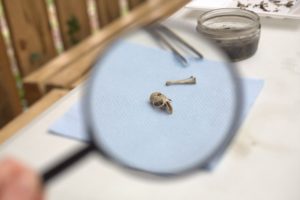
Owls have a really cool way of processing their food, the outputs of which we as scientists can use to find out more about them and the ecosystem. Owls have weaker stomach acid compared to other birds of prey, and as they swallow their prey whole, this often includes elements that they cannot digest, such as bones and fir. This is later compacted into a mass that is brought back up again in a neat little package called a pellet.
For anyone who has not had the delights of picking apart an owl pellet, let me paint the scene for you! Twenty children armed with tweezers and gloves picking apart a gorgeous bit of owl vomit, extracting bones and other animal remains that made up the owl’s last meal! It sounds worse than it is as the the pellets are dry and brittle at time of dissection. It is always a popular activity with children and this was certainly the case with the children from Toynbee School. Children with varying degrees of visual impairments were able to immerse themselves in the wonderful world of birds of prey, using adapted resources provided by the school, and specialist equipment such as microscopes to help them visualise the amazing things they were finding.
One of the most memorable and emotional part of the day came after we had enjoyed the first flying display of the day – Wings of Africa. What better way to bring the children even closer to the world of birds, than to meet and fly one of our beautiful birds. This was a surprise for the students, and a very special treat, arranged with the school in advance, as we do not usually have school groups flying the birds themselves. The excitement and emotion from the students at this precious moment was truly magical and will remain one of the highlights in my career. I am unashamed to say that I too found the experience emotional, to see the wonder and joy in a child’s face as they stand shoulder to shoulder with one of nature’s beautiful creatures.
We were delighted to achieve “Highly Commended” in the BIAZA Accessibility Awards for the project, which was the icing on the cake to an already fulfilling project. The award funding will be allocated towards future projects focussing on visual impairment provision at the Trust, following the learnings and success of our day with Toynbee School. The students at Toynbee School have certainly inspired me to explore new ways of how we can engage people of all levels of vision with our important conservation work.