





Some readers might be aware that 2025 was a very poor year for cavity-nesting birds of prey such as Barn Owl, Tawny Owl, and Kestrels. Only 132 young birds were ringed from project boxes in 2025, which is considerably lower than in previous years. 2013 was the last time we recorded as few in the nest boxes. A lack of small mammal prey is one of the likely reasons for the poor season, along with unfavourable weather conditions. The Small Mammal Project, a project within the British Raptor Programme, focuses on monitoring abundance and diversity of small mammal species in the local area to the Trust that overlap with locations of our nest boxes. In 2025, only after six weeks of surveying did we find the first Field Vole of the year! Field Voles, also known as Short-tailed voles are one of the primary prey species for Kestrels. The low capture rate across the Small Mammal Project combined with poor reports from the nest boxes raised alarm bells. This year, however, things have bounced back and the nest box monitoring has felt busier than ever.
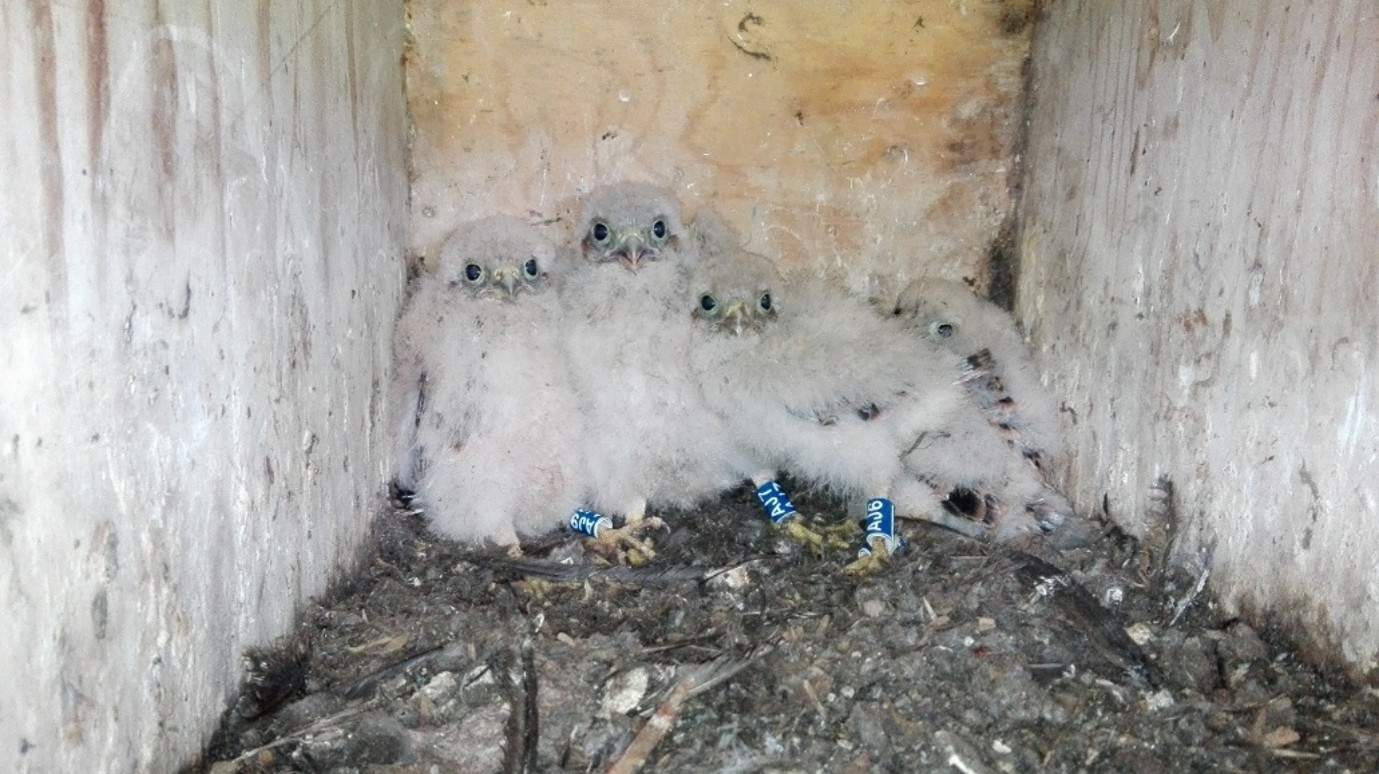
General observations from the wider Raptor Nest Box Project in 2026 include birds nesting earlier in the season and larger clutch sizes; a record of 9 eggs were found in a Barn Owl box this Spring! It has been a welcome change to the previous year when we had just over 10 confirmed Barn Owl fledglings in total. As of the end of June, we have already ringed more than 250 Kestrels, 200 Barn Owls and 100 Tawny Owls across our project area. This surpasses the 2025 total of 132 quite considerably and given the early nesting of Barn Owls this year, there is even a possibility of second nesting attempts later in the year. The Small Mammal Project has also been reflecting the success from the boxes, with 37 field voles being caught in six weeks of surveying and 150 captures of a variety of small mammal species to date.
Other positive news includes achieving our target fundraiser back in 2025; ‘£60k for Kestrels’. Thank you! As a result of the many generous donations, the Conservation and Research Department bought several GPS tags for Kestrels. These solar-powered GPS tags can record fine-scale movements of these birds over the course of the breeding season. This is key for understanding what habitats they use, how far they travel from the nest box and how frequently they provision to their chicks. This year, we have successfully fitted four Kestrels with these tags in the Hampshire area; two females and two males. This project is ‘growing wings’, and we hope to deploy a few more of these tags in 2027 and see what data we can retrieve from the birds tagged this year.
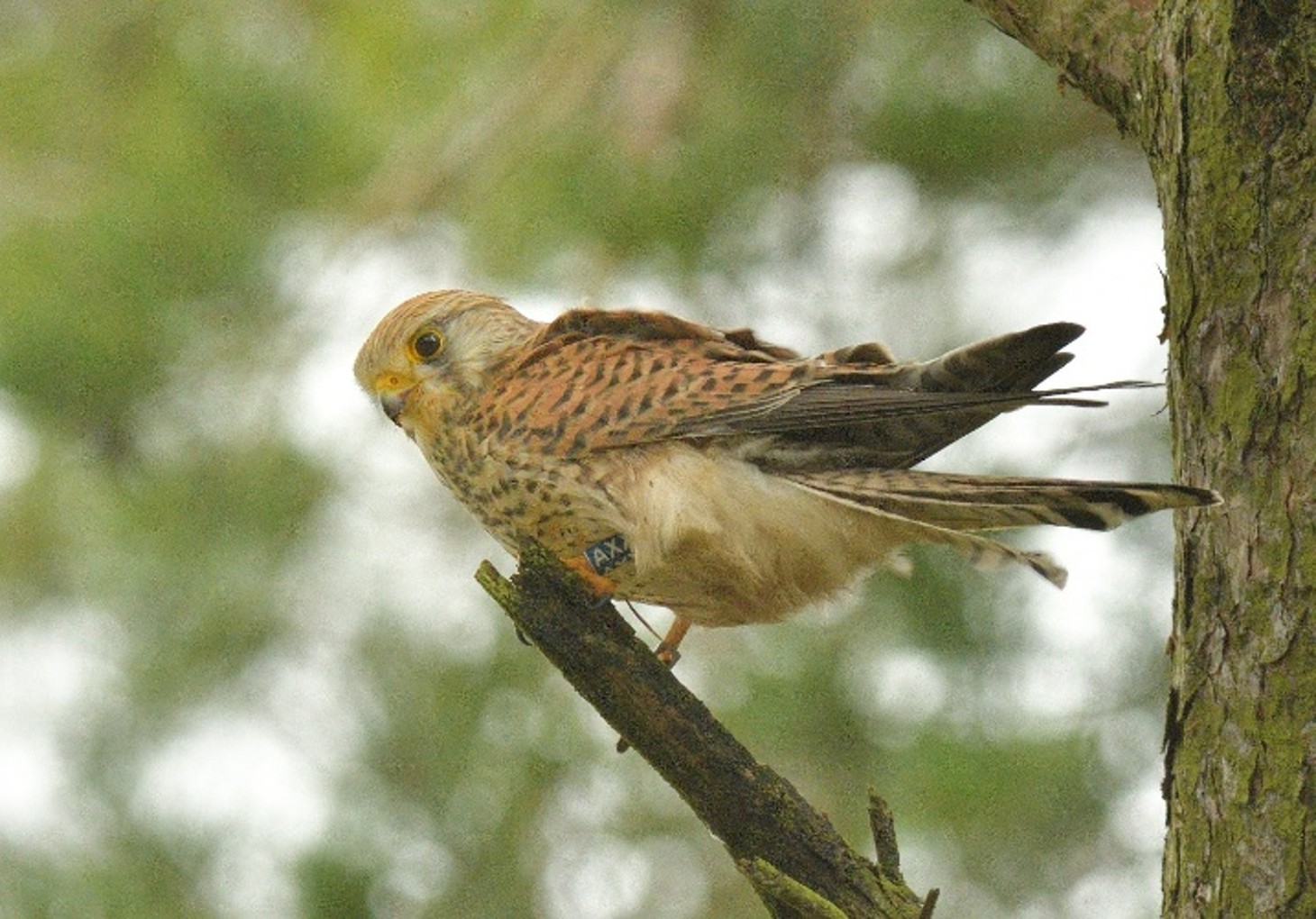
With the increased productivity of the nest boxes, 2026 has been a ‘record year’ for the Kestrel Colour Ring Project. Under a BTO licence, Dr Matt Stevens has been fitting these rings as part of the British Raptor Programme since 2015. With a previous record of 140 kestrel colour rings in a season, over 200 colour rings have been used in 2026 already, with more expected. Quite the year for Kestrels! These rings are bright blue and marked with a white unique code variation; i.e. “A H 7”. The codes can be read at distance with binoculars or telescopes and reported back to us
If you notice a colour ring on a Kestrel, please let us know by emailing Matt@hawkconservancy.org with the location, date and time you spotted the bird. If you can take a photo of the Kestrel with the tag, that would be ideal, but we know this is easier said than done! This information is incredibly valuable and helps us to understand more about the movements and dispersal of Kestrel fledglings from our boxes.
Finally, we couldn’t do all the in-depth monitoring work for Kestrels without the nest boxes. An expansion to our group of dedicated and hardworking nest box Volunteers in late 2025 has meant that over 130 new boxes have been built for the British Raptor Programme. This new nest box building team has been a fantastic addition to the Conservation and Research Department; their time and skills have helped us to build up a good stock of boxes in preparation for replacing damaged or worn nest boxes, installing new boxes in the Autumn of 2026 and will set us up to provide even more for Kestrels in 2027!