



“I have been helping at the Trust since 2017, when I first came as a work experience student. Since then, I have continued to be involved in between my other roles in zoological collections and overseas in South Africa, and this summer I have joined the team as a Bird Team member.
Throughout my time at the Trust over the years, one of my favourite parts of working here has always been having the opportunity to be a voice for animals that cannot speak for themselves. Every day, as members of the Bird Team, we are incredibly fortunate to spend time with these remarkable birds, observing them not just in flight but in the quieter moments too. It is in those moments that you begin to appreciate each bird as an individual.
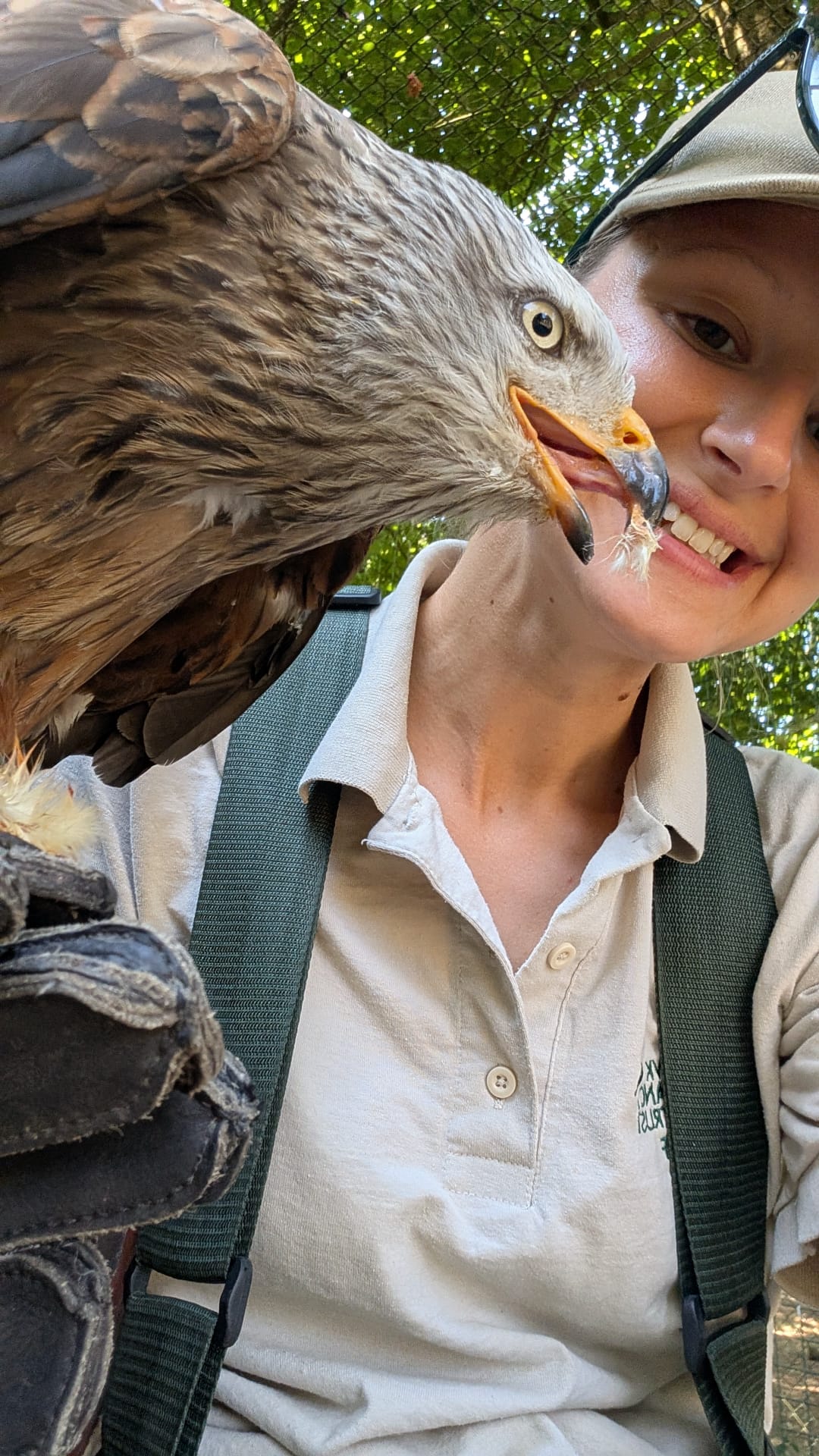
Over time, you start to notice the little things. Some birds approach something new with quiet curiosity, taking a moment to observe before making their move. Others are bold and decisive, while a few prefer to sit back and watch the world unfold around them. These subtle differences are part of what makes working alongside them so rewarding, and they’re often something that surprises people when they join us for an experience day.
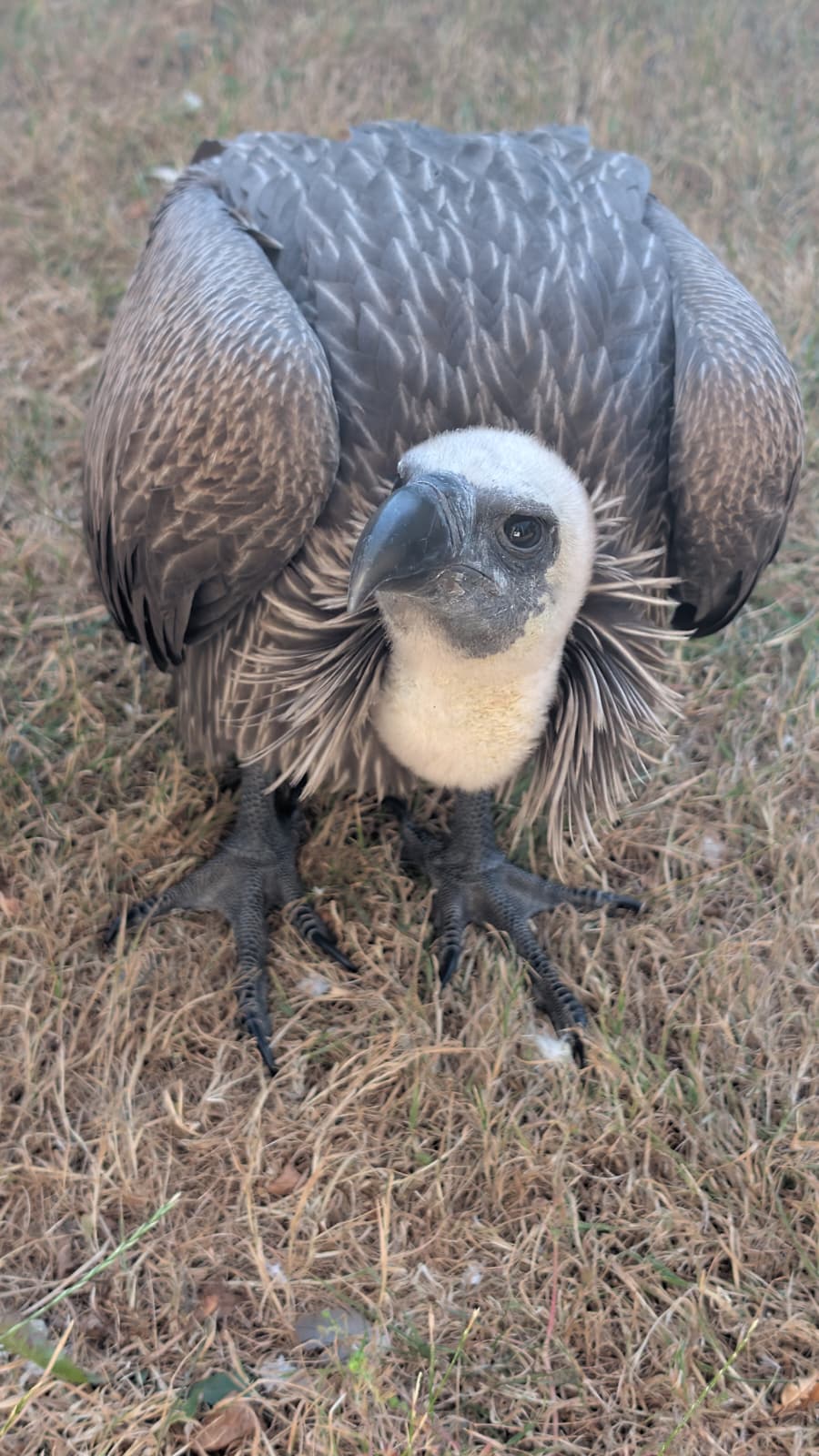
As Bird Team members, we also have the privilege of seeing how these individual traits often reflect the natural behaviours of each species. Our Hooded Vultures, for example, are endlessly curious. During an experience day, they’ll often spend time investigating guests, hopping over to see what someone is doing or examining anything new that catches their attention. It’s easy to smile at these moments, but they also provide the perfect opportunity to translate those individual personalities into an explanation of why that curiosity is so important in the wild. Hooded Vultures use these inquisitive behaviours to investigate potential food sources, watch the behaviour of other vultures and scavengers, and assess whether it is safe to approach a carcass. Their social awareness and willingness to explore are key adaptations that help them survive.
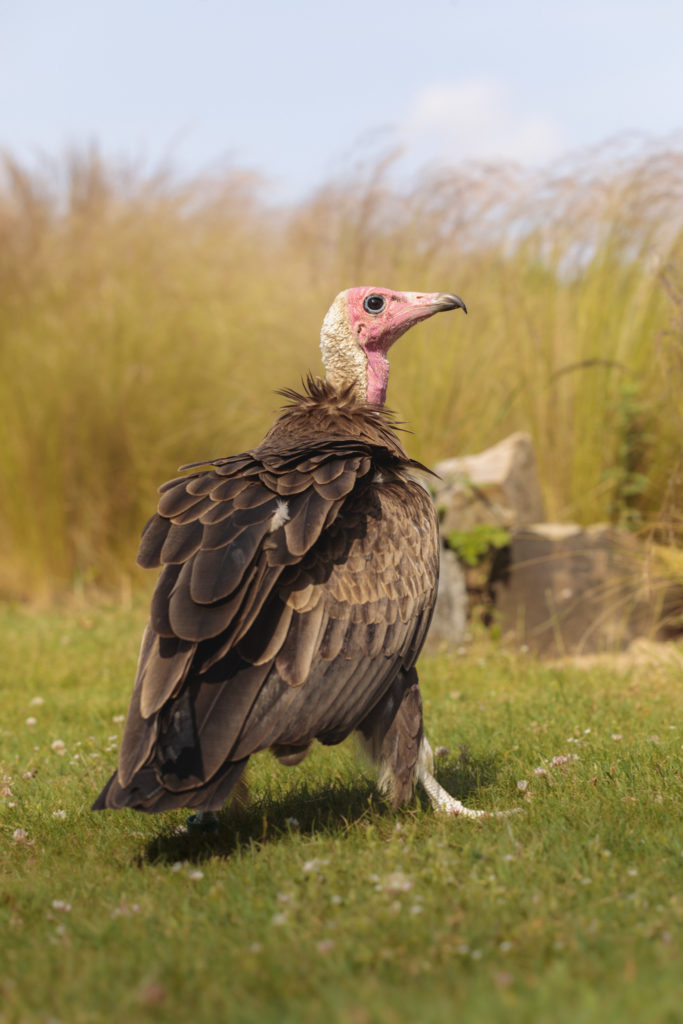
It’s these moments that make meeting the birds so special, connecting the birds we know and love every day with a wider picture and being able to reflect that to people who come and visit us. Rather than simply watching a flying display, guests begin to understand why a bird behaves the way it does, and that, as a member of the Bird Team, is truly why we love to do what we do. Every interaction becomes an opportunity to connect what they are seeing in front of them with the natural history of the species, bringing the bird’s story to life in a way that a book or documentary never quite can, and I think it surprises many guests who join us just how strong some of these personalities can be.
Recently, I had guests with me during a vulture restaurant feed as part of a full-day experience, in which we took some food down to our vulture colony. In this colony is one of our newest members of the team, Norbert, this year’s White-backed Vulture chick. Norbert was born in February so is still a young bird. As I explained to the guests, we had been incredibly lucky to watch Norbert learn how to fly. We first saw him performing lots of flapping and stretching behaviours, and then one day found him at the other end of the aviary, seemingly as surprised as we were that he had made it there. At this stage he was delightfully clumsy as he learned how to use his wings, developing all these natural behaviours he had learnt from his parents living alongside him.
Norbert found the confidence and began, with some assistance from his “dad”, exhibiting behaviours such as pushing the much larger White-headed Vultures (who they share the aviary with) away from the food, making himself seem larger with calls and widening his wings. It was an exciting example of how vultures can go from caring individuals to typically bold characters that enable them to survive. It was really a unique experience to share with others.
Experience days offer the rare opportunity to slow down and really observe the birds. Standing just metres away from an owl as it glides silently overhead, or watching a hawk lock onto its next perch, allows people to notice behaviours that might otherwise go unseen. Those close encounters naturally lead to conversations about the adaptations that make birds of prey such successful hunters and the work that helps conserve them.
It’s often these quieter moments, rather than the spectacular flights alone, that leave the greatest impression. They create a connection that extends far beyond the experience itself. When people connect with wildlife, they begin to care about its future, and if someone leaves with a deeper appreciation for birds of prey and a greater understanding of why their conservation matters, then we’ve achieved something incredibly special. It is truly one of my favourite parts of getting to work with these birds and the Trust”.