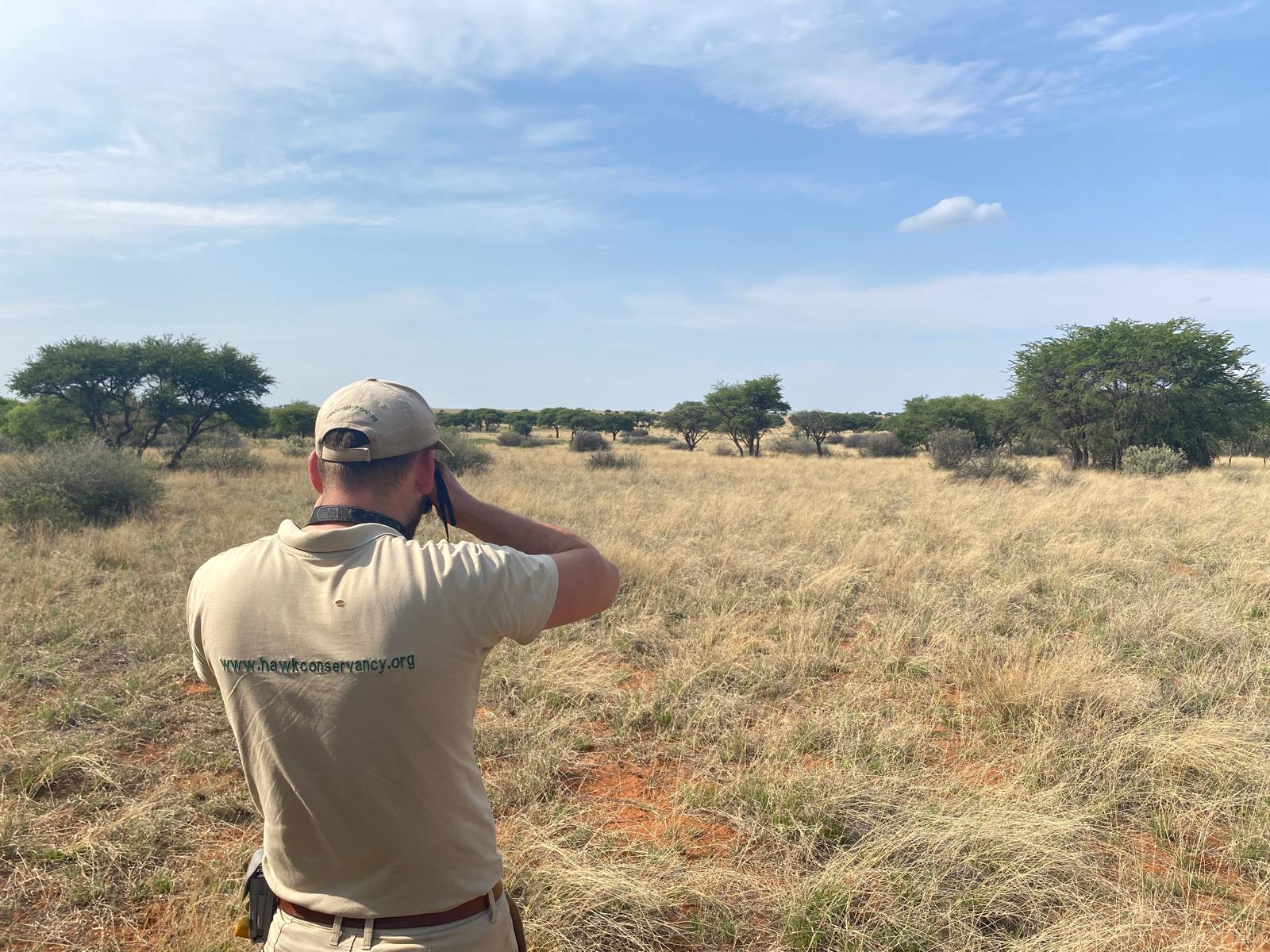





‘For twenty-five years, the Hawk Conservancy Trust has worked on and supported a long-term ringing project for African White-backed Vultures in South Africa. Supported by De Beers and working with local partners the Endangered Wildlife Trust and BirdLife South Africa, plus other partners including Gauntlet Conservation Trust and Puy du Fou, Trust team members spend two weeks each breeding season ringing chicks. With former lead and Head of Development at the Trust Andy Hinton now retired, this season Patrick King and I represented the Trust.
The main focus is across De Beers’ Dronfield Reserve, an area with one of the biggest and most important breeding colonies of Critically Endangered African White-backed Vultures. Each morning, the team are usually up at the crack of dawn, where we meet for a briefing with Project Leader Angus Anthony on where the nests are located that we will be checking that day. The nests are mapped out following checks carried out by Angus earlier in the season, establishing if they are likely to be used by a pair for rearing their young. A plan is made and then we’re all jumping into the vehicles and heading out into the wild!
As we approach a potential nesting tree, there’s a few key signs we look for to see if the nest is being used. A key sign is parents sitting on the nest, that usually fly off as our vehicles pull up, circling overhead or keeping watch from a neighbouring tree. We also check for signs of life, like feathers on the ground or a ‘white-wash’ of vulture poo in the branches – these are usually signs someone is home.
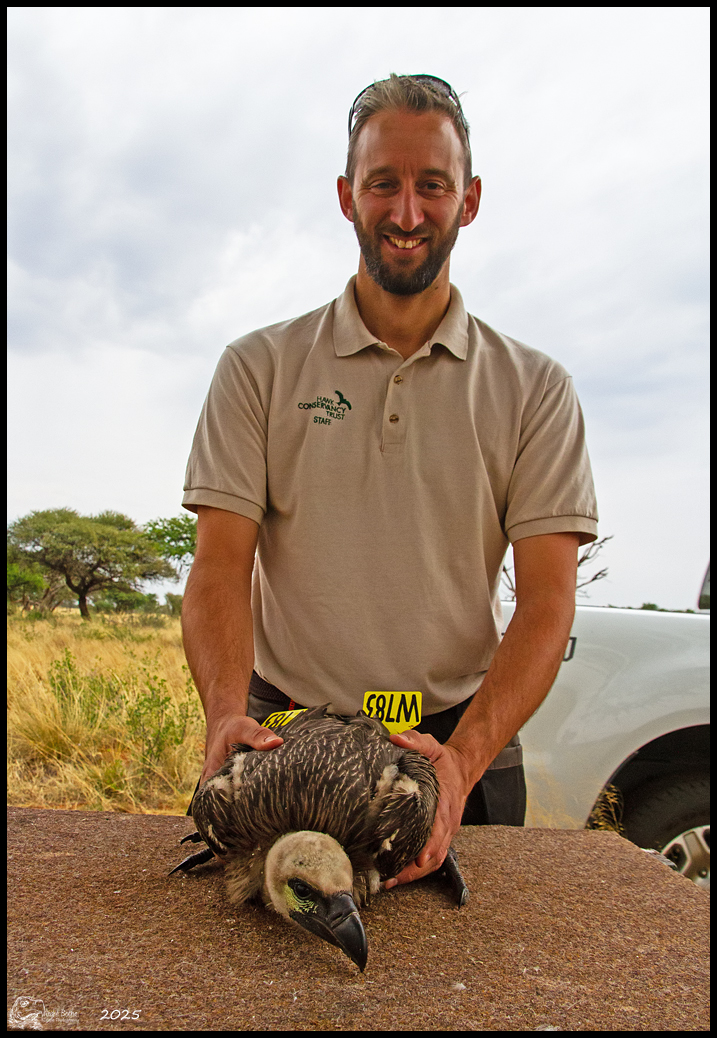
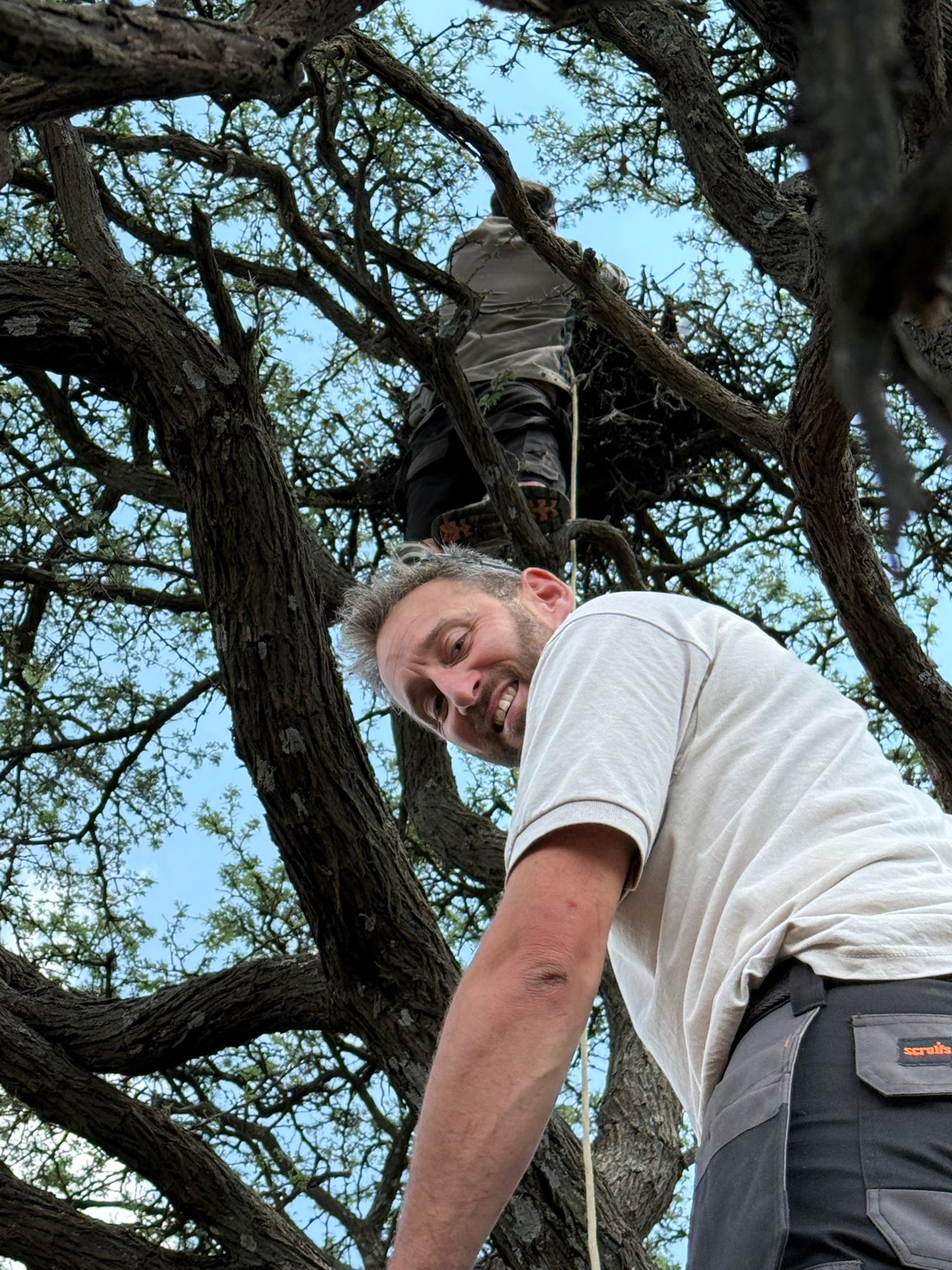
If it all looks viable, it’s time to split up. The tree team’s job involves securing a ladder, climbing the tree and popping the young vulture into a basket which is then winched down to the ground team. This team then carry out a general health check on the chick, take its measurements, and fit them with an identification leg ring. The chick is then lifted back into the nest before we pack down and move to the next nest, repeating the process until we start to lose the light. The team aim to visit around twenty nests a day, before heading back to camp for a good wash ready to begin the process all over again at first light.

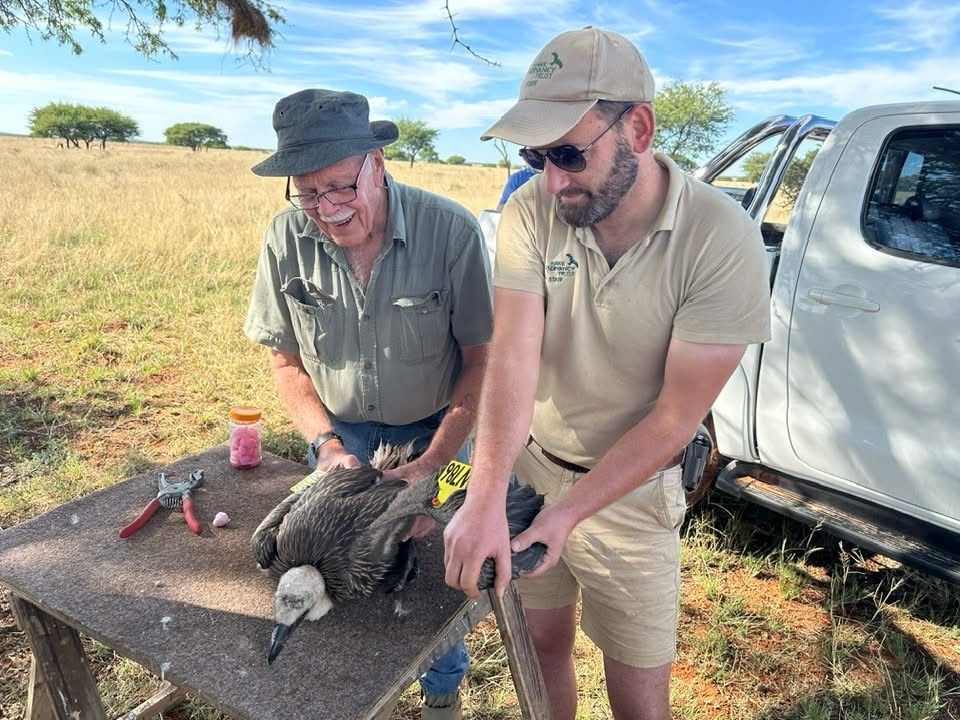
Each nest visit takes around 15-20 minutes, where the parents are often sitting close by, waiting to come back as you start driving away. It’s always nice to see them flying back to the nest as we drive off to the next nesting site. From all the nests we checked, most of the chicks we ringed were around 6-11 weeks old. At this point they’re mostly fully grown, with lots of feathers and nearly ready to leave the nest. Happily, most looked fairly healthy. With no rhinos on this reserve, the risk of carcasses being poisoned is a lot less. We did happen to see a few carcasses on our drives, with many vultures feasting there. This was a real positive. Luckily, we only came across one deceased chick – about eight weeks old, with no real clear reason as to what had happened.
One of the moments that really stood out to me on this trip was visiting a nest with a very young chick in it. Most chicks are at a feisty age and let you know they’d rather be staying put in their comfy nest! But this one was a real tiny youngster, probably only a week or two old. It was small enough to fit in your cupped hands, and a real fluff-ball! It was absolutely gorgeous, and everyone gathered round to coo and have a look.


You can usually tell when approaching a tree whether it’s an active nest from those signs of life. If you pull up and the parents don’t fly off until the very last minute, sometimes it indicates they are sitting on an egg, or even a very young chick that is only a few days old and still heavily reliant on the parents. If this is the case, we’ll give the nest site a scan using a camera attached to the end of a very long extendable pole to check on how it’s getting on. If it’s too small to ring, we’ll leave it be.
This data is all still recorded, as well as other sightings of nests, wildlife and activity we see on our drives across the savannah.
As we were in the area, which is in the middle of nowhere, we also checked in on a Secretary Bird nest that had been recorded as potentially active earlier in the season. Amazingly, the nest had three beautiful chicks in it! We saw lots of other birds of prey, including a Secretary Bird actually hunting using the iconic kick we’ve all come to love, and one bobbing its head down into the grasses to feast on insects. On one drive we spotted a Martial Eagle surveying its surroundings from a telegraph pole, and we even saw a pair of Lanner Falcons hunting together – a male and female picking off their next meal from a group of Starlings.
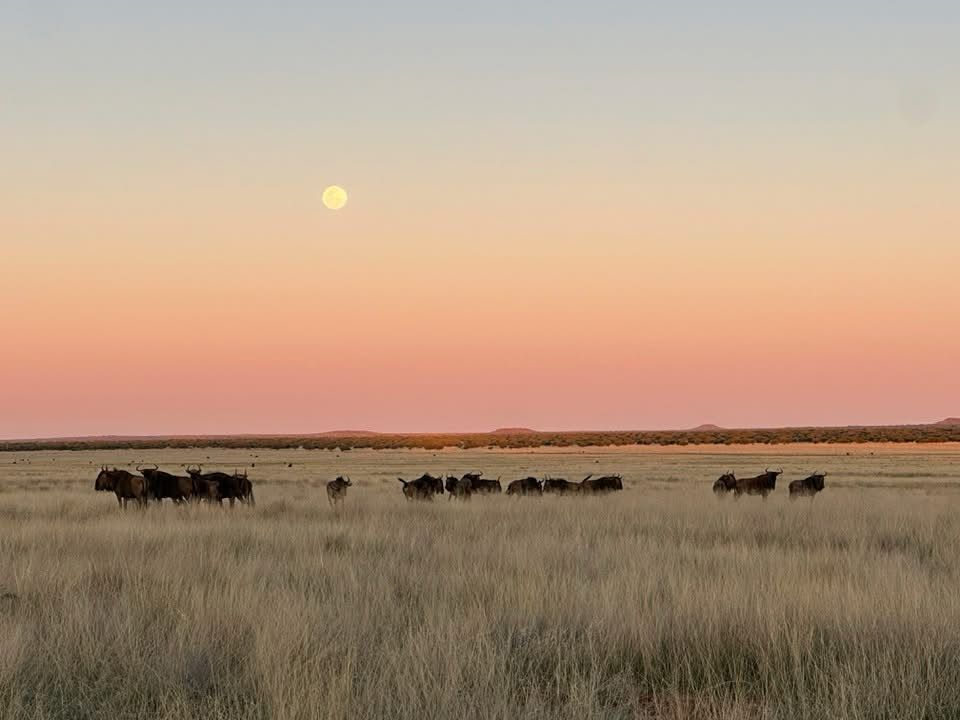
As you’re driving through these immense and massive environments, you do get to see so much. We saw herds of giraffe, packs of lions, African Wild Dogs, Spotted Hyenas and more. What wewere constantly warned of, was that we were surrounded by things that do want to eat you! Whether it’s thorny plants, spikey bushes, or animals looking for their next meal. We were interrupted during one nest check by a herd of Buffalo, from which we quickly jumped back into the vehicles for cover. One nest tree even had a Sociable Weaver Bird nest with an unwanted visitor – a Boomslang! The most venomous snake in all of Africa, which quickly slithered into the tree branches and watched us as we worked.
As well as the actual monitoring work we are doing, there is also a huge emphasis on education. We chat to the farmers whose land borders the reserves, engaging in ways they can protect their land and livestock without needing to poison carcasses that might affect the vultures. Last year we held a talk at a local school on vulture conservation and why it’s so important – and sitting in that classroom watching the next generation learn to love and appreciate vultures as much as we do was a truly touching moment that really felt full circle.
It’s been a privilege to be a part of this long-standing project. Every nest reached, every chick counted, and every conversation with a farmer adds up to something bigger—a future where these important birds still fly high above. Being a part of this conservation work, even for a short time, is a humbling reminder of why what we do matters and why we must keep fighting for the species that cannot speak for themselves.