On Saturday 23 June, we welcomed over 500 guests to our Music on the Wing fundraising evening; a celebration of music and birds. The weather was perfect, the music superb and the birds of prey magnificent.





On Saturday 23 June, we welcomed over 500 guests to our Music on the Wing fundraising evening; a celebration of music and birds. The weather was perfect, the music superb and the birds of prey magnificent.
We have now expanded our project in Pakistan to include research and conservation of the Red-headed and Egyptian Vultures, in addition to the Asian White-backed and Long-billed Vultures that we already work with.
Bring the family to the Hawk Conservancy Trust for a very special Wildlife Weekend with renowned wildlife TV presenter and naturalist, Martin Hughes-Games. Martin is one of the UK’s most popular and respected naturalists and zoologists, best known as one of the presenters of the BBC’s successful live shows Springwatch, Autumnwatch and Winterwatch, which he co-hosted with Chris Packham and Michaela Strachan for the last nine years.
Rewilding has become a popular term these days in conservation and is not only important for the natural world but also vital for children. Giving them the opportunity to be in the presence of wild and beautiful creatures helps develop a connection to nature and to their own wild side. Children can flourish in this environment and not only is it good for them we hope it may inspire a passion to protect our wildlife and wild environments.
Now is the perfect time for you to get your children outside and immersed in nature. On top of our full daily timetable (including three spectacular, world-class flying displays), we will be introducing a number of new attractions this year to inspire this passion in children.
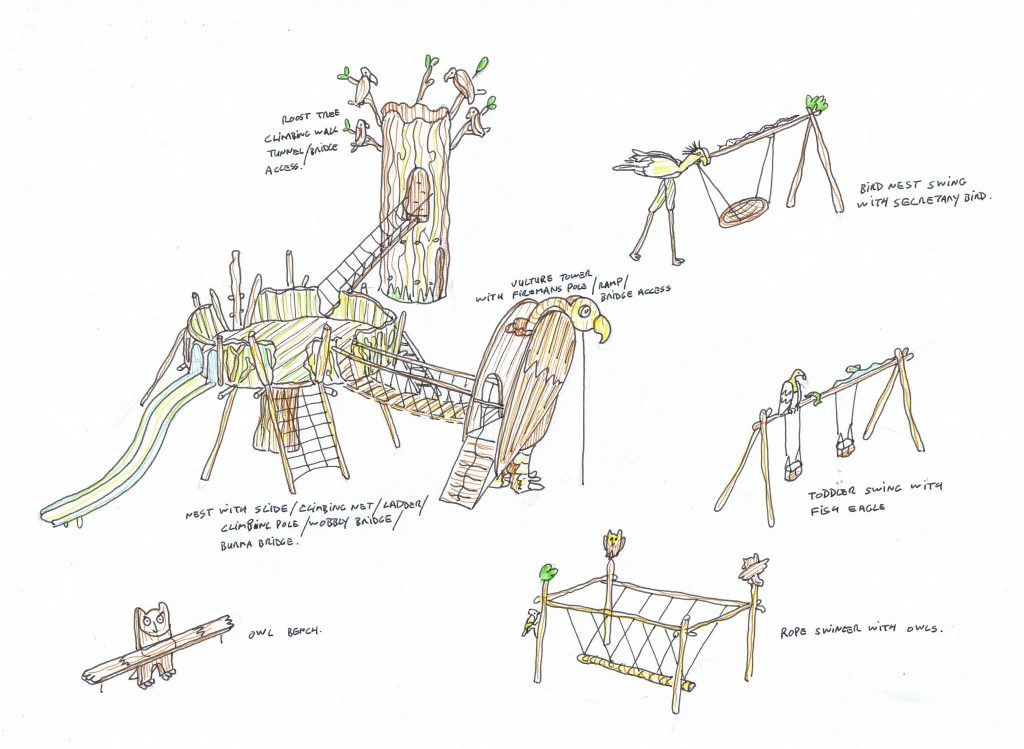
Our new and fun bird of prey themed adventure playground opens at Easter where children can use up any extra energy and play happily and safely – featuring an owl rope swing, a Secretary Bird’s nest swing, a bird’s nest with a climbing net, fireman’s pole, wobbly bridge and slide – and lots more bird of prey inspired fun.
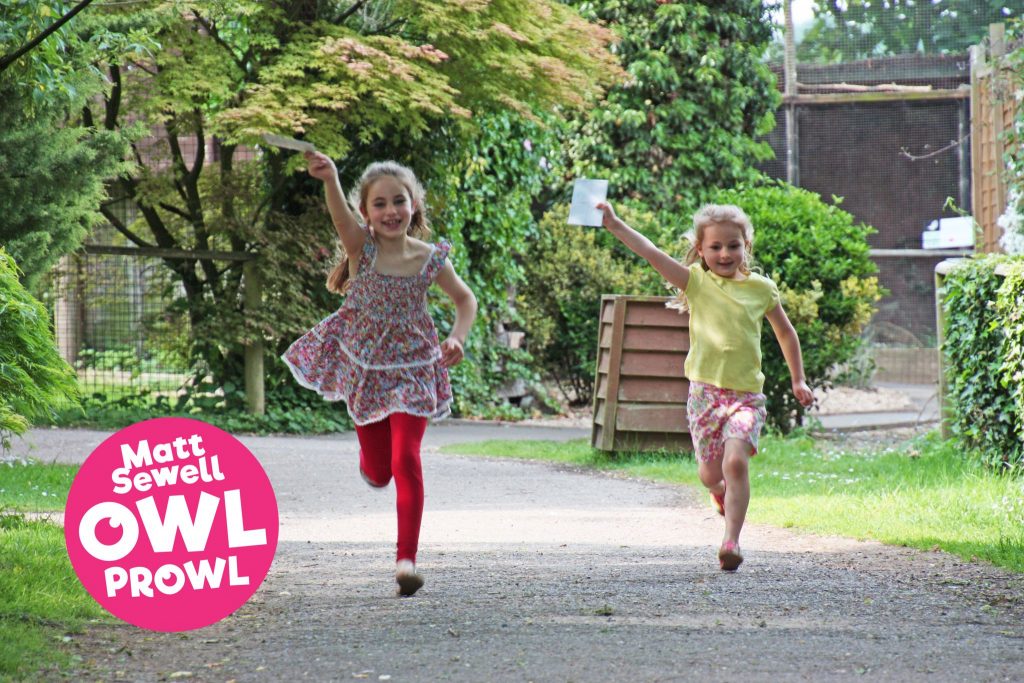
Look out for the brand new Children’s Activity Trail which is based around the work of wildlife artist Matt Sewell (https://www.mattsewell.co.uk/). The trail has been designed for all ages and the aim is to find the birds pictured on your activity sheet, which not only includes fantastic illustrations by Matt but also lots of fascinating information about each species to keep the children intrigued. For older children there are also questions to answer if they are inspired. Everyone who attempts the trail will receive a badge to show they have completed it.
The trail is free for children as part of a day admission to the Trust
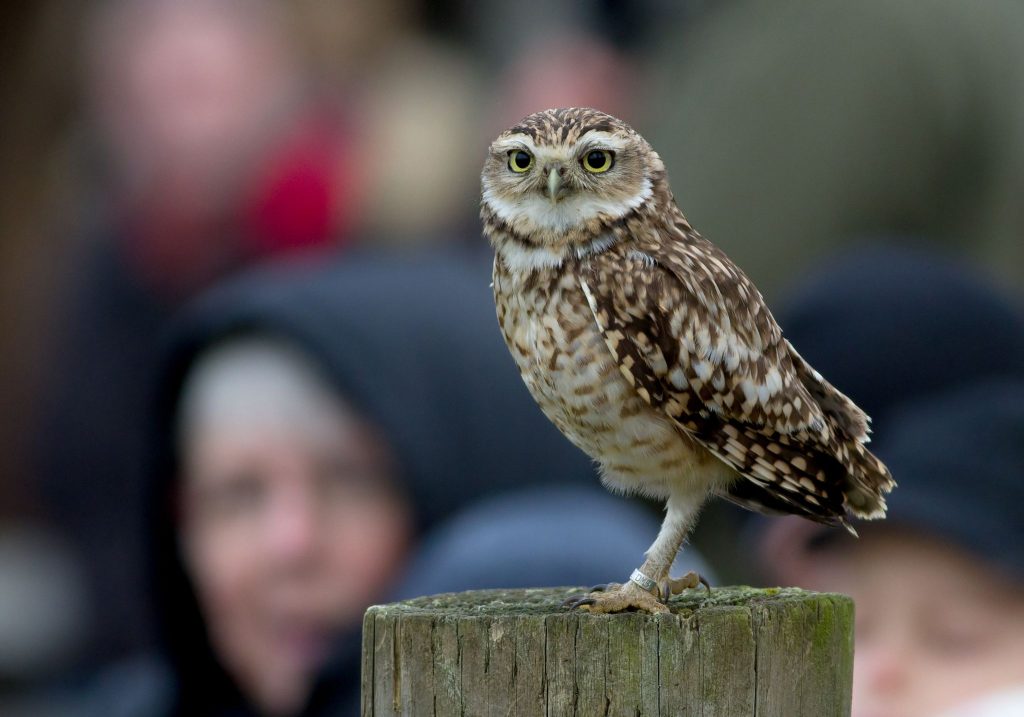
Come and meet our cute Burrowing Owls, new residents at the Hawk Conservancy Trust. You can get up close and find out all about these small, long legged owls from the prairies and grasslands of North and South America.
Intrepid visitors are invited into a tunnel running through the aviary of the Burrowing Owls. From this tunnel you can peep through cleverly cut peep holes to watch the Burrowing Owls in their aviary, which is designed to replicate their natural habitat. The natural habitat of a Burrowing Owl is the prairie and you will see how our owls are completely at home here. The tunnel provides a sense of how the owls live, and will also display information about the owls and their daily habits.
This is experience is included as part of a Day Admission
Get even closer to the owls with our VIP Meet the Burrowers Experience. Guests will be invited into the ‘burrow’ and an expert member of our team will tell them all about the life, habits and habitat of Burrowing Owls whilst encouraging the owls to move freely amongst the guests. Hang on to your hats as the owls can fly very close and sometimes are daring enough to land on a visitor’s head – be prepared for unexpected encounters. The VIP experience takes place every day at 12.15pm.
£19.50 per person and can be pre-booked or booked on the day subject to availability via our shop or online. Normal admission fees apply.
We have just introduced a new conservation and research award, created to continue the legacy of our former Chairman, Marion Paviour.
The shocking news about the intentional and targeted poisoning of an elephant carcass that affected 121 Critically Endangered vultures on 25 February 2018 in southern Mozambique is distressing but not surprising. These incidents are becoming more frequent. The impact of this event is devastating, however it is important to realise that without a quick response the mortalities would have been much greater.
Of the 121 affected vultures, 18 were recovered poisoned but still alive and these are all undergoing treatment. The rapid action taken by the poison response team neutralised the poisoned carcass and prevented many of the hundreds of vultures seen in the area plus other scavenging animals from a death via poisoning. Research by the Hawk Conservancy Trust’s Head of Conservation and Research, Dr Campbell Murn, has demonstrated that a quick response by poison response teams will significantly reduce deaths and minimise the loss of wildlife and contamination of the environment.
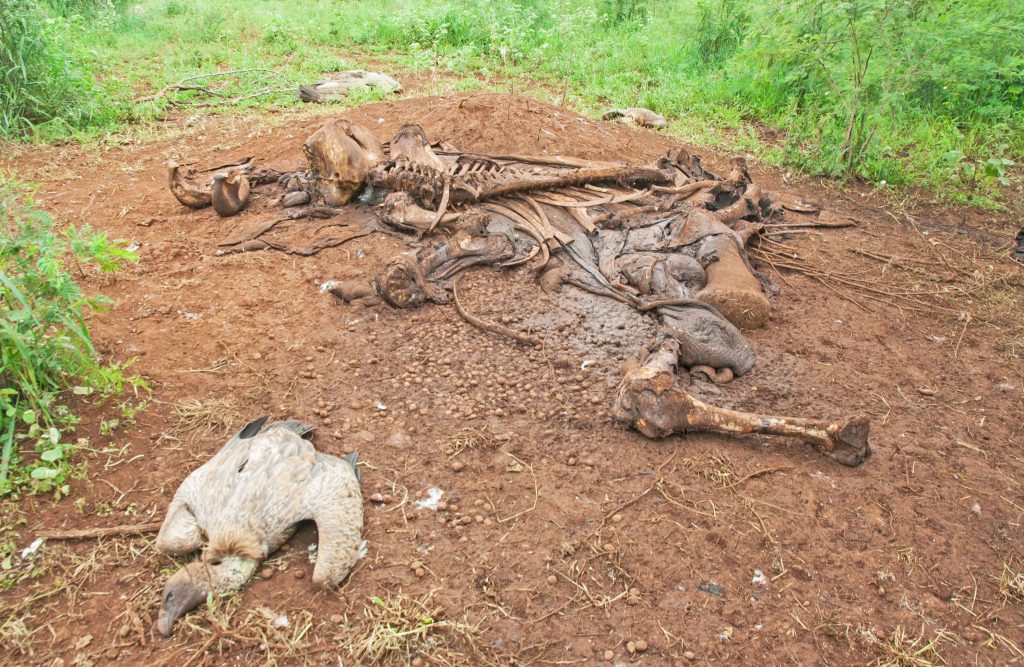
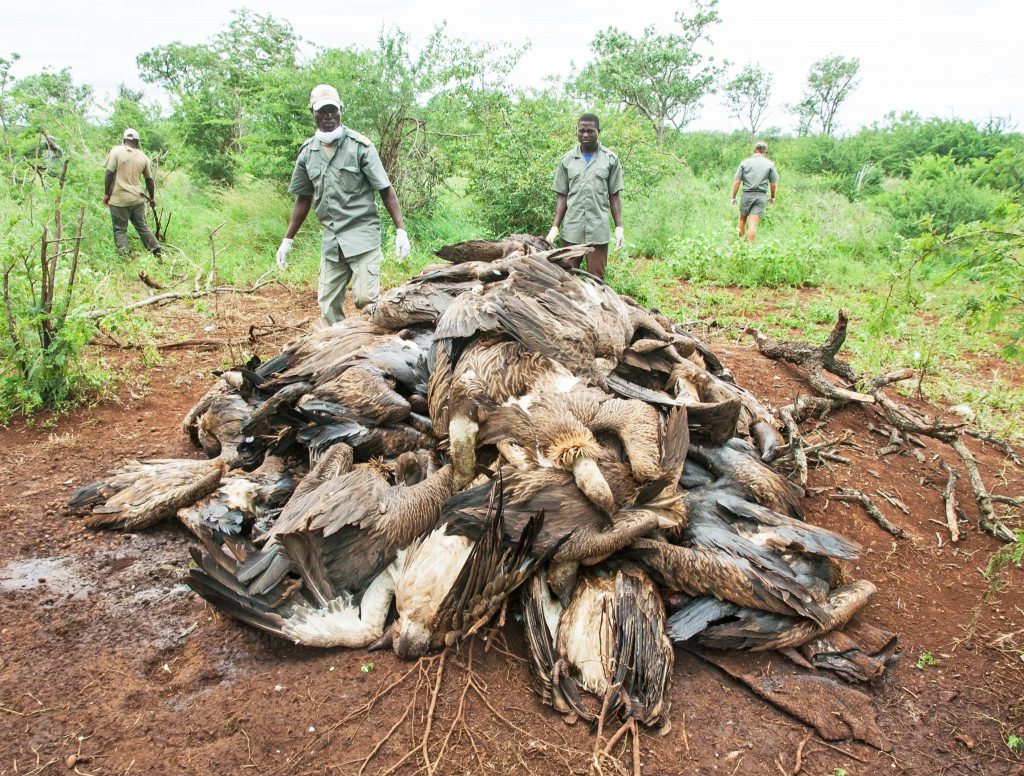
The killing of wildlife by poisoning is very difficult to prevent, but a fast response to poisoning events limits their impact. Working in partnership, the Hawk Conservancy Trust, the University of Reading and the Endangered Wildlife Trust deliver a training programme on the effective neutralisation of poisoning events and also provide poison response kits to field personnel in southern Africa.
A lot more poison response training is required, and we have identified key areas and poisoning hotspots where urgent work is needed to enable stakeholders in these areas to adequately plan for and manage incidents when they occur.
Vultures are in severe decline and the situation is now critical. Africa is fast losing its vultures, and with them the important and highly efficient ecosystem services they provide. Without scavengers, carcasses are left to rot and potential for disease increases for both humans and wildlife.
It cannot be overlooked that the most significant underlying issue is illegal elephant poaching, and as long as there is elephant poaching, vultures are at risk. However, elephants already have a huge support network, which is having a positive impact on elephant conservation.
Vultures cannot wait for the underlying issue to be resolved. Immediate action is needed and we are here to help vultures because without effective intervention when poisoning occurs, they will become extinct. Our ability to supply the training and kits needed across this region is limited by our resources and so we are asking for your support to expand these vital skills and equipment into the key areas where we can play our part together in preventing the extinction of these vital birds.
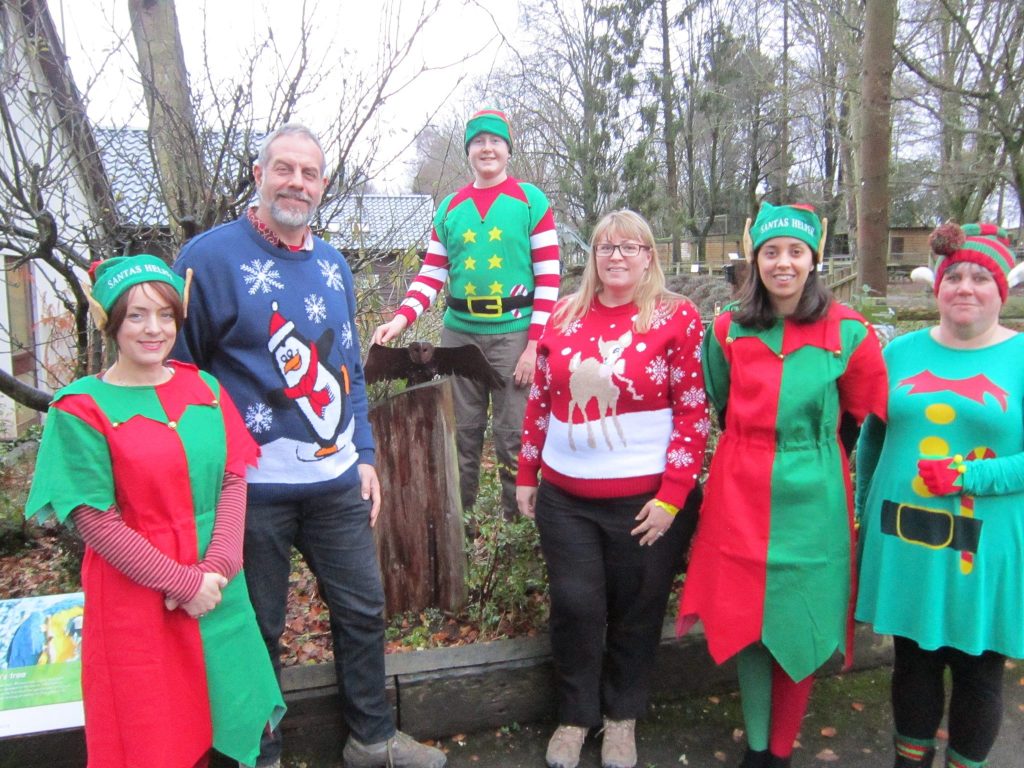
Congratulations to Colin Wyatt, the winner of our raffle to win a stunning Barn Owl sculpture. Given the time of year, we just had to let some of Father Christmas’ elves present the prize!
The stunning piece was created in metal and wood by artist Diccon Dadey. For those of you not lucky enough to win on this occasion, keep an eye out for our 2018 art raffle.
The Trust undertakes a number of UK-based research projects aimed at monitoring the status of a number of UK raptor species. Although the majority of this work is performed by members of our Conservation and Research Department, there are a number of other aspects to these projects we are unable to perform due to lack of manpower. To get around this problem, we have identified ways in which you can help.
Last month, Ben and James took on the challenges they set themselves in order to raise funds for critically endangered vultures. Thank you to everyone who has supported them.