



Many of you already know Sarabi, our Lugger Falcon who joined us in 2019. Her species, found across the Indian subcontinent, faces serious pressures from pesticides and illegal trapping across their range. They are in need of conservation action, aligning with our mission to conserve birds of prey and their habitats. Sarabi has always been a bit of a character. For years she was timid, selective, and never quite settled into a regular flying-display role. Nevertheless, we do our best to work closely with our birds in a way that suits them best.
When I first started working with her in late 2022, she wasn’t too sure about me, especially during her routine health checks. Over time she began warming to me, as I spent more time around her, but she still wasn’t a big fan of the health checks we carry out regularly with all of our birds, so I knew we still had some way to go. As time passed and with more time spent together, I figured out routines that worked better for her. As a character she can be quite fickle, some days very calm and some not. So it’s been an important step for us working together to find a balance that works.
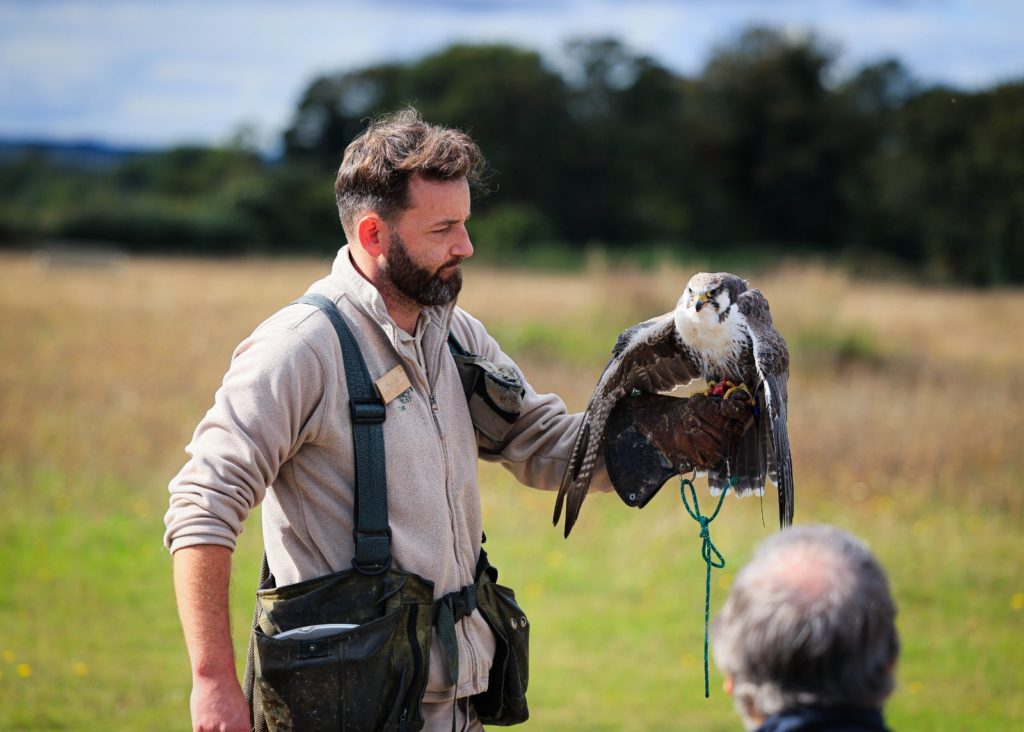
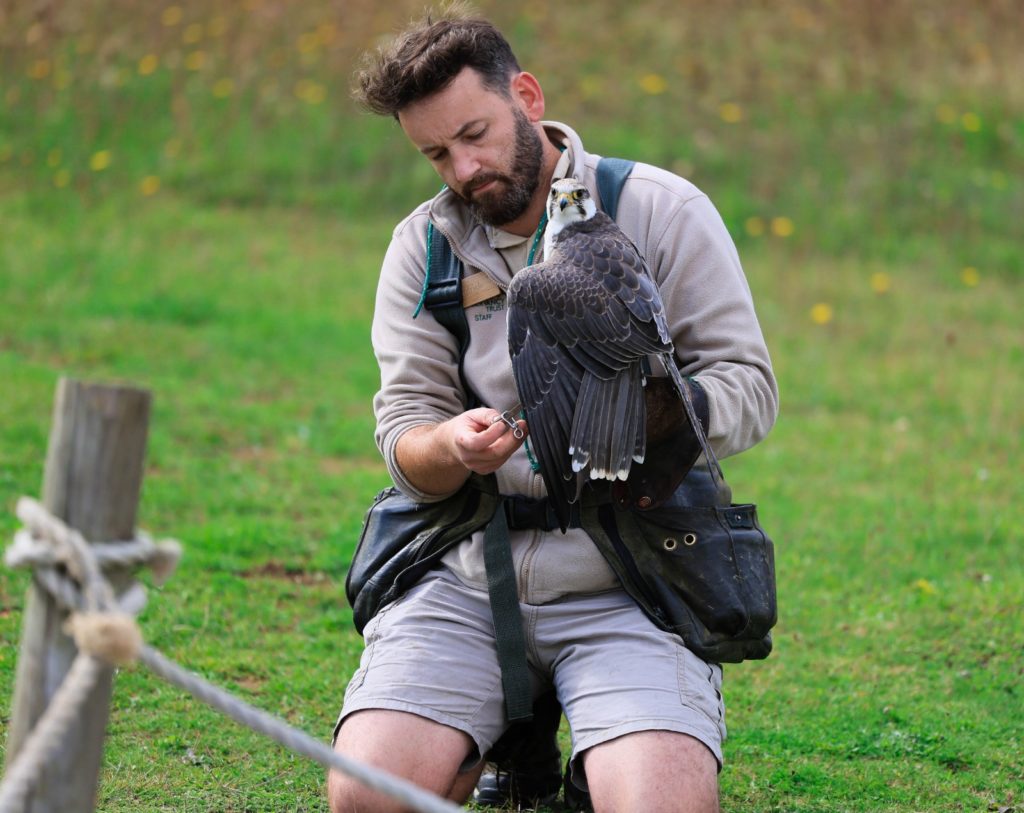
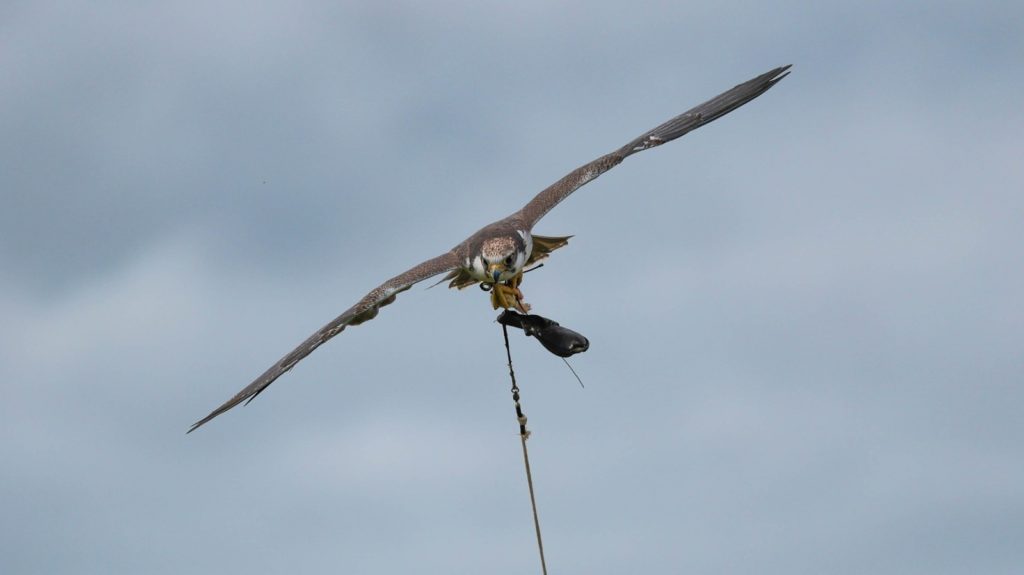
We had always hoped Sarabi would find a place within our flying display team of birds to showcase the amazing speed and agility of this member of the falcon family, utilising a swung lure as our means of demonstrating this. Initially, we weren’t sure how she would respond. When we started our flight training together, I was essentially trying to develop a routine where she would be able to flourish and fully spread her wings (no pun intended), but I knew this was going to be challenging. The challenge was whether she would be able to overcome any distractions, something that she struggled with initially when joining us, and allowing her to solely focus on the routine at hand.
I often say Sarabi is like a giant spinning game-show wheel, whatever the wheel lands on, is what Sarabi will do that day. As you can imagine, this could really vary! Some days she’d fly beautifully; others she’d perch, stare at me, and do absolutely nothing; sometimes she’d disappear off into the East Cholderton Valley, leaving me to wander the Hampshire countryside with telemetry in hand. And on plenty of occasions, she’d get distracted by the local corvid populations!
For some unknown reason, she also cannot stand our two Mediterranean Miniature Donkeys, Mickey and Molly. If she lands near their paddock, she’ll shout her head off at them as if they are the problem, even though she can simply fly away.
Another hurdle was getting her comfortable around visitors. In the early days, even a couple of people watching could unsettle her. This began a patient process of introducing her to small groups of people for her to become more confident, important not just for our flying displays, but also for her overall wellbeing. As her confidence grew, so did the number of people she was happy to fly in front of. I even remember some of the numbers of attendees by heart – 2 people, followed by 18, then 37, then even 108 at one stage! This was huge progress. Her Brilliant Bird Brains and Meadow Encounter flights during 2024 were hugely important, helping her gain even more confidence, fitness, and the lure-flying skills she’d need for bigger displays.
Progress was slow and steady, but we certainly had a eureka moment when she began flying in our World of Birds of Prey demonstration during the 2025 winter season. Something seemed to click. It’s almost as if everything suddenly started to make sense to her, and she had found the trust our relationship to feel confident enough to regularly fly in front of larger audiences without being phased. The pieces were starting to fall in to place…
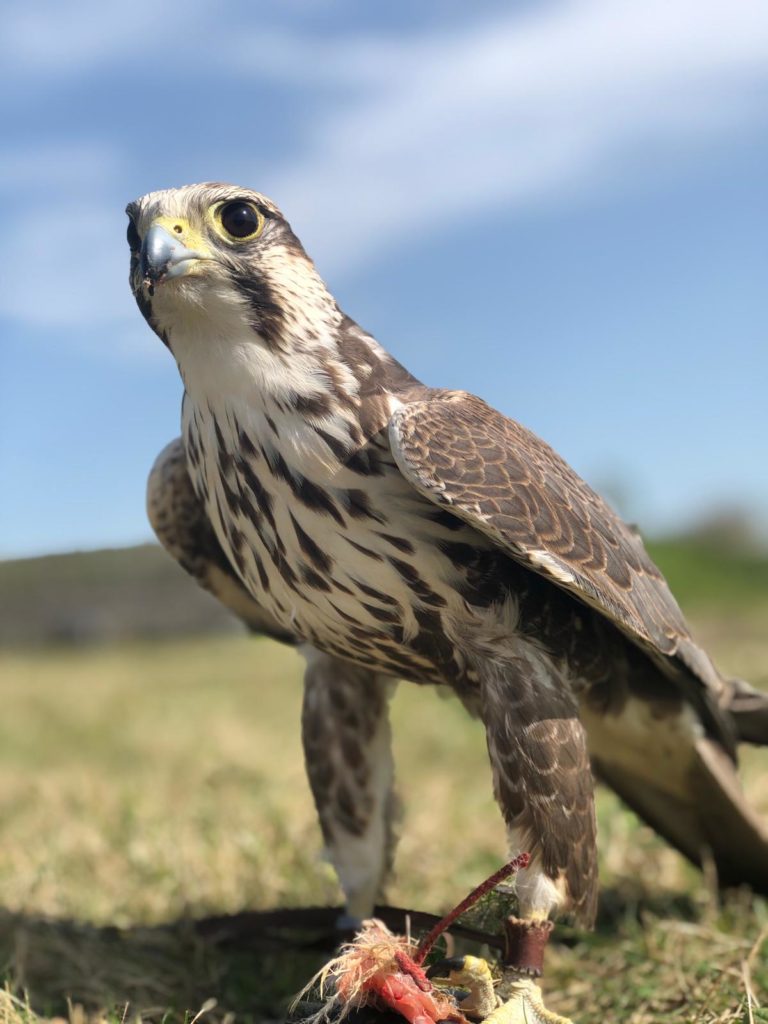
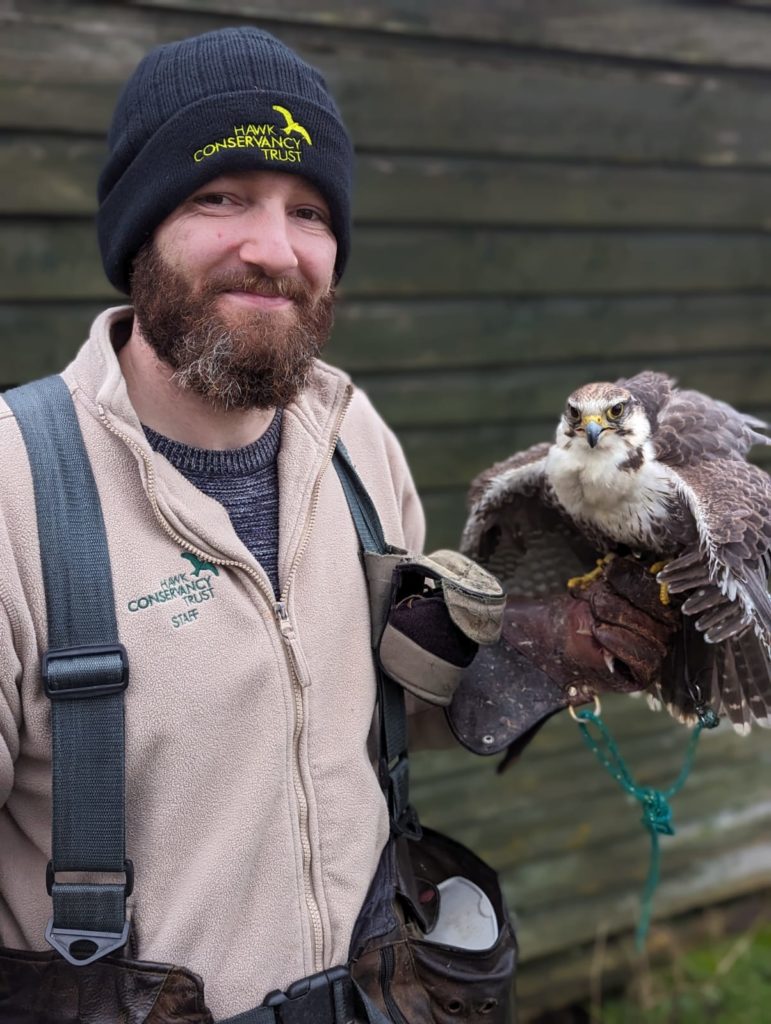
Now, in early 2026, she feels like a completely different falcon. I’m happy to say she flies with confidence regularly in front of our audiences, showing off her speed and agility. Not only has her physical fitness and endurance increased tremendously, she has also become a very confident and competent flyer, learning all sorts of new tricks and tips to keep us in the Bird Team very much on our toes! The way she is able to just literally almost flip herself over mid-air to recommit to the attack as quickly as possible is honestly incredible to watch. Even on some occasions on recent days, she’ll turn herself around and almost fly back at you, upside down briefly! It’s hard to fully explain it in words, but when you see her in action and the conditions are in her favour, she definitely knows how to impress a crowd, that’s for certain. Watching her reminds me why Lugger Falcons are such extraordinary aerial hunters. Their long tails give them remarkable manoeuvrability—essential when chasing fast-moving prey like birds, small mammals, reptiles, and large insects. When she’s in the zone, she really does take your breath away.
I’m incredibly proud of how far Sarabi has come. I know I shouldn’t have favourites, but she’s without question mine. The journey hasn’t always been easy, but beneath the occasional stubbornness, she’s one of the sweetest birds I’ve ever worked with.
We are at the stage now where she is beginning to work alongside more of my colleagues on a regular basis. Even better, she’s now beginning to trust more members of the team, including Cedric and Hugo. For a bird who used to be so person‑specific, seeing her open up is a huge success in itself. With time, we’re hopeful she’ll feel comfortable working with everyone.
She’ll be celebrating her 7th birthday soon, and I can’t wait for you to see her fly during our demonstrations. She’s only getting fitter, smarter, and more confident, with a long flying career ahead of her.
Thanks, everyone.
Patrick – Hawk Conservancy Trust Bird Team Member