



X

Protecting Peregrine Falcons

Posted on: by

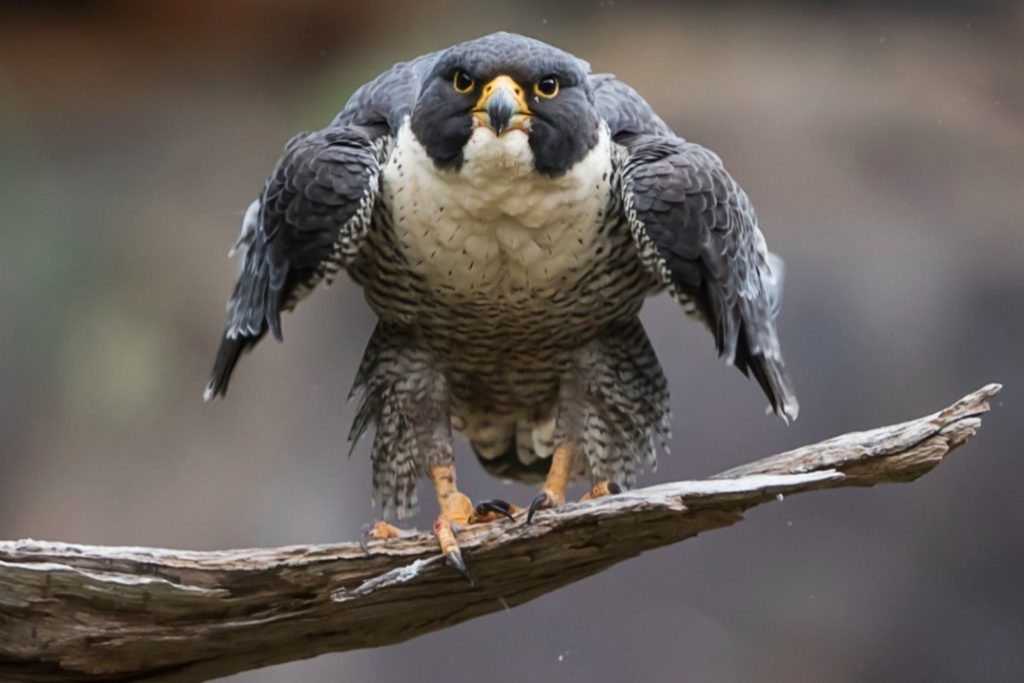
CITES CoP20 took place towards the end of 2025. One of the proposals discussed was whether to lower Peregrine Falcons from CITES Appendix 1 to Appendix 2, and ultimately the discussion resulted in them staying on Appendix 1.

But where did this proposal come from and what would it have meant for Peregrines?

Let’s start with what CITES and these appendices are… CITES is the Convention on International Trade in Endangered Species of Wild Fauna and Flora – a bit of a mouthful, hence the widespread use of CITES! Fundamentally, it is an international agreement between governments to regulate the trade of wild animals and plants and ensure that this trade does not threaten these species’ survival in the wild.

Appendix 1 lists species at risk from trade and (mostly) these are species that are threatened with extinction. CITES  prohibits any international trade of those species listed on Appendix I, effectively providing the highest level of protection possible (in terms of trade). Appendix 2 lists species not necessarily listed as threatened but that might become so if the trade in that species is not controlled and regulated. So, Appendix 2 essentially allows trade of the species but requires meeting stringent permit requirements, ultimately with the aim of preventing trade becoming a threat to the species. It is important to note that CITES is not meant to be an indication of the conservation status of a species; that’s what the IUCN Red List of Threatened Species is for.

So, where did the proposal to move Peregrine Falcons from Appendix 1 to Appendix 2 come from?

In short, the proposal stems from Peregrines being listed as ‘Least Concern’ on the Red List, following one of the most renowned conservation success stories ever, where they recovered from near extinction in the 1970s due to environmental contaminants to their current population of up to 499,000 mature individuals, which is said still to be increasing, and their wide global distribution (one of the most widely distributed birds globally, with a presence on every continent except Antarctica).

Despite the favourable conservation status of Peregrines, our Head of Conservation, Research and Education, Dr Campbell Murn, and Africa Projects Manager (and Co-chair of the IUCN Species Survival Commission’s Vulture Specialist Group), André Botha, contributed to convincing the Convention on Migratory Species Raptor TAG’s decision to reject the proposed CITES downlisting, and subsequently the voting of CITES parties at CoP20 to follow suit.
So, if everything appears pretty positive for Peregrines, why reject the proposal? What is the problem?

Ultimately, while on the face of it, things do look positive for a species now listed as Least Concern following their global recovery from pesticides and persecution, there are several elements that this headline summary glosses over. Namely – data reliability in many parts of their range is still very poor and many of the same threats still remain for the species.

So, data-wise, one of the biggest concerns surrounding the proposed downlisting was the uneven quality of the data behind their IUCN Red List status. In fact, around 63% of countries assessing Peregrine populations report their status as “unknown,” particularly across South America, Africa, and Australasia, with much of the optimism around their populations coming from well-studied populations in Europe and North America. The gaps in data run even deeper when looking at subspecies information, with at least 11 of the 19 recognised subspecies lacking sufficient data, including highly vulnerable groups such as the Cape Verde Peregrine, which may already be Critically Endangered and facing dangerously low genetic diversity. On top of that, unreliable methods, like the potential double-counting of certain migratory populations, raise further doubts about whether global population trends are being portrayed accurately.

The other concern relates to threats… Even where Peregrines have made encouraging recoveries, ongoing threats continue to put pressure on populations. Sudden demographic declines linked to avian influenza have been documented in multiple regions, reminding us that progress can be fragile and trends can change dramatically for the worse. Alaska has reported notable reductions in breeding pairs, while wintering populations in Canada and the USA have also shown worrying downturns. Across Europe, too, warning signs are emerging with breeding numbers having dropped in some areas, mortality rates appearing to be climbing, and a growing share of breeding pairs consisting of immature birds – often a signal that established adults are disappearing and the population is under stress.
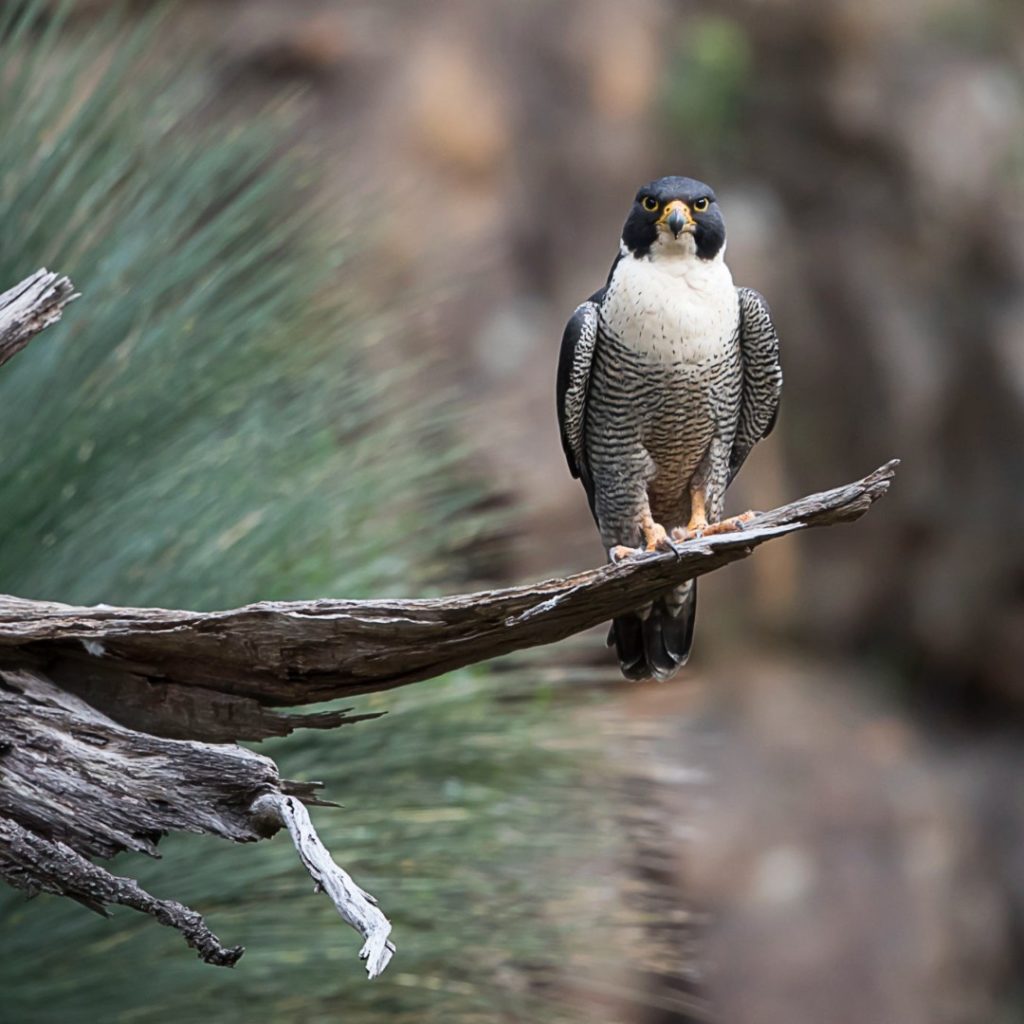
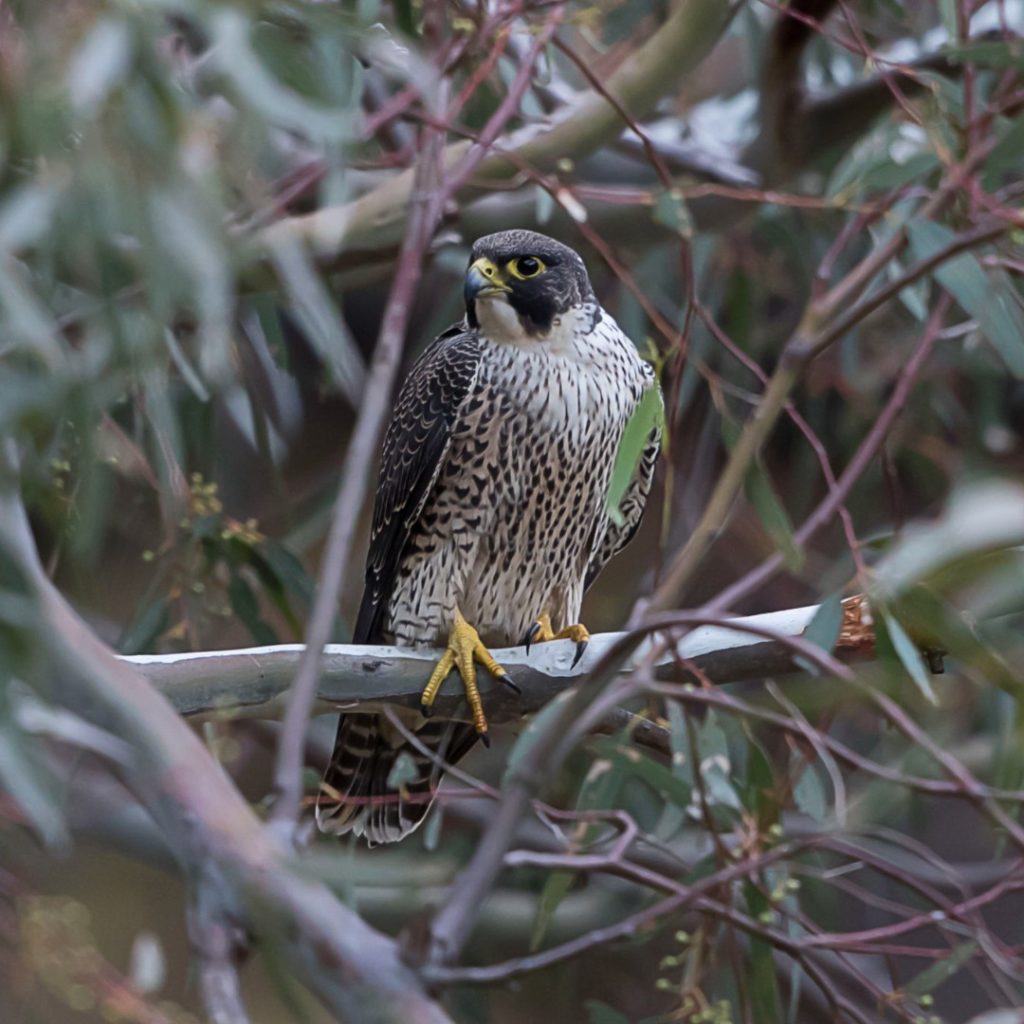
This also all falls within a larger discussion about the trade in large falcons….

One of the main concerns about relaxing regulations is that it could exacerbate an expanding and largely unquantified illegal trade in large falcons – the focus of the remainder of this article.

A particularly notable threat to a species being downlisted from Appendix 1 to 2, albeit hard to quantify, would be the likely increase in the already damaging illegal trade and trafficking of falcons. Illegal trade in Peregrine eggs, nestlings, and adult birds continues to threaten wild populations, especially in regions where enforcement is weak or under-resourced. The concern is that a downlisting could re-ignite demand for wild-caught birds for the international trade, intensifying existing pressures on vulnerable populations. Even in Europe, where legal protections are comparatively strong, illegal activities such as nest robbing remain a widespread problem that is difficult to control.

The UK is no exception to this, with a troubling rise observed in Peregrine chicks disappearing from remote nests and cliff ledges. Investigations by police and conservation groups suggest that demand is being driven both directly by markets in the Middle East seeking high-performance racing birds and by breeding facilities attempting to secure wild parent stock to meet a booming export market. The colder climate of northern Europe is considered ideal for creating tough, fast birds, and British-bred birds from established lines are generally considered more reliable.

While falconry remains a Bedouin hunting tradition, in some parts of the Gulf, falconry has increasingly evolved into a symbol of wealth and prestige among the modern elite and has become a multimillion-dollar industry – with a Peregrine sold last year for upwards of $400k. The growth of the captive breeding industry reflects the growing demand for the UK’s Peregrines. There are now about 160 breeding facilities in the UK – a dramatic increase from roughly 27 in the 1980s, with many of these facilities having commercial links to Middle Eastern buyers. DNA testing has also confirmed that some wild-caught birds are being used within breeding centres, and police reports show that more than half of the facilities inspected show some form of non-compliance, in one form or another.

So, what next?

Taken together, these challenges paint a more complicated picture than simple recovery narratives suggest. While Peregrines have made remarkable comebacks in certain regions, substantial data gaps, emerging risks, and ongoing exploitation mean that many populations remain far from secure. A decision about changing any protection status must grapple with these uncertainties to avoid undermining decades of progress.

As we have seen with so many species before, including Peregrines, rebuilding populations is far harder, far slower and often far more expensive than preventing the decline in the first place. The future of large falcons will depend not on past recovery stories, but on the choices made now to prevent exploitation from resurging.

The Hawk Conservancy Trust is committed to conserving birds of prey and their habitats and will continue to support these birds in whatever ways we can. Learn more about our conservation efforts here.
Getting to know our new Secretary Bird

Posted on: by

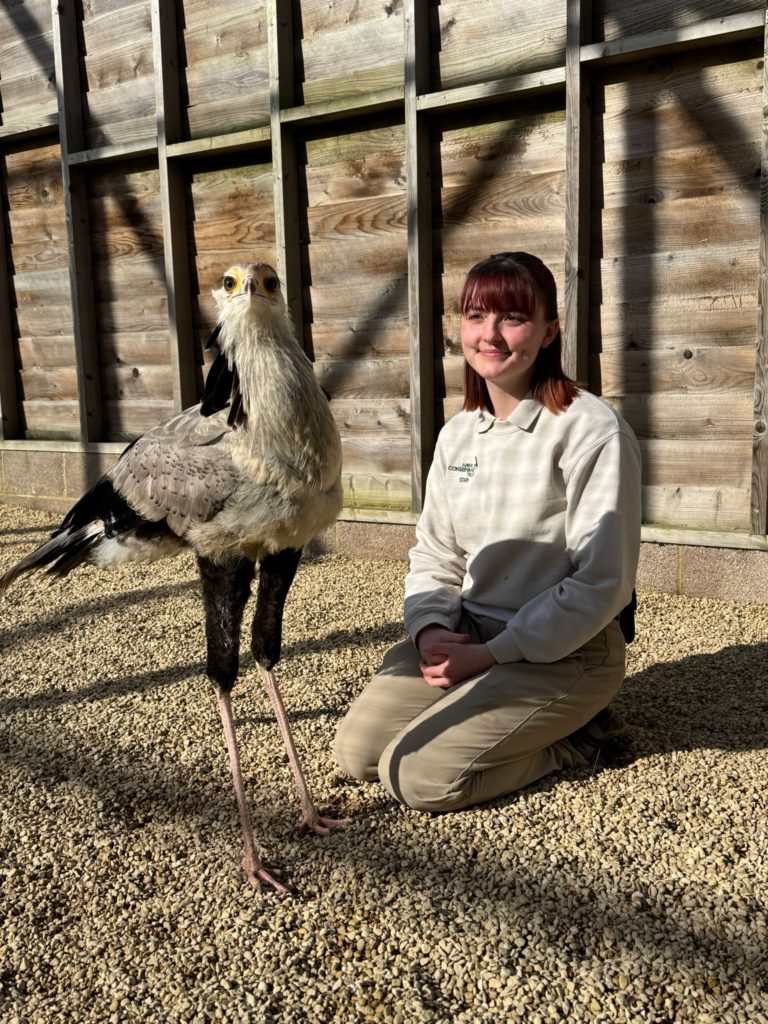
Bird Team member Jennie Marshall has one of the most enviable jobs here at the Hawk Conservancy Trust – she has the privilege of saying good morning to our young Secretary Bird Sherbie every day! While living on her section at the Trust, Sherbie has been getting to know Jennie very well, and the duo are forming a really close bond. We chatted to Jennie to hear what it’s been like working with our newest arrival so far:

“After Sherbie arrived in October, he moved into my section of the park after about one month. This section is off-show to the public, which has allowed him to settle in and ease into the comings and goings of life at the Hawk Conservancy Trust.

When I first met Sherbie, I noticed straight away that he was a very chatty chap. He usually says good morning to me, and we’ve got into a lovely routine when I enter his aviary. He will fly down to say hello from his favourite perch, which is up nice and high. This perch is a spacious platform at the front of his aviary, where he loves to sit and watch the world go by.

He’s very good at keeping himself looking in tiptop condition. When he’s on his favourite perch he likes to preen and rouse, ruffling his feathers and keeping on top of appearances. This is a courtesy he extends to me as well – as he seems to have a fascination with my hair! Whilst I’ve been spending time with him to help him become accustomed to our company, he always likes to be close. It’s really amazing that he feels trusting of me, and I feel privileged to spend time so close to him. However, he doesn’t seem to understand the concept of personal space just yet.

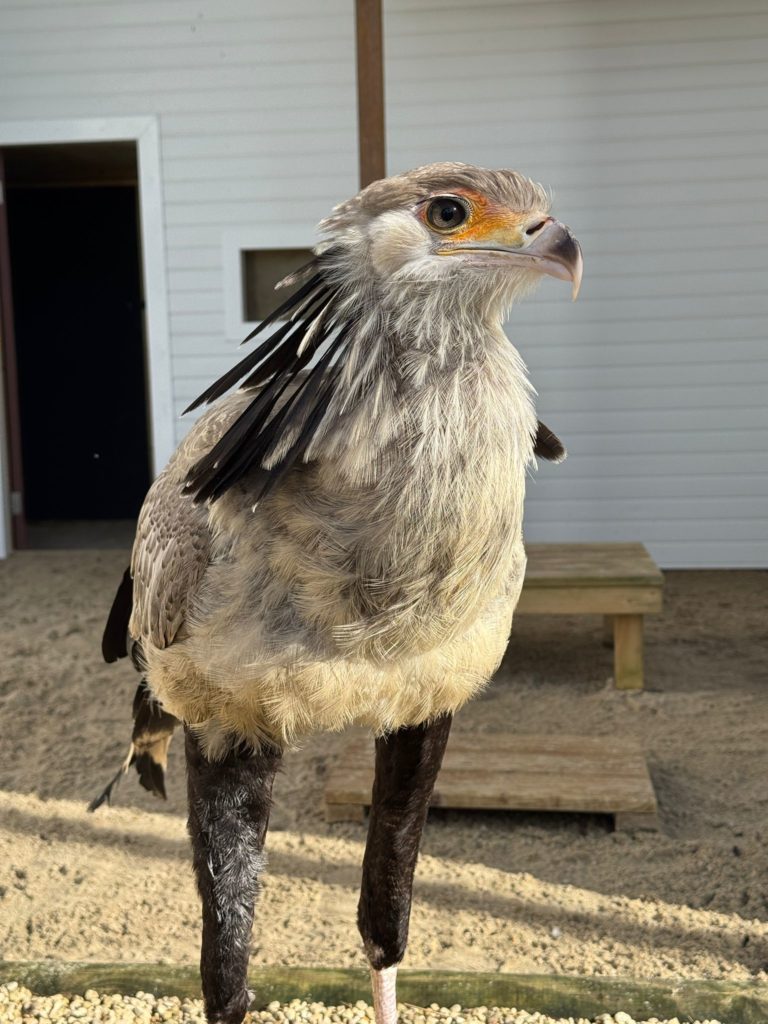
As a juvenile Secretary Bird, his plumage and face colouration are quite different to an adult like Angola. His feathers are a bit darker in colour, almost grey-brown with a unique speckled pattern. His face is also a paler shade of yellow than the bright red-orange of an adult. When he’s excited, his face flushes a bit brighter – a hint at how he’ll look in the future. It’s theorized that many juvenile birds of prey are darker than their adult counterparts in colour as it’s easier for them to camouflage against the nesting material at the vulnerable stage in life.

Personality wise, he’s very different from Angola. Sherbie is a lot more sociable with all the members of the Bird Team, whereas Angola has his firm favourites…and least favourites too!

We’ve just begun the first stage of his training, where he’s getting used to stepping onto the scales to check his weight, and running between two people. We’re also working with him to feel comfortable being fitted with telemetry equipment, which is really important for when he steps out into the Savannah Arena and takes his first flights.

He’s not been introduced to Stuntman Steve yet, the resident rubber snake here at the Trust. But that hasn’t stopped him showing off his innate kicking behaviour! The poor, unsuspecting flies in his aviary are no match for Sherbie. He also seems to have an aversion to the lovely gardening provided for him in his aviary, with the beautiful grasses having also fallen victim to his almighty kick.

So far, Sherbie’s kicks have been quite timid and unsure – almost as if he’s just discovering he can kick. Whereas Angola is more assured in the power of his kicks, and is happy to deliver a swift blow when presented with the rubber snake, or any Bird Team member he doesn’t like. So it will be interesting to see how Sherbie reacts when the day comes.

I’m really looking forward to seeing his progression – so far, he’s taken to the training very well. We’ll keep you updated on how he’s getting on, and hopefully you’ll be seeing him in a Wings of Africa flying display in the future!”


Patrick and Sarabi: a perfect pairing!

Posted on: by

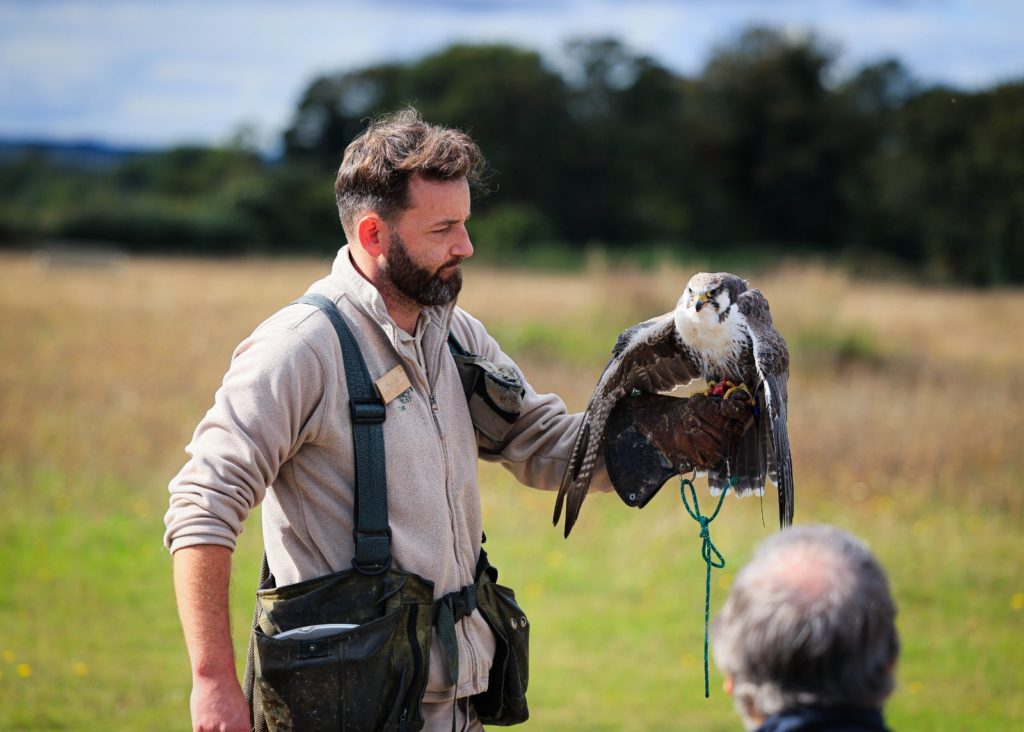
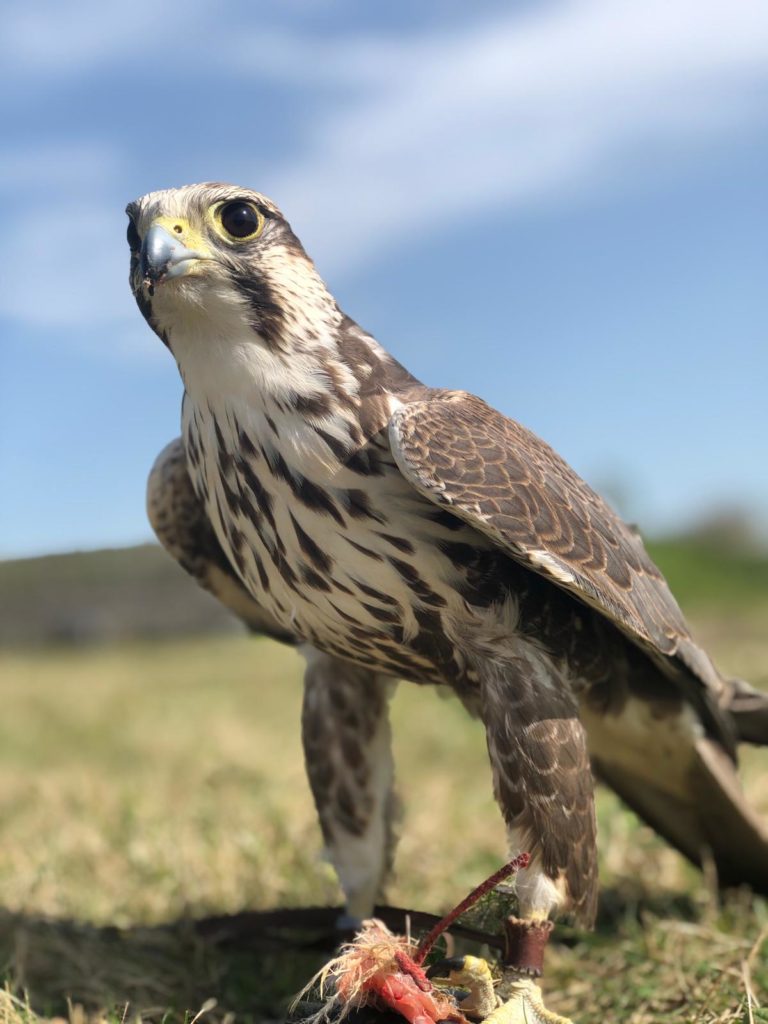
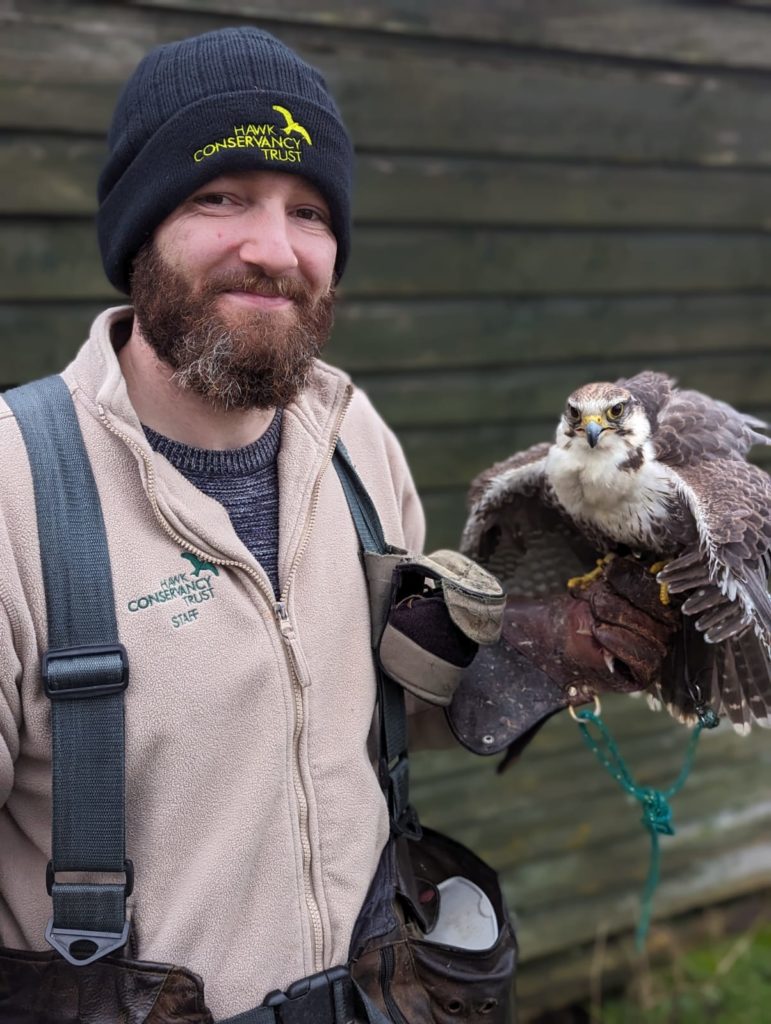
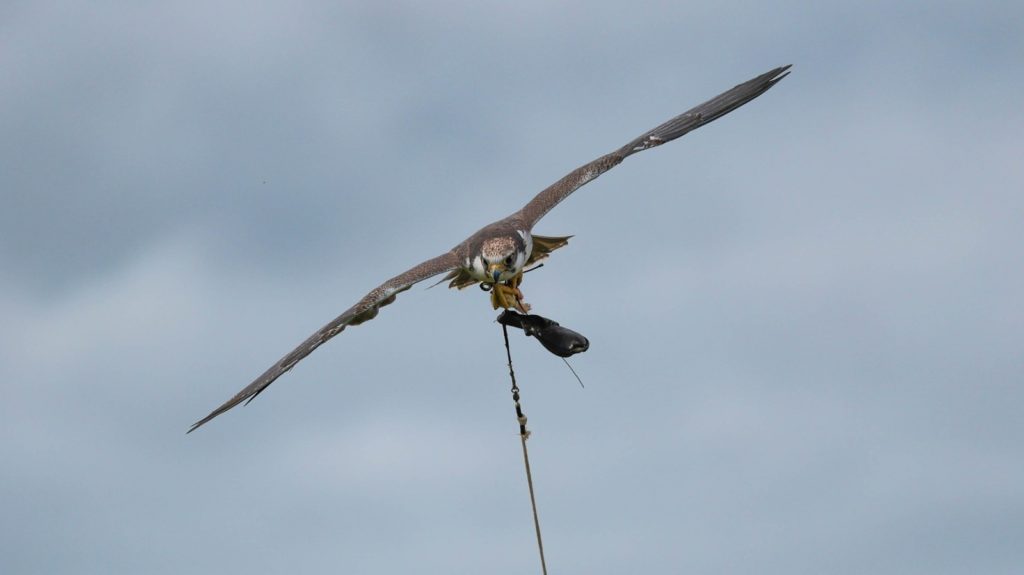
Many of you already know Sarabi, our Lugger Falcon who joined us in 2019. Her species, found across the Indian subcontinent, faces serious pressures from pesticides and illegal trapping across their range. They are in need of conservation action, aligning with our mission to conserve birds of prey and their habitats. Sarabi has always been a bit of a character. For years she was timid, selective, and never quite settled into a regular flying-display role. Nevertheless, we do our best to work closely with our birds in a way that suits them best.

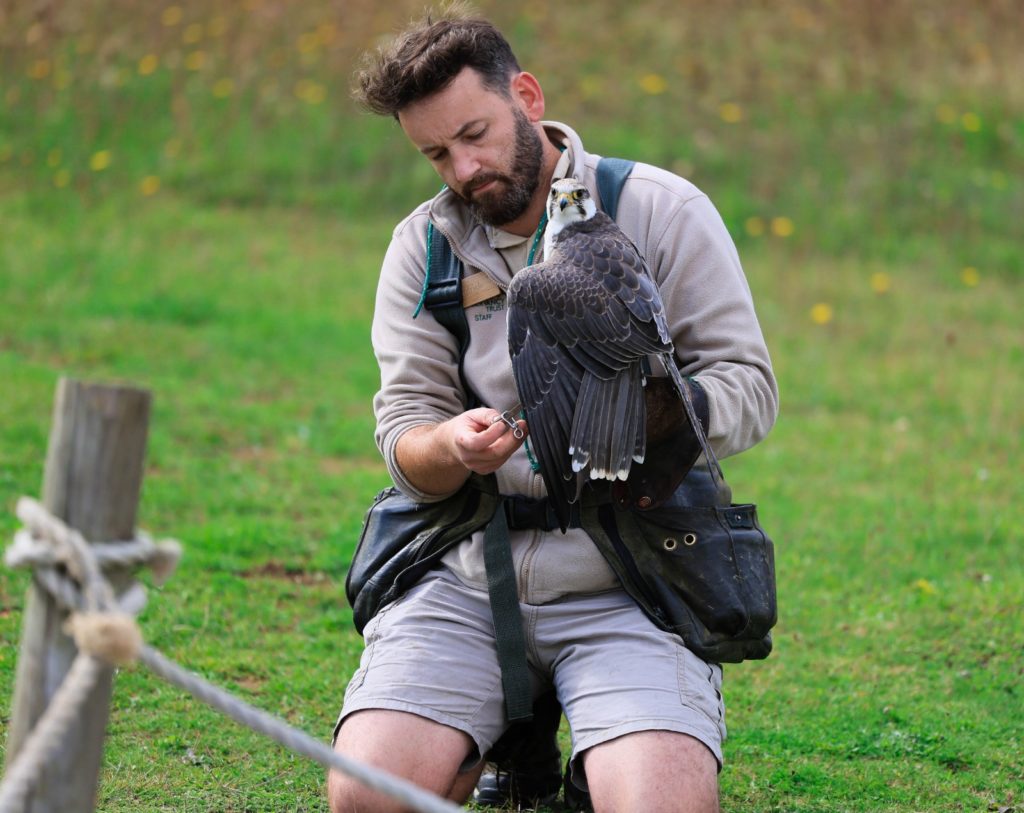
When I first started working with her in late 2022, she wasn’t too sure about me, especially during her routine health checks. Over time she began warming to me, as I spent more time around her, but she still wasn’t a big fan of the health checks we carry out regularly with all of our birds, so I knew we still had some way to go. As time passed and with more time spent together, I figured out routines that worked better for her. As a character she can be quite fickle, some days very calm and some not. So it’s been an important step for us working together to find a balance that works.

We had always hoped Sarabi would find a place within our flying display team of birds to showcase the amazing speed and agility of this member of the falcon family, utilising a swung lure as our means of demonstrating this. Initially, we weren’t sure how she would respond.  When we started our flight training together, I was essentially trying to develop a routine where she would be able to flourish and fully spread her wings (no pun intended), but I knew this was going to be challenging.  The challenge was whether she would be able to overcome any distractions, something that she struggled with initially when joining us, and allowing her to solely focus on the routine at hand.

I often say Sarabi is like a giant spinning game-show wheel, whatever the wheel lands on, is what Sarabi will do that day. As you can imagine, this could really vary! Some days she’d fly beautifully; others she’d perch, stare at me, and do absolutely nothing; sometimes she’d disappear off into the East Cholderton Valley, leaving me to wander the Hampshire countryside with telemetry in hand. And on plenty of occasions, she’d get distracted by the local corvid populations!

For some unknown reason, she also cannot stand our two Mediterranean Miniature Donkeys, Mickey and Molly. If she lands near their paddock, she’ll shout her head off at them as if they are the problem, even though she can simply fly away.

Another hurdle was getting her comfortable around visitors. In the early days, even a couple of people watching could unsettle her. This began a patient process of introducing her to small groups of people for her to become more confident, important not just for our flying displays, but also for her overall wellbeing. As her confidence grew, so did the number of people she was happy to fly in front of. I even remember some of the numbers of attendees by heart – 2 people, followed by 18, then 37, then even 108 at one stage! This was huge progress. Her Brilliant Bird Brains and Meadow Encounter flights during 2024 were hugely important, helping her gain even more confidence, fitness, and the lure-flying skills she’d need for bigger displays.

Progress was slow and steady, but we certainly had a eureka moment when she began flying in our World of Birds of Prey demonstration during the 2025 winter season. Something seemed to click. It’s almost as if everything suddenly started to make sense to her, and she had found the trust our relationship to feel confident enough to regularly fly in front of larger audiences without being phased. The pieces were starting to fall in to place…

Now, in early 2026, she feels like a completely different falcon. I’m happy to say she flies with confidence regularly in front of our audiences, showing off her speed and agility. Not only has her physical fitness and endurance increased tremendously, she has also become a very confident and competent flyer, learning all sorts of new tricks and tips to keep us in the Bird Team very much on our toes! The way she is able to just literally almost flip herself over mid-air to recommit to the attack as quickly as possible is honestly incredible to watch. Even on some occasions on recent days, she’ll turn herself around and almost fly back at you, upside down briefly! It’s hard to fully explain it in words, but when you see her in action and the conditions are in her favour, she definitely knows how to impress a crowd, that’s for certain. Watching her reminds me why Lugger Falcons are such extraordinary aerial hunters. Their long tails give them remarkable manoeuvrability—essential when chasing fast-moving prey like birds, small mammals, reptiles, and large insects. When she’s in the zone, she really does take your breath away.

I’m incredibly proud of how far Sarabi has come. I know I shouldn’t have favourites, but she’s without question mine. The journey hasn’t always been easy, but beneath the occasional stubbornness, she’s one of the sweetest birds I’ve ever worked with.

We are at the stage now where she is beginning to work alongside more of my colleagues on a regular basis. Even better, she’s now beginning to trust more members of the team, including Cedric and Hugo. For a bird who used to be so person‑specific, seeing her open up is a huge success in itself. With time, we’re hopeful she’ll feel comfortable working with everyone.

She’ll be celebrating her 7th birthday soon, and I can’t wait for you to see her fly during our demonstrations. She’s only getting fitter, smarter, and more confident, with a long flying career ahead of her.

Thanks, everyone.

Patrick – Hawk Conservancy Trust Bird Team Member

An update on the Asian Vulture Crisis

Posted on: by
After tens of millions of vultures in south Asia have died since the 1990’s from being poisoned by veterinary diclofenac in their food, progress to fix the problem is slow. Our Head of Conservation, Research and Education Dr Campbell Murn and colleagues from WWF Pakistan have co-authored a study about undercover pharmacy surveys that showed the use of vulture-toxic drugs is still, unfortunately, widespread.

New Insights into the South Asian Vulture Crisis: What Pharmacy Surveys Reveal About NSAID Use

A new article published in December has shed important light on the ongoing South Asian vulture crisis. Our Head of Conservation, Research and Education, Dr Campbell Murn and Senior Manager of Research and Conservation for WWF Pakistan, Jamshed Chaudhry, who partners on our Pakistan Vulture Recovery Project were co-authors on the study, which presents the most up-to-date analysis of veterinary non-steroidal anti-inflammatory drug (NSAID) availability across the region. The study draws on undercover pharmacy surveys conducted between 2012 and 2024 across south Asia.

These surveys are a critical tool for conservation. By documenting which veterinary drugs are actually available and sold in the marketplace, researchers can assess how effectively bans on vulture-toxic drugs are being enforced and where potentially dangerous gaps remain. Below are the key headlines from the study.

Progress, but not full compliance

One of the most encouraging findings is that the availability of diclofenac, the drug primarily responsible for catastrophic vulture population declines in the 1990s and 2000s, has decreased substantially across South Asia. This decrease in diclofenac reflects years of advocacy, policy change, and awareness-raising.

Nonetheless, the picture is far from complete success. The study found that diclofenac is still being sold in some areas, accounting for up to 25% of NSAID sales in certain locations. Incomplete compliance with existing bans on veterinary diclofenac therefore continues to pose a serious threat to already fragile vulture populations.

Uneven adoption of vulture-safe alternatives

Meloxicam, a proven vulture-safe NSAID, emerged as the most commonly available drug overall and was especially dominant in Nepal. This preferred use of meloxicam shows that is possible to shift veterinary practice toward safer alternatives with effective regulation, combined with strong messaging around vulture safety, but it is not always as straightforward as that, with other factors proving further hurdles to progress in other areas.

Elsewhere in the region, meloxicam was far less dominant, suggesting that safer drugs are not yet the default choice in many markets.

Rapid change in Bangladesh following policy action

The situation in Bangladesh provides a powerful example of how quickly markets can respond to regulation. The study found that ketoprofen, known to be toxic to vultures, was the most prevalent NSAID in Bangladesh prior to 2023. Following the introduction of a national ban that year, ketoprofen use has declined sharply, falling to less than 1% of Bangladesh’s NSAID sales by 2024.

This rapid drop demonstrates that well-designed and enforced bans can have an immediate and measurable impact, but again, just because it can happen does not mean it will in every location.

A crowded and risk-strewn NSAID landscape

Across all surveyed countries, 14 different NSAIDs were recorded to be in circulation. Several of these drugs are known to be toxic to vultures, while others are suspected to be harmful but have not yet been adequately tested.

Of particular concern is the rapid rise in flunixin use, especially in Bangladesh. Flunixin is not banned in any vulture range country and has not been proven safe for vultures. The growing popularity of flunixin represents a significant emerging risk for vultures, potentially undermining progress made by reducing diclofenac and ketoprofen use.

What must happen next

The findings reinforce that the vulture crisis is no longer driven by a single drug, but by a complex and evolving landscape of pharmaceuticals. The authors highlight several ongoing conservation priorities:

  • Stronger enforcement of existing bans on vulture-toxic NSAIDs
  • Awareness campaigns targeting veterinarians, pharmacists, and livestock owners
  • Comprehensive safety testing of all veterinary NSAIDs used in the region
  • Regulatory reform, including requiring proof of vulture safety before new veterinary drugs are licensed

While the decline of diclofenac and the success of recent bans are reasons for cautious optimism, the study makes it clear that vigilance remains essential. Without proactive regulation and sustained monitoring, new drugs could continue to replace old threats, keeping South Asia’s vultures in grave danger.

The Hawk Conservancy Trust has been working to conserve vultures in this area since 1997, partnering with WWF Pakistan in 2004. We’re continuing our work in Pakistan, calling for a stronger drug regulation, safety testing of new drugs, and raising awareness of the devastating affects these medicines have on vultures. Conservation can’t be done in isolation, and with your support, we can continue being a force for positive change for vultures in south Asia.

Find out more about our work in this region, and how you can help us help these important species.

Rescuing and rehabilitating Cape Vultures

Posted on: by

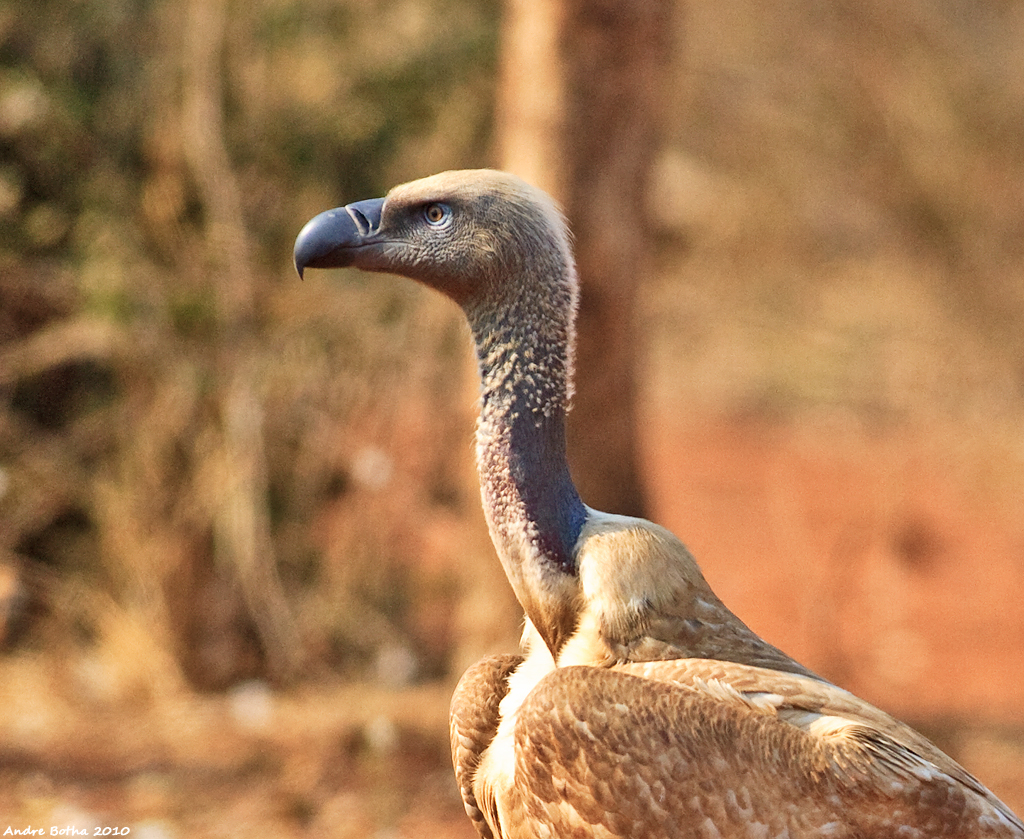
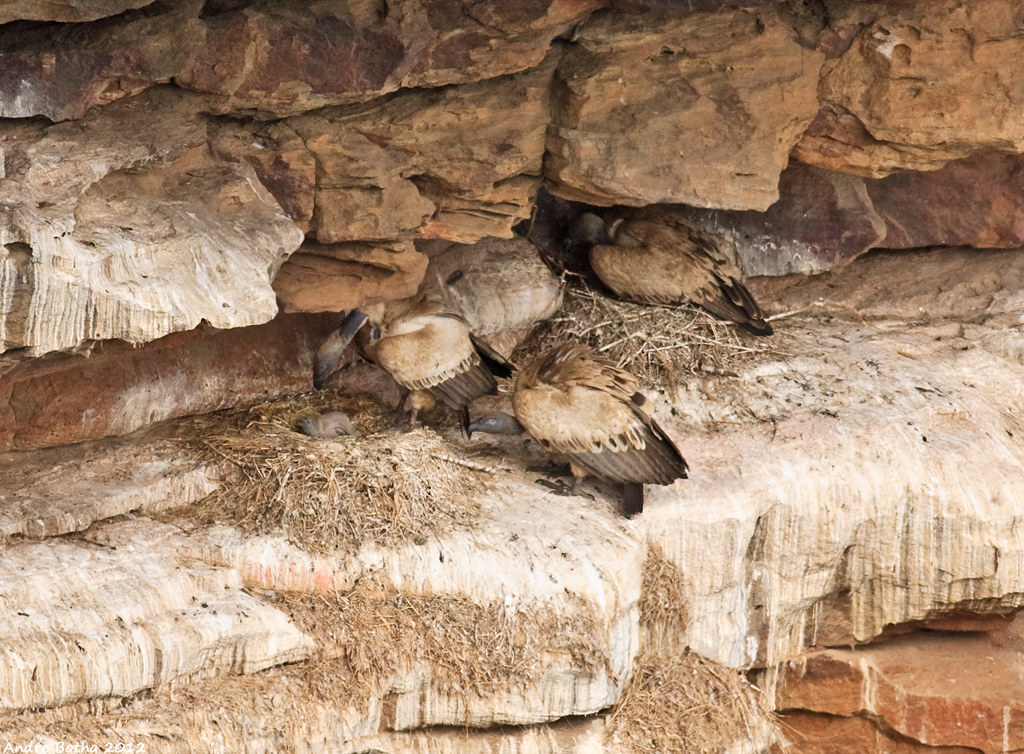
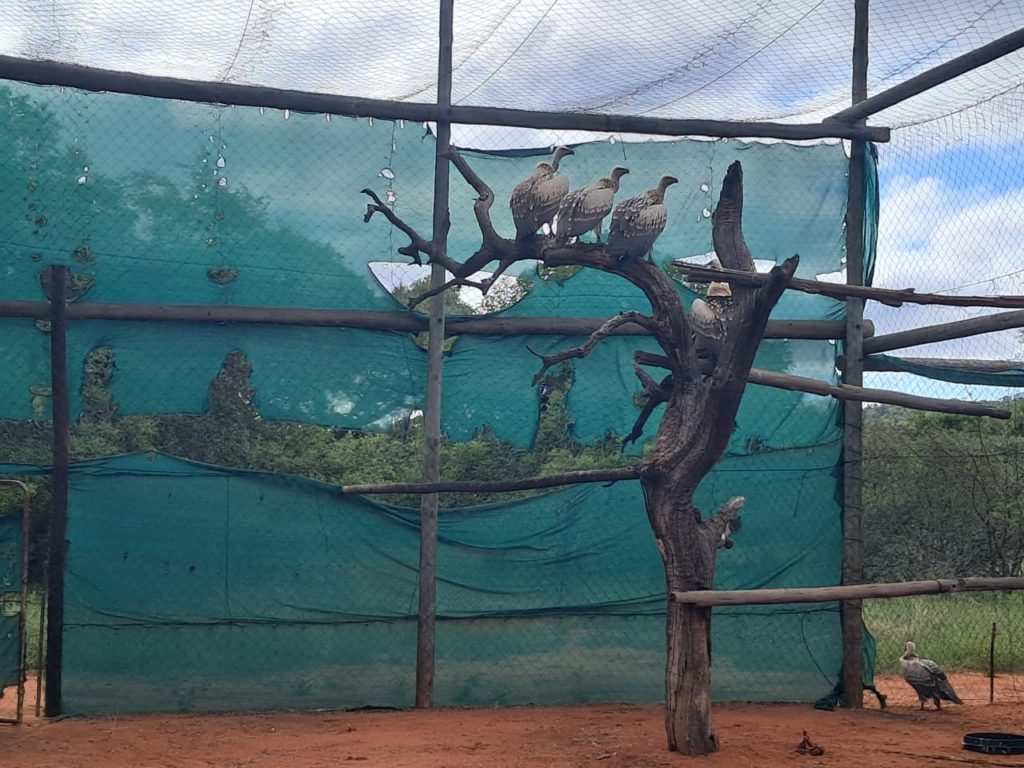
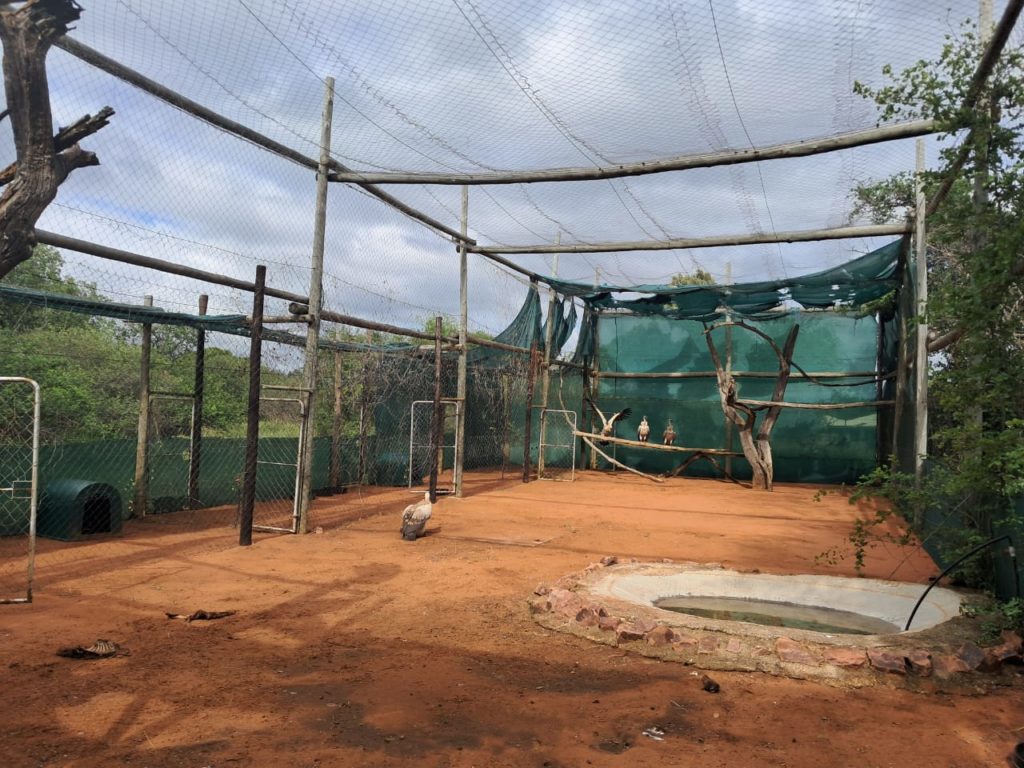
We’re excited to announce a new conservation and rehabilitation project to help and protect Vulnerable Cape Vultures in South Africa! Partnering with Blouberg Nature Reserve, our work involves supporting their initiative to rescue and rehabilitate young vultures.

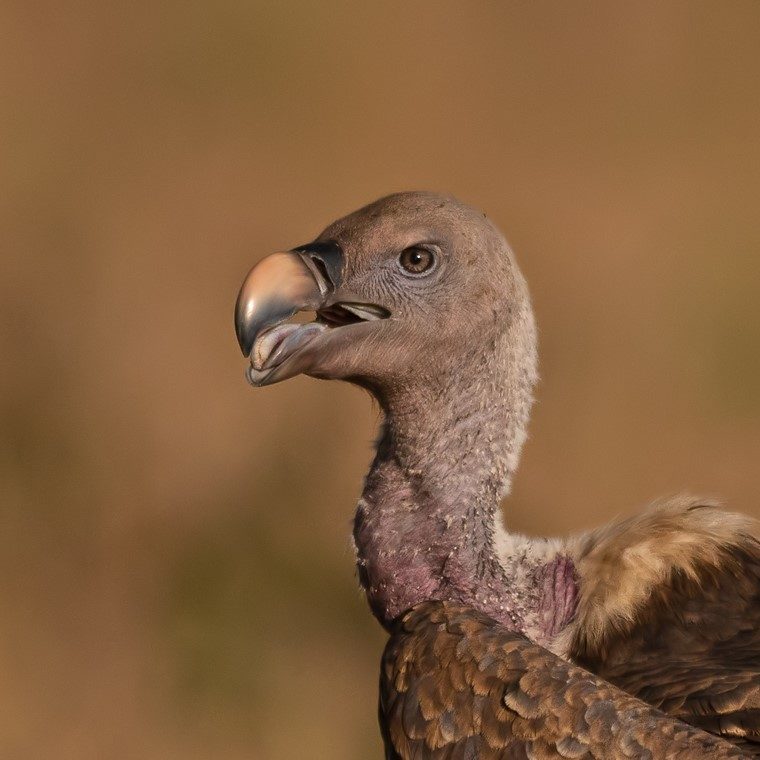
The stunning Blouberg landscape is home to approximately 1200 nests of Cape Vultures, making it one of the largest breeding colonies of this species in the world. However, these birds face a serious threat. Around the same time as their breeding season, the Blouberg area has its rainiest season. Huge storms and intense downpours often result in young vultures, who have only just begun finding their wings after fledging their parent’s nest, grounded and stuck. Sodden through, these birds are stranded, sometimes with catastrophic consequences.

Without a means of escape, the young Cape Vultures can be preyed upon by traders looking to capture animals for ’muti’ – the practice of using animal body parts for belief-based purposes. Vultures are sought after by these traders for muti because of the belief, amongst others, that by ingesting or smoking vulture brains, people will be granted the ability to see into the future or have prophetic visions. The muti trade has had devastating impacts on vulture populations in several parts of Africa, where vultures are captured and sold or poisoned in huge numbers, contributing to their declining populations.

In an attempt to counteract the trading of Cape Vultures, the Blouberg Nature Reserve launched a recovery project, offering rewards for collecting un-injured but grounded young vultures. At the same time, they also run an education programme to promote vulture conservation within the area. With more awareness raised about the plight of these vultures and how important they are, coupled with an incentive to bring the birds to the facility instead of selling them into the muti market, the hope is more farmers, citizens and traders will be encouraged to protect and conserve these precious birds.

Since the programme was started, unfortunately illegal trade prices offered for vultures has increased. Once rehabilitating over fifty vultures, the facility has struggled to keep up with new traders and increased demand from the  the muti market. With support from the Hawk Conservancy Trust, the reserve is now able to offer a larger reward than before, with aims to spark more interest from locals to bring in any un-injured grounded vultures they find, instead of the muti alternative.

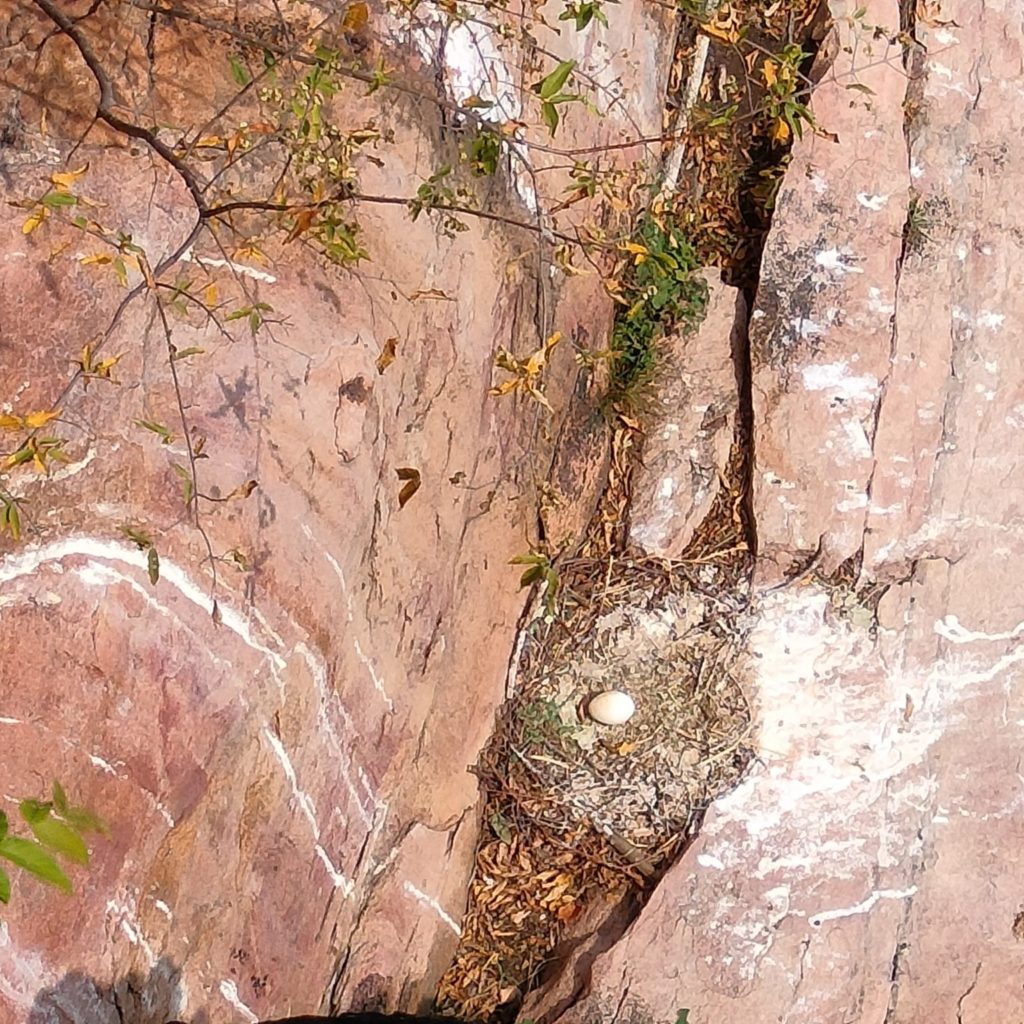
As well as financial support, the Trust is also planning to support the education programme run by the Reserve, inspiring even more people to recognise the importance of these incredible birds. With vultures only laying one egg each year, the survival of each young vulture is vital. Together, with your support, we can give these birds a chance at reaching adulthood – where they can in turn rear young of their own, keeping this species forever flying over the skies of southern Africa.

Photo credit: Andre Botha and Blouberg Nature Reserve

In the field with Gary

Posted on: by

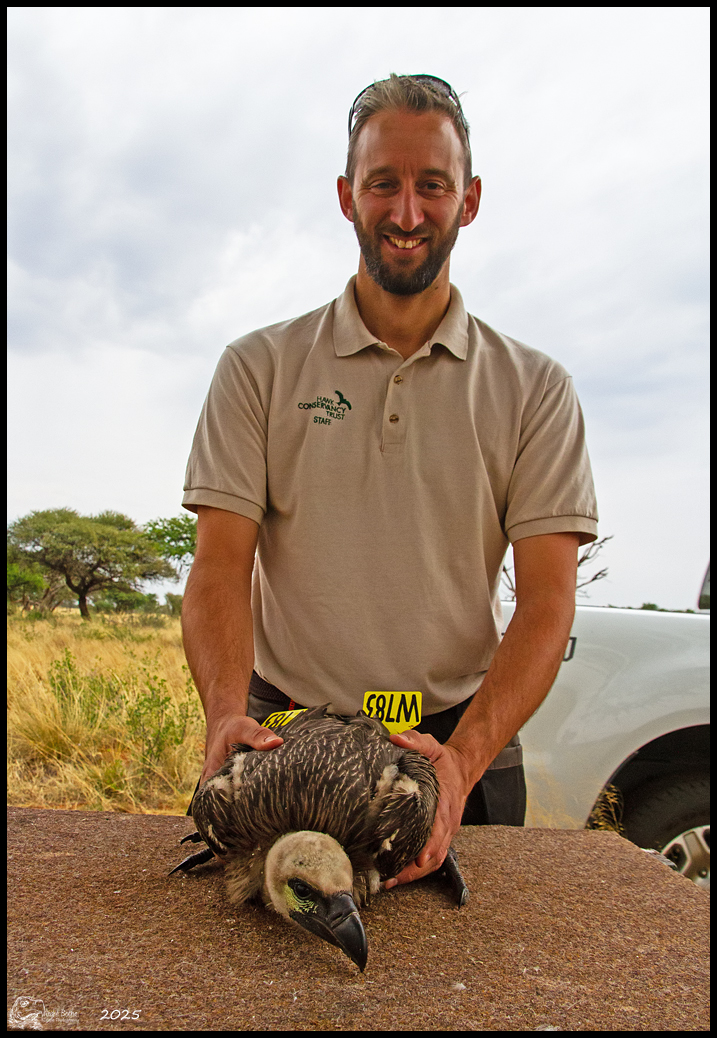
‘For twenty-five years, the Hawk Conservancy Trust has worked on and supported a long-term ringing project for African White-backed Vultures in South Africa. Supported by De Beers and working with local partners the Endangered Wildlife Trust and BirdLife South Africa, plus other partners including Gauntlet Conservation Trust and Puy du Fou, Trust team members spend two weeks each breeding season ringing chicks. With former lead and Head of Development at the Trust Andy Hinton now retired, this season Patrick King and I represented the Trust.

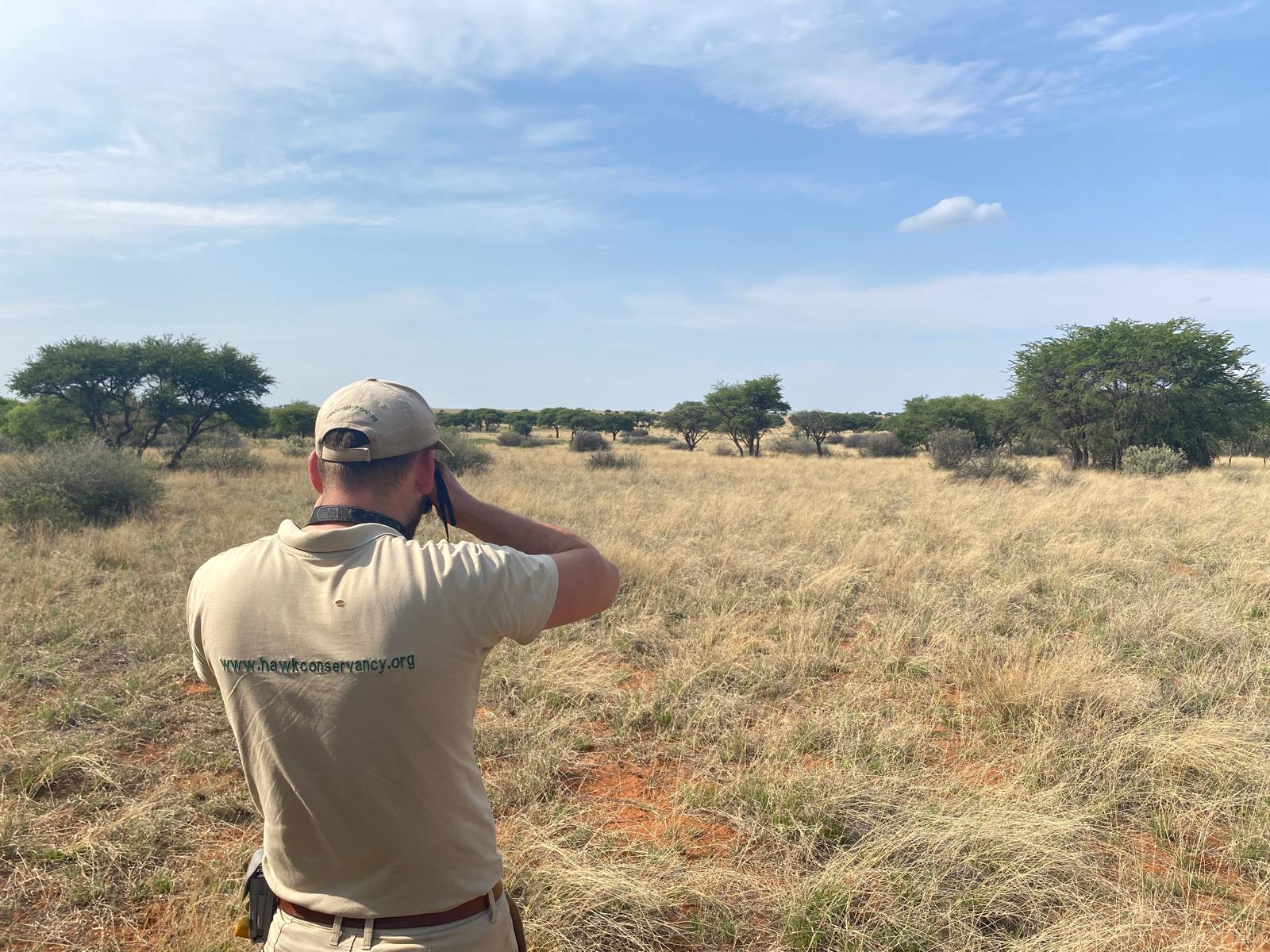
The main focus is across De Beers’ Dronfield Reserve, an area with one of the biggest and most important breeding colonies of Critically Endangered African White-backed Vultures. Each morning, the team are usually up at the crack of dawn, where we meet for a briefing with Project Leader Angus Anthony on where the nests are located that we will be checking that day. The nests are mapped out following checks carried out by Angus earlier in the season, establishing if they are likely to be used by a pair for rearing their young. A plan is made and then we’re all jumping into the vehicles and heading out into the wild!

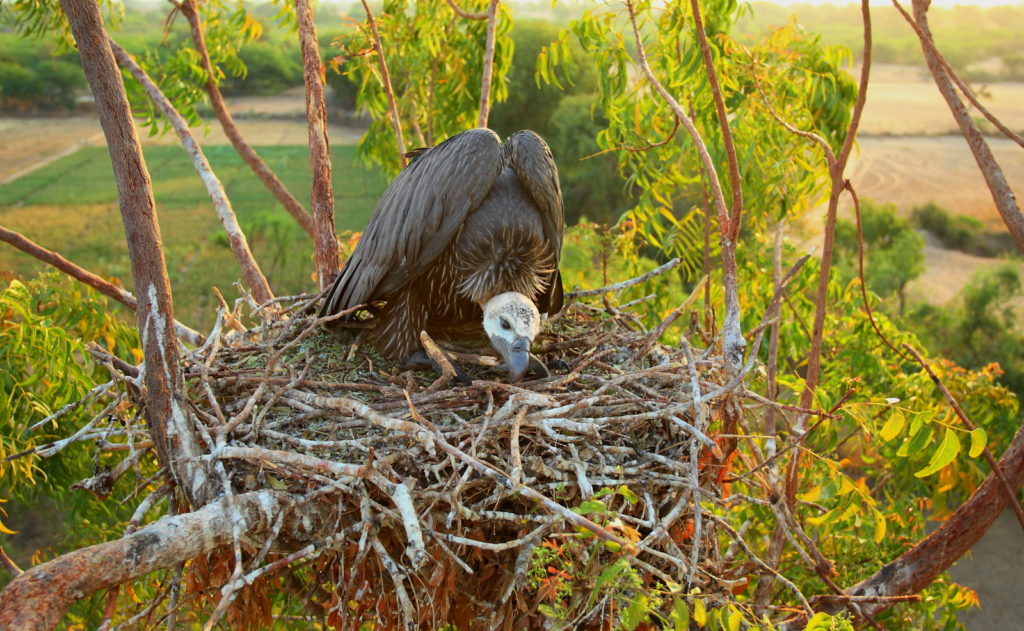
As we approach a potential nesting tree, there’s a few key signs we look for to see if the nest is being used. A key sign is parents sitting on the nest, that usually fly off as our vehicles pull up, circling overhead or keeping watch from a neighbouring tree. We also check for signs of life, like feathers on the ground or a ‘white-wash’ of vulture poo in the branches – these are usually signs someone is home.

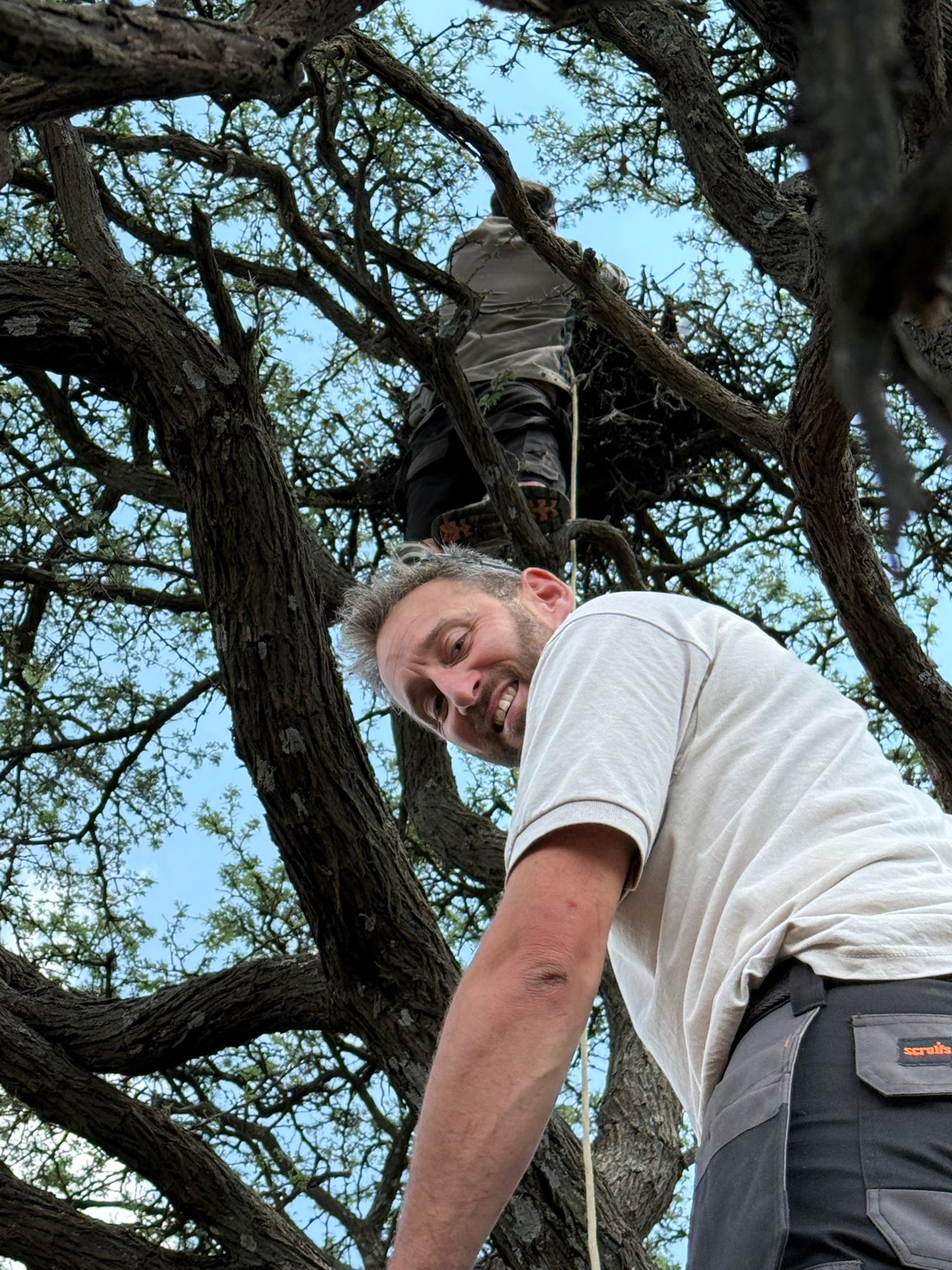
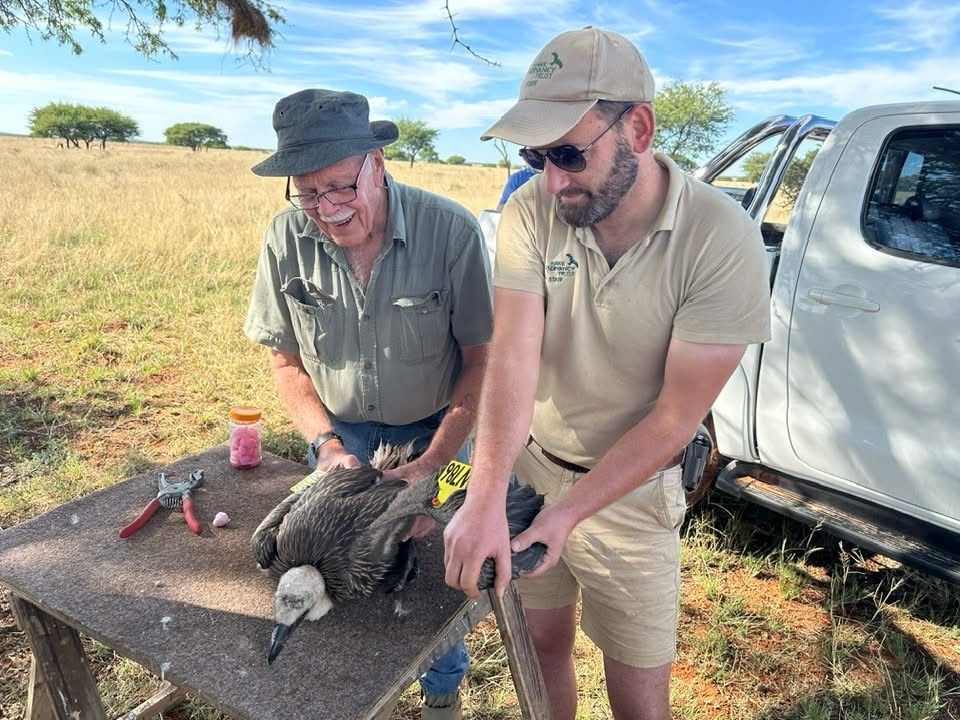
If it all looks viable, it’s time to split up. The tree team’s job involves securing a ladder, climbing the tree and popping the young vulture into a basket which is then winched down to the ground team. This team then carry out a general health check on the chick, take its measurements, and fit them with an identification leg ring. The chick is then lifted back into the nest before we pack down and move to the next nest, repeating the process until we start to lose the light. The team aim to visit around twenty nests a day, before heading back to camp for a good wash ready to begin the process all over again at first light.

Each nest visit takes around 15-20 minutes, where the parents are often sitting close by, waiting to come back as you start driving away. It’s always nice to see them flying back to the nest as we drive off to the next nesting site. From all the nests we checked, most of the chicks we ringed were around 6-11 weeks old. At this point they’re mostly fully grown, with lots of feathers and nearly ready to leave the nest. Happily, most looked fairly healthy. With no rhinos on this reserve, the risk of carcasses being poisoned is a lot less. We did happen to see a few carcasses on our drives, with many vultures feasting there. This was a real positive. Luckily, we only came across one deceased chick – about eight weeks old, with no real clear reason as to what had happened.

One of the moments that really stood out to me on this trip was visiting a nest with a very young chick in it. Most chicks are at a feisty age and let you know they’d rather be staying put in their comfy nest! But this one was a real tiny youngster, probably only a week or two old. It was small enough to fit in your cupped hands, and a real fluff-ball! It was absolutely gorgeous, and everyone gathered round to coo and have a look.

You can usually tell when approaching a tree whether it’s an active nest from those signs of life. If you pull up and the parents don’t fly off until the very last minute, sometimes it indicates they are sitting on an egg, or even a very young chick that is only a few days old and still heavily reliant on the parents. If this is the case, we’ll give the nest site a scan using a camera attached to the end of a very long extendable pole to check on how it’s getting on. If it’s too small to ring, we’ll leave it be.

This data is all still recorded, as well as other sightings of nests, wildlife and activity we see on our drives across the savannah.

As we were in the area, which is in the middle of nowhere, we also checked in on a Secretary Bird nest that had been recorded as potentially active earlier in the season. Amazingly, the nest had three beautiful chicks in it! We saw lots of other birds of prey, including a Secretary Bird actually hunting using the iconic kick we’ve all come to love, and one bobbing its head down into the grasses to feast on insects. On one drive we spotted a Martial Eagle surveying its surroundings from a telegraph pole, and we even saw a pair of Lanner Falcons hunting together – a male and female picking off their next meal from a group of Starlings.

As you’re driving through these immense and massive environments, you do get to see so much. We saw herds of giraffe, packs of lions, African Wild Dogs, Spotted Hyenas and more. What wewere constantly warned of, was that we were   surrounded by things that do want to eat you! Whether it’s thorny plants, spikey bushes, or animals looking for their next meal. We were interrupted during one nest check by a herd of Buffalo, from which we quickly jumped back into the vehicles for cover. One nest tree even had a Sociable Weaver Bird nest with an unwanted visitor – a Boomslang! The most venomous snake in all of Africa, which quickly slithered into the tree branches and watched us as we worked.

As well as the actual monitoring work we are doing, there is also a huge emphasis on education. We chat to the farmers whose land borders the reserves, engaging in ways they can protect their land and livestock without needing to poison carcasses that might affect the vultures. Last year we held a talk at a local school on vulture conservation and why it’s so important – and sitting in that classroom watching the next generation learn to love and appreciate vultures as much as we do was a truly touching moment that really felt full circle.

It’s been a privilege to be a part of this long-standing project. Every nest reached, every chick counted, and every conversation with a farmer adds up to something bigger—a future where these important birds still fly high above. Being a part of this conservation work, even for a short time, is a humbling reminder of why what we do matters and why we must keep fighting for the species that cannot speak for themselves.


The winner of the 2025 Marion Paviour Award!

Posted on: by

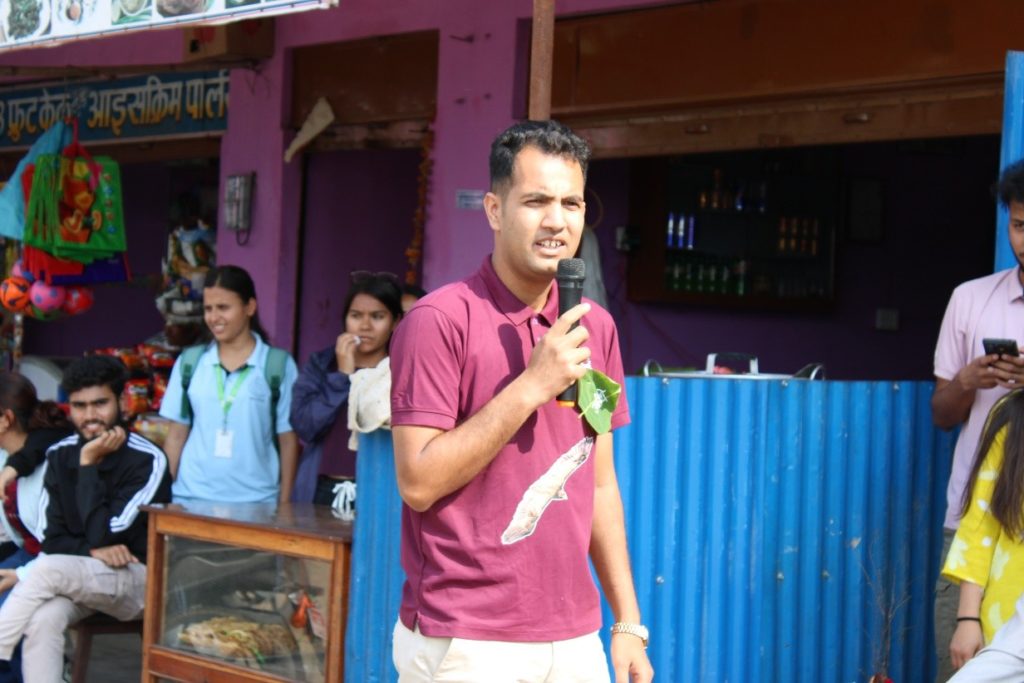
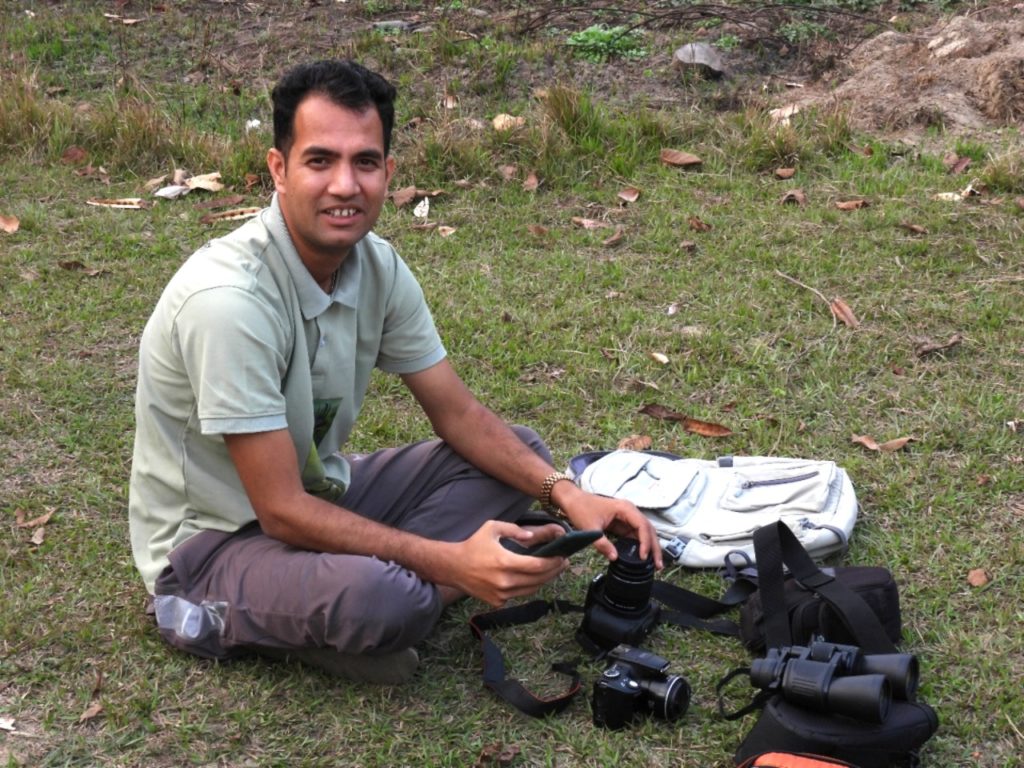
We are very excited to announce our 2025 Marion Paviour Award winner – Samik Bista!

Samik’s work will be on the stunning Steppe Eagle. These Endangered eagles get their name from their preferred breeding habitat – the steppes of Central Asia. While the current estimate for their global population stands at just over 31,000 pairs and around 94,000 individuals in total, this is based on studies from 2015 and 2016, and there may well be fewer now as their population trend is declining.

Alarmingly, a study in 2014 showed that Steppe Eagles are also impacted by exposure to diclofenac (a non-steroidal anti-inflammatory drug (NSAID) used to treat livestock) in the same way that many vultures in South Asia are and have been – a major conservation concern that we have worked on for many years. The use of these toxic NSAIDs have resulted in an unprecedented decline in vulture population numbers in South Asia. This serves to underline the importance of our work with our partners in Asia to help remove toxic NSAIDs from the market but also the need for wider collaborations and work on different species, such as with our Marion Paviour Award winners, to try and best conserve and protect as many birds of prey as possible.

Samik’s work will take place in Nepal, where a considerable amount of work to ban NSAIDs and make the environment safer for birds of prey has already happened and is yielding positive results for vulture populations. Threats to vultures and other birds of prey still exist here nonetheless, and Samik’s work will look at how to address some of these and encourage long-term and sustainable protection of these birds through engaging communities in this work.

Hear from Samik below as he introduces himself and his project and what winning the Hawk Conservancy Trust’s Marion Paviour Award means to him.

“My name is Samik Bista, and I am leading a project titled “Breaking Barriers to Steppe Eagle Conservation through Research, Education, and Community Action in Hetauda, Central Nepal.” The Steppe Eagle, listed as Endangered on the IUCN Red List, is experiencing rapid population decline from threats including habitat loss, persecution, and collisions with powerlines. Despite regular winter sightings in Hetauda, very little is known about what habitat they are using and what local threats they face. Through systematic surveys and community engagement, this project aims to generate vital data, identify key habitats, and inspire local stewardship for Steppe Eagle conservation.

The Marion Paviour Award will be transformative in enabling both research and community action. It will directly support our field surveys, awareness campaigns, and capacity-building programs, allowing us to train local birdwatchers and students as ‘Steppe Eagle Guardians.’ Beyond funding, this award provides recognition and encouragement that strengthens my commitment to raptor research and conservation. It will help me develop advanced field, analytical, and leadership skills essential for my long-term goal of becoming a conservation biologist dedicated to protecting birds of prey and promoting community-based wildlife conservation across Nepal.”

Come along to the Trust to see Stilton, our Steppe Eagle, as he showcases these stunning birds, helping raise awareness about the species and the realities the wild population faces.

Our year conserving birds of prey

Posted on: by

With your dedicated support, our 60th Anniversary year has been one of our biggest yet. From helping us approach one of our most ambitious fundraising targets ever to massive steps forward in our conservation work, you’ve helped us fly in our mission of conserving birds of prey and their habitats. As this monumental year draws to a close, we’re reflecting on what we’ve achieved with your help, and looking ahead to what 2026 holds.


Lappet-faced Vulture

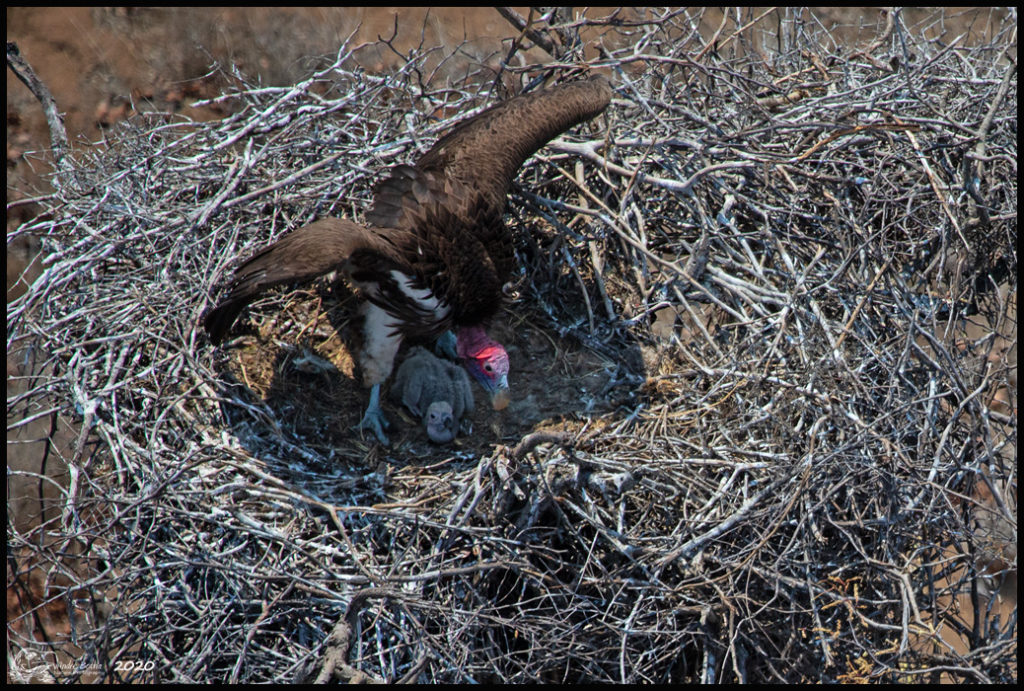
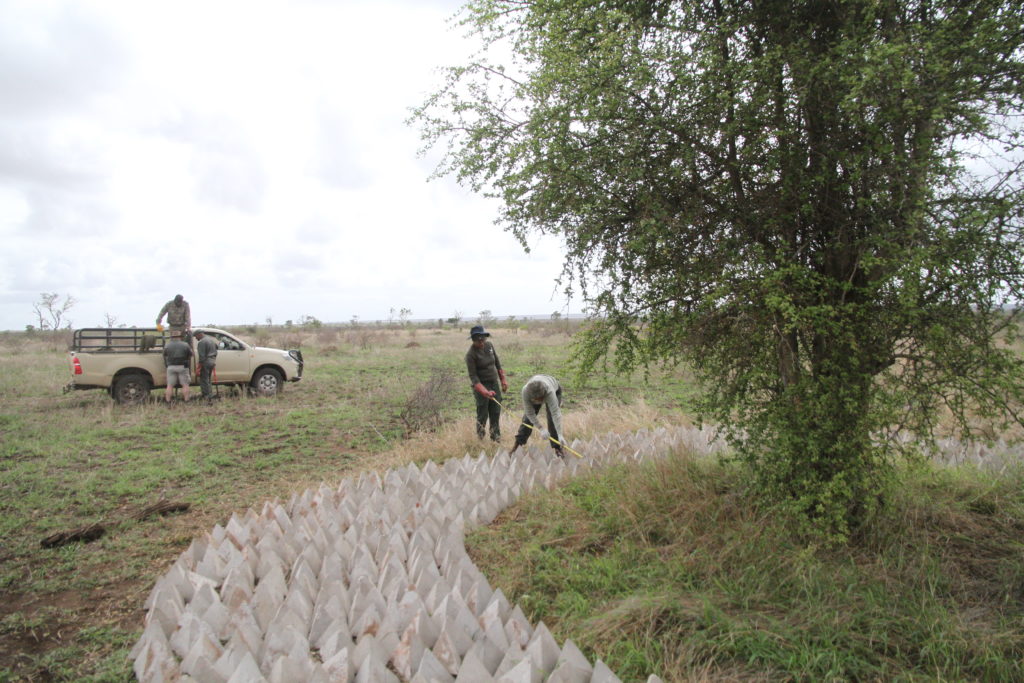
This year has seen us realise an exciting development in our conservation work – the launch of our very first ’tree-safe installations‘ to protect Lappet-faced Vulture nest trees from elephant damage! The money raised in our Team Challenge fundraising from last year has been essential in progressing our efforts with practical interventions. This represents a major step forward for the project, moving from years of monitoring to actively testing a hands-on intervention strategy.

Elephant activity poses a serious threat to the vital breeding population of Lappet-faced Vultures in Kruger National Park, with many nesting trees being pushed over and lost. To tackle this, we are implementing a protection method built on a traditional strategy – installing large concrete blocks in a ring around the base of the nesting trees. These blocks are pointed and act as a physical deterrent, preventing elephants from reaching the trunks while leaving other wildlife and the surrounding habitat unaffected – key criteria for the mitigation strategy.

Each installation is a huge effort, taking around 2,000 concrete blocks per tree, plus significant logistical work to transport and install them deep within the bushveld of Kruger National Park. Despite the challenges, the design meets our goals perfectly as it is durable, low-maintenance, and minimally invasive.

We are starting with a pilot phase that will protect and monitor six trees, and assessing the effectiveness of this approach before expanding to safeguard more nesting trees in the future upon success of the pilot. It is a bold and practical step toward securing the future of South Africa’s Lappet-faced Vultures.


Central Asian Vulture Project

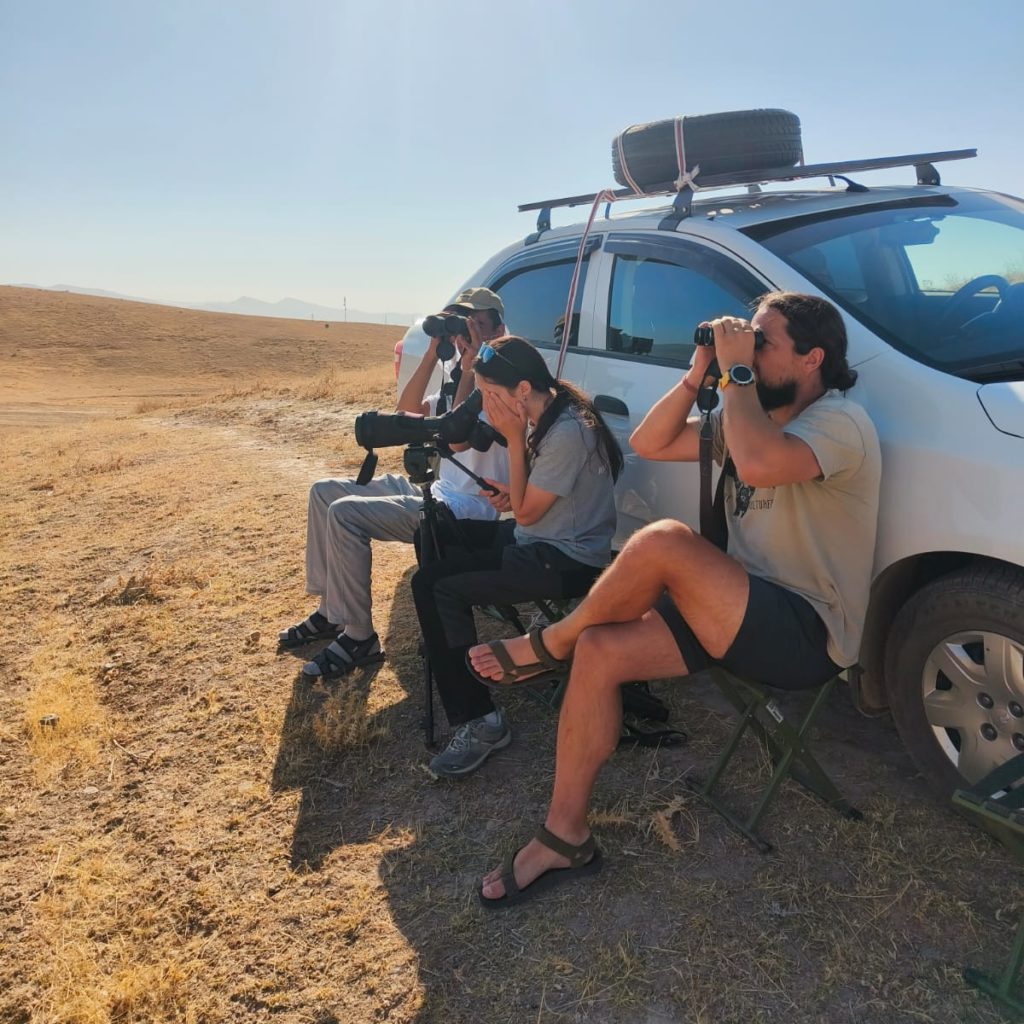
Fieldwork this year included five successful congregation counts in Uzbekistan and one in Tajikistan, as well as the identification of some more nesting grounds. These provide valuable data towards one of the main objectives: estimating the size of the Egyptian Vulture population in the region.

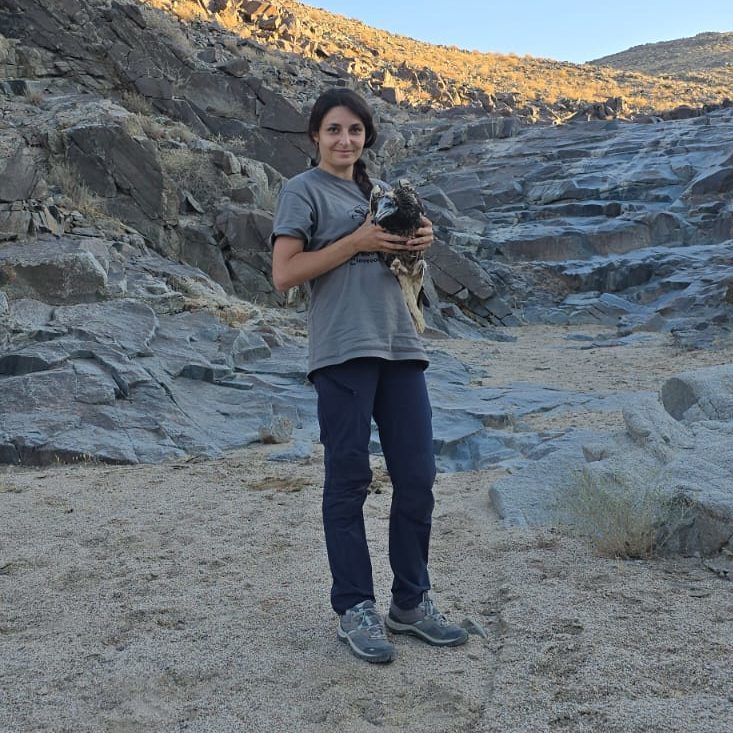
We also expanded fieldwork into Kyrgyzstan for the first time, meaning birds have now been tagged in Uzbekistan, Kazakhstan and Kyrgyzstan for this project. This year saw three juvenile Egyptian Vultures tagged in Uzbekistan and two in Kyrgyzstan, while project partners in Kazakhstan added a further four birds. Despite these positive steps, we have also seen several tags lose signal in the second half of the year, with a number of these confirmed as mortalities. While this is always upsetting to see, the loss is not in vain because it is providing incredibly important information on survival rates and threats that face this migrating population. As we continue to track more birds, this information will build up to provide an incredibly valuable picture that can underpin practical conservation strategy and efforts.


Pakistan Vulture Recovery Project

The PVRP project had a productive year in the community despite some significant challenges. The establishment of three Nature Clubs in three schools in District Kotli in Azad Jammu and Kashmir was a key achievement. Awareness sessions with the students aimed to increase their knowledge and sensitivity to the importance and ecological role of vultures in the ecosystem, the threats these birds face, and the role students and local communities can play to protect vultures.

The project has also received some funding to enhance its national-level advocacy efforts, which aim to strengthen regulations and promote a ban on vulture-toxic veterinary drugs, specifically aceclofenac, ketoprofen, and flunixin, in Pakistan. Pakistan, thus far, has lagged behind other countries in the region in banning additional vulture-toxic NSAIDs. This new work represents a crucial step toward accelerating progress in this area. The project ultimately seeks to use targeted, evidence-based advocacy efforts to secure a nationwide ban on these harmful drugs.

Breeding in Changa Manga continues successfully, with two more White-rumped Vulture chicks successfully fledging at the breeding centre this season. The breeding centre now houses a total of 33 White-rumped Vultures, with all vultures in good health and feeding well.


Kestrel Conservation Monitoring

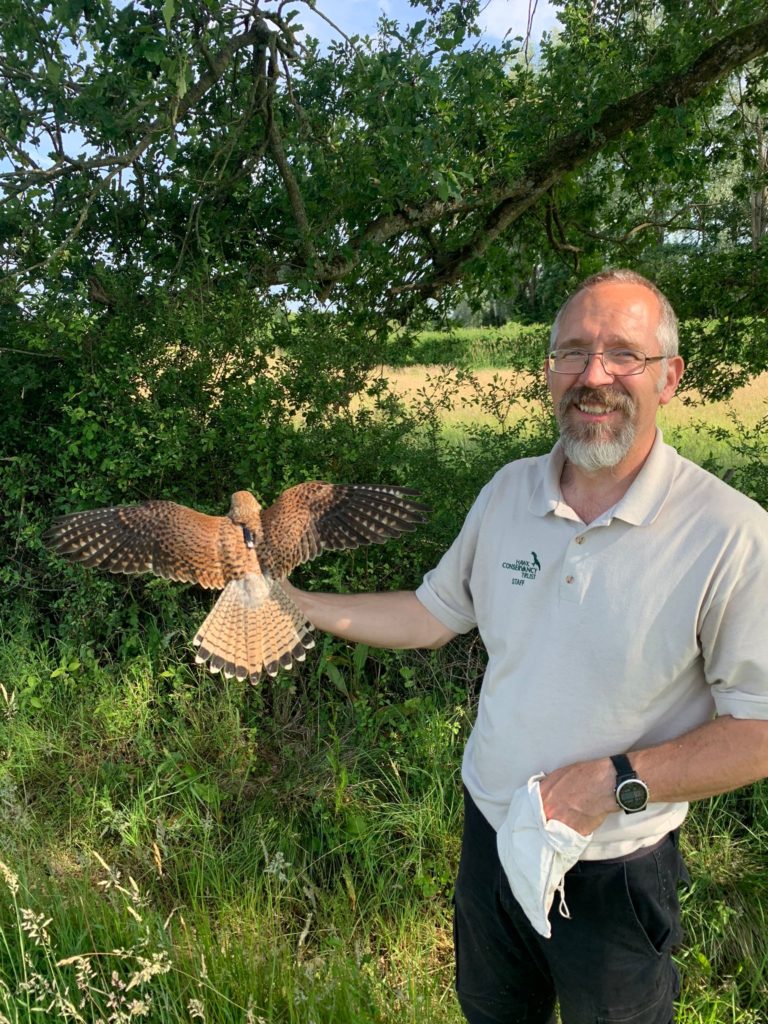
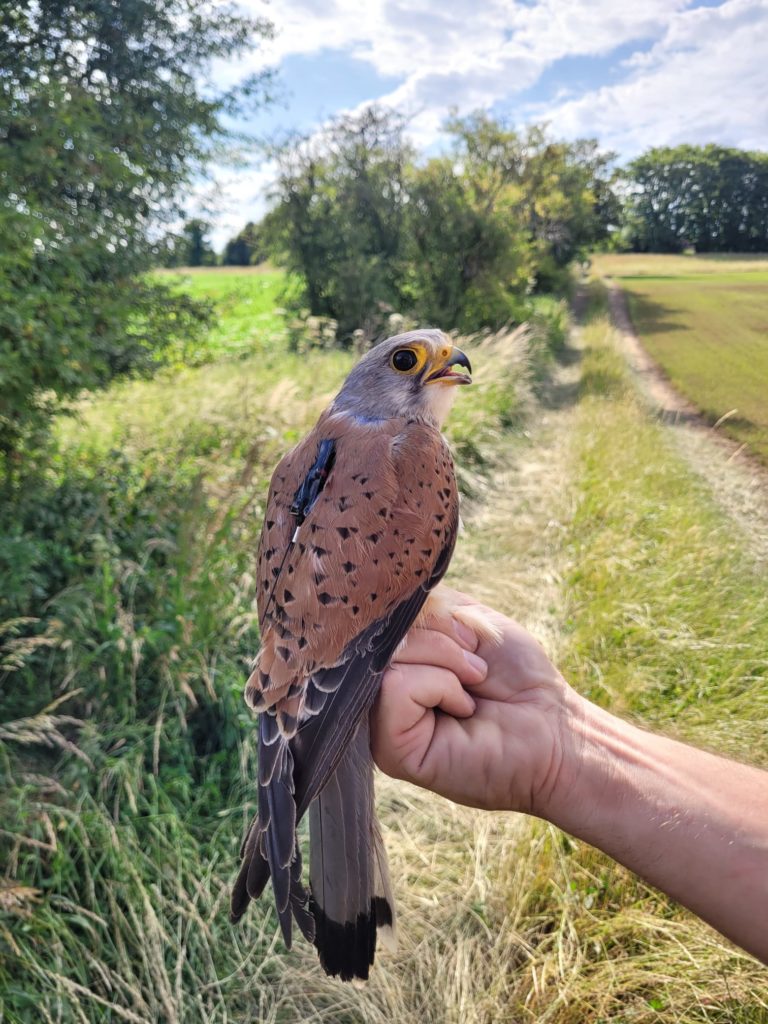
This year, our Team Challenge fundraising has supported our Kestrel Monitoring Conservation work, and it has been an exciting year of progress! We have launched a brand new phase of research – tracking adult nesting Kestrels. This is the first time such movement data has ever been collected in the UK, marking a major step forward in understanding these incredible birds and the reasons behind their decline in many parts of the country.

So, what exactly are we hoping to gain from the data?

The main aim of tagging adult nesting Kestrels is to find out which habitats and areas Kestrels prefer to use when raising their young. There are many factors involved and plenty of questions we expect to explore, but our key focus is on understanding how changes to the landscape, and especially those brought about by different environmental schemes, affect how Kestrels use these areas. By identifying where Kestrels concentrate their hunting across a landscape, we hope to measure how different habitat features influence their hunting success – and by extension nesting success – and once we know that, work to increase the amount of habitat that is most beneficial.

Working out how a species like the Kestrel uses its habitat is not easy though. One option is direct observation by fieldworkers, but this takes a lot of time, focus, and usually several fieldworkers, since the birds often move out of sight as they leave the nest area. Electronic tracking offers an exciting alternative, allowing us to gather detailed data with much less time in the field, and it means we can study more birds throughout the breeding season.

We have developed a safe remote system to capture the adult Kestrels in order to be able to tag them. The trackers equate to about 2% of the average weight of the lightest Kestrel. With many other birds, tags are fitted to their central tail feathers but this is not appropriate for Kestrels because of their tendency to hover during hunting, and it is likely the tags would impact their ability to do this efficiently. As such, we used a backpack harness attachment instead.

We aim to tag 20 Kestrels with satellite trackers, starting this year by successfully tagging three adult Kestrels (two females and one male) after developing our strategy and navigating some challenges in the field. We will continue to gather more data before completing a full analysis and drawing any firm conclusions but initial inspection of early patterns shows that the majority of time is spent relatively close to the nest site, with occasional trips further away.

Next year we will activate more tags and collect a lot more data. With this information, alongside data on their population numbers, where they nest, and how many chicks they raise from our raptor transects and Raptor Nest Box Project, we will have built quite a comprehensive picture of Kestrel lives in southern England. This can underpin the development of robust practical conservation solutions for them.

Here’s to a fantastic year continuing our work to conserve birds of prey in 2026!

Hawk Conservancy Trust grant winner published!

Posted on: by

Our 2023 Marion Paviour Award winner, Ivan and his work for that project, has recently been published in an academic journal – a fantastic achievement! We are proud to have supported Ivan in his project and this amazing milestone.

Ivan’s study focused on the Critically Endangered Rüppell’s Vulture. While they are a resident species in Uganda, their only one known breeding site in the country is in the Luku Central Forest Reserve. With support from the Hawk Conservancy Trust Marion Paviour Award grant, Ivan documented their population size and breeding success at a small colony inside the reserve, and identified specific threats to this vital colony as well as the surrounding habitat. Although once widespread across East, West and Central Africa, their population has radically plunged by more than 90% in about four decades, a heart-breaking loss that further underscores the importance of this breeding population.

The Luku Central Forest Reserve provides about 4,000 hectares of forest refuge in Uganda’s West Nile region, but this important species’ future in the region remains very uncertain. Talking about his study area, Ivan explained how the reserve sits near the border with the Democratic Republic of Congo (DRC), where conflict has driven thousands of refugees into Uganda’s Arua District. Refugees now make up nearly a quarter of the district’s 800,000 residents, many of whom rely on the reserve for charcoal production and farmland. Subsequently, once-dense forest has given way to scattered scrub. Even an important native hardwood tree, previously not typically used in the charcoal production, is now being felled regularly. Ivan explained that while they are a cliff nesting species, the tree in question, Antiaris toxicaria (part of the Mulberry and Fig family, Moraceae), is still used by vultures for nesting material and roosting, and it disappearing is a major concern for the future of this species in Uganda.

The impact is not solely the loss of habitat, but also the direct influence on these declining vultures and their behaviour. Ivan explained that the smoke rising from the charcoal kilns disturbs the vultures, particularly on the lower ledges of the cliff. As a result, they fly off. This can impact their breeding success, leaving eggs or young chicks alone and uncovered – at risk of predation or perishing. Ivan’s research of the colony showed that only 57% of nests monitored raised a chick successfully during the survey period, lower than recorded in other locations.

This is only one of several threats facing these birds. Hunters from outside Uganda cross the border, often on the hunt for Rock Hyraxes, will also steal vulture eggs and chicks. Expanding farmland and settlements in the area often attract other species like monkeys, baboons and corvids, which also raid nests. These animals also threaten vultures in another devasting way: poisonings. As a result of negative interactions with humans, many are poisoned, which leaves deadly toxins that also kill the vultures feeding on their carcasses. With vultures typically hatching just one chick per year, each loss is significant, and devastating.

Ivan estimated the population to be around 49 Rüppell’s Vultures, with just 14 breeding pairs – a worryingly small population compared to surveyed cliffs in some other countries. With the many threats they face and the low nest success rate, the future looks uncertain for these birds. There is a lot of work to be done to ensure this population can be sustained and begin to grow, but this is not a mission Ivan is shying away from.

Now back out in the field, Ivan is hard at work monitoring the Ngolonyako Cliff, as well as a new site discovered towards the end of his previous study. This second site has around 60 nesting pairs, which is a really positive find for the area, and for Rüppell’s Vultures in Uganda and the wider region. He will continue to focus on collecting data on population dynamics, breeding success, and threat assessments, with the goal being this data can inform the next steps towards conserving this species in the area. It is great to see Ivan’s research have such an impact and benefit to such an incredibly threatened but brilliant species, as well as to Ivan’s blossoming conservation career – Marion’s leading hope from this award.

School visits to meet birds of prey

Posted on: by

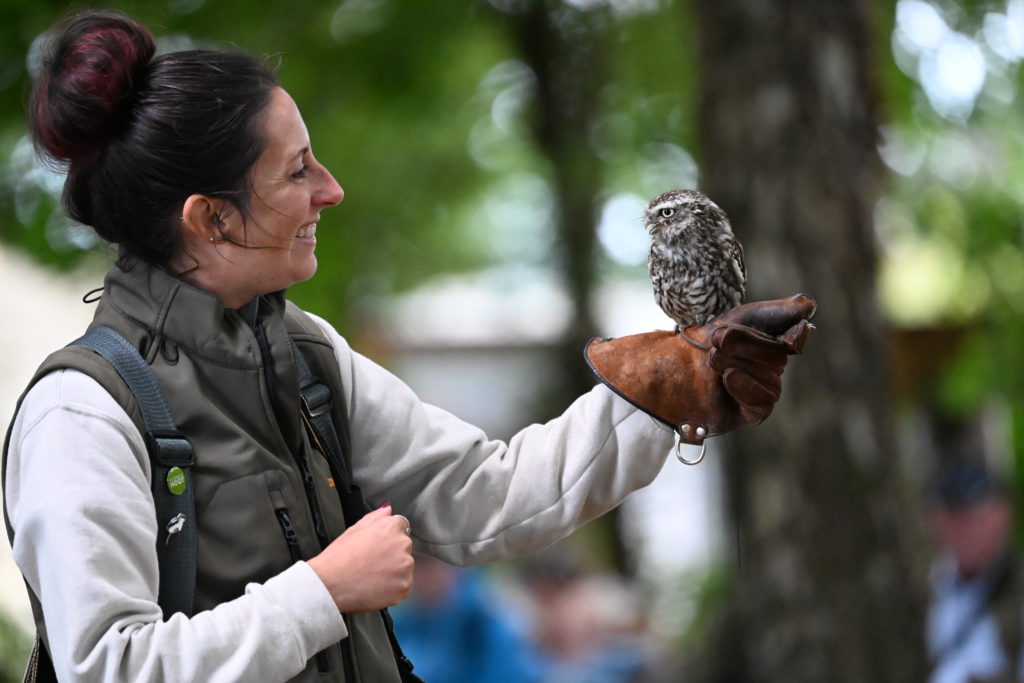
As well as working with and flying our beautiful birds of prey, many members of our Bird Team work across other areas of the Hawk Conservancy Trust. Senior Bird Team member Jillian, who joined us early last year, works closely with our Principal Educator Jenny to engage with the thousands of students that visit each year. We caught up with Jillian to hear all about how special it is to watch students fall in love with birds of prey.

“What a whirlwind of school workshops! After a busy summer, where in June alone we had over a thousand students come to the Trust, we are now jumping right back into another school year. I have been working with Jenny, our Principal Educator, to bring as many schools as possible to the Hawk Conservancy Trust so the next generations of conservations and biologists can be inspired.

While I love getting to work with our brilliant birds every day, my favourite part of my job is to run the workshops for visiting schools. In these workshops, students get a presentation from one of our staff members about the workshop topic, as well as a chance to meet a bird up close! We have multiple workshops to choose from, all of which align with Key Stages in the national curriculum. While we do recommend certain topics for different ages, most of the workshops can be adjusted to suit a variety of comprehension levels.

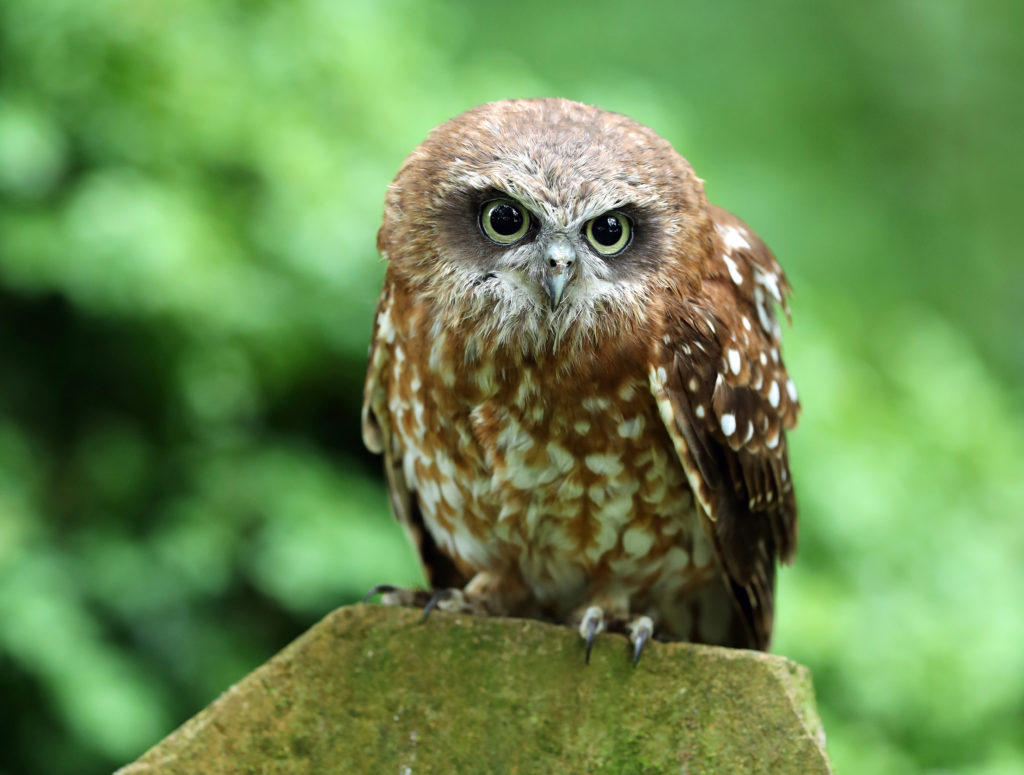
Usually these groups contain a wide range of students’ feelings towards birds – while we have many that are excited to be at the Trust and answer all of our questions about birds of prey, we also have students who can be nervous to meet the birds. These nervous students are actually the reason I love running the workshops, because the most rewarding part is seeing them change their opinions. Luckily, we have a variety of different birds at the Trust and this allows us to tailor these workshops to the specific groups. For example, a Reception class of students usually do best with meeting Wispa our Morepork Owl. Wispa is a small, very confident owl with an adorable trilling call. She is perfect for the smaller students, and will often think she herself is a Reception student and sit on the benches next to them like she is ready to learn all about owls! Wispa is a great introduction to birds for our younger guests (and our older ones as well – she wins over a lot of people!).

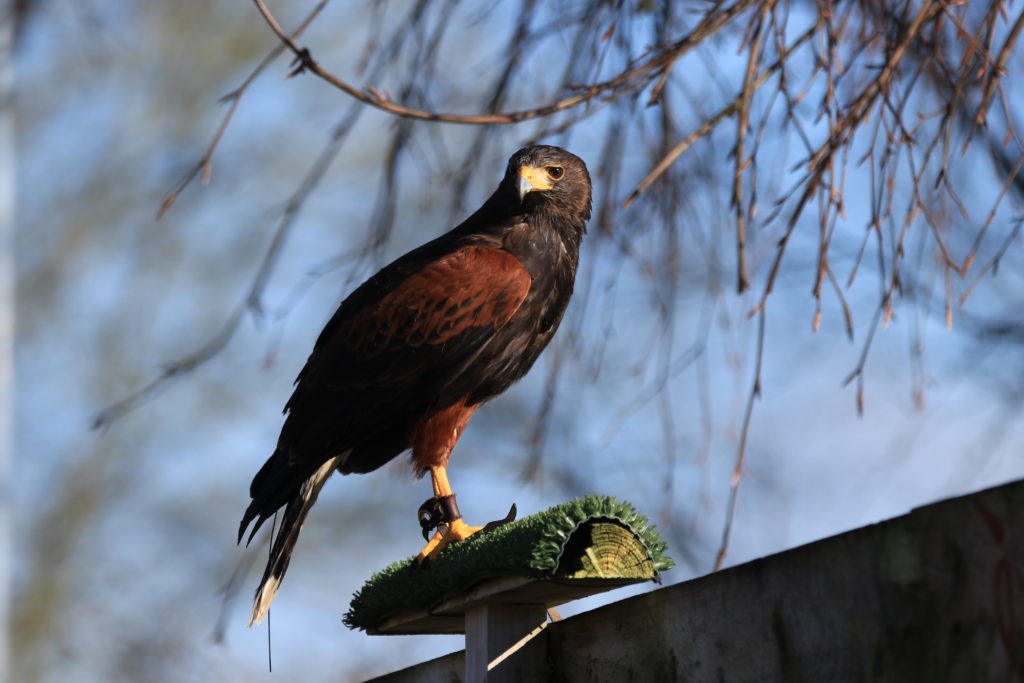
For the older students, late Primary or early Secondary, I usually introduce them to one of our Harris’s Hawks. While they can seem more larger than a small owl, they have so many interesting adaptations to talk about that it sparks a sense discovery in the students. They are able to comprehend more challenging concepts, like how Harris’s Hawks hunt in teams rather than alone, and how that helps them to survive in their environments.

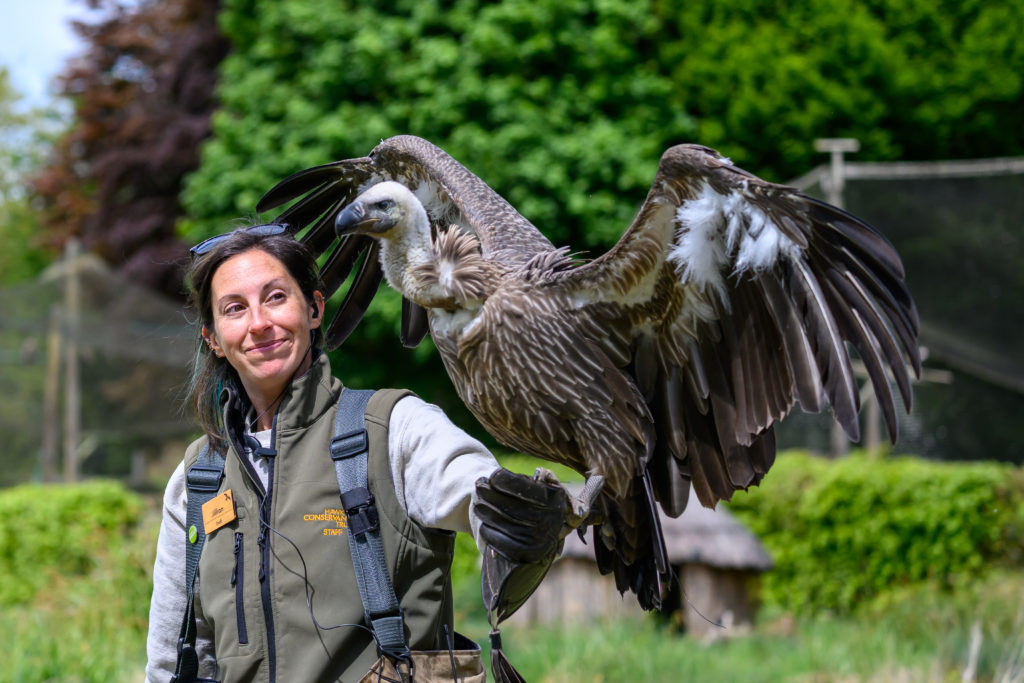
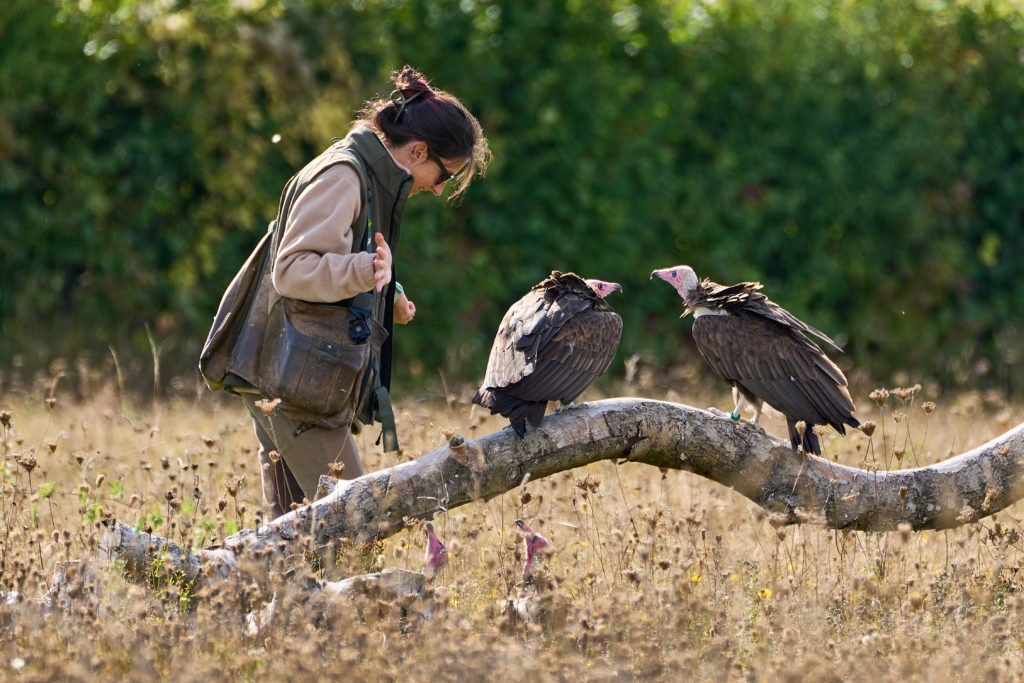
However, nothing compares to the sense of accomplishment I have when it comes to our vultures. Helping to spread the message about the plight of vultures is one the Trust’s biggest conservation projects, as many are Critically Endangered. Yes, they eat carcasses, but vultures are nature’s clean-up crew, and by getting rid of those carcasses they are potentially helping to stop the spread of some diseases. The importance of vultures can be a hard concept to grasp for students (or even adults), especially as we don’t have any in the UK for a first-hand experience. But we have found that the best way to change someone’s negative opinion on vultures is to introduce them to one up close and personal. You can imagine that there is usually a lot of excited screaming from the students when they first get introduced to a Hooded Vulture flying low over their heads. But as they learn all of the interesting adaptations of vultures and see how they are applied directly in front of them, you can see those preconceptions slide away and be replaced with empathy, especially when we talk about how at risk these birds are. During the Conservation in Action workshop we actually take a word-association poll from the students before they meet a vulture and after, so they can physically see how their own opinions have changed.

That final part of the session is why I have the role I do. It makes me so proud to see the students, who were so nervous or unsure of these birds, now actively like them and want to help conserve their species. Changing opinions and feelings can be the first step towards saving some of the world’s most endangered species, and I am so grateful to be a part of that process. We want to encourage the next generation of conservationists, and it is such a powerful thing to see when that moment begins for a lot of people. Education classes at the zoo were what sparked my interest in wildlife, and I am happy to be continuing this process, introducing to students to the amazing world of birds of prey, one small owl at a time.

Jenny and I are looking forward to another full year of schools visiting the Trust, hoping to surpass our numbers from the previous year and reach even more students with our conservation message. If you are a teacher and interested in one of our workshops, please email our Education Department at education@hawkconservancy.org for more information and booking enquiries, or head to our Education webpages here.

Here’s to the next generation of aspiring conservationists!”

©2026 Hawk Conservancy Trust