


X

Seeing the world through a different lens

Posted on: by

As we stagger our way through yet another heatwave, summer is well and truly underway, heralding the end of another exciting school year. We have been delighted to welcome over thousands of  pupils to the Hawk Conservancy Trust since for another year, providing memorable experiences that enhance their school learning.

We have been lucky enough to work with many inspirational schools and students, with one in particular group from last year standing out as a rewarding experience for Trust staff and students alike. Toynbee School, based in Southampton, is a secondary school with a specialist department supporting students with visual impairments. This year the department celebrate their 30th anniversary, a fantastic achievement that we look forward to marking with them.

We are privileged that the school chose the Hawk Conservancy Trust for their annual department trip in July 2025, providing an invaluable opportunity to work with the staff and students to develop our own provision for visually impaired students and visitors. Many had never experienced a flying display before or been able to get close enough to fully appreciate and visualise these birds.

Working with the dedicated staff at Toynbee School, we created a specialist workshop that focussed on engaging multiple senses. Students could feel the incredible differences between an owl and vulture feather, hear the distinctive calls of some of our more vocal feathered colleagues (I will let our regulars decide which ones they may have been!) and dive into the world of owls through one of our more popular activities…an owl pellet dissection!
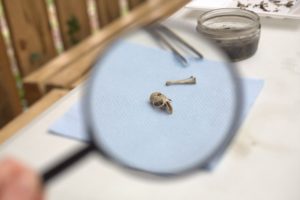
Owls have a really cool way of processing their food, the outputs of which we as scientists can use to find out more about them and the ecosystem. Owls have weaker stomach acid compared to other birds of prey, and as they swallow their prey whole, this often includes elements that they cannot digest, such as bones and fir. This is later compacted into a mass that is brought back up again in a neat little package called a pellet.

For anyone who has not had the delights of picking apart an owl pellet, let me paint the scene for you! Twenty children armed with tweezers and gloves picking apart a gorgeous bit of owl vomit, extracting bones and other animal remains that made up the owl’s last meal! It sounds worse than it is as the the pellets are dry and brittle at time of dissection.  It is always a popular activity with children and this was certainly the case with the children from Toynbee School.  Children with varying degrees of visual impairments were able to immerse themselves in the wonderful world of birds of prey, using adapted resources provided by the school, and specialist equipment such as microscopes to help them visualise the amazing things they were finding.

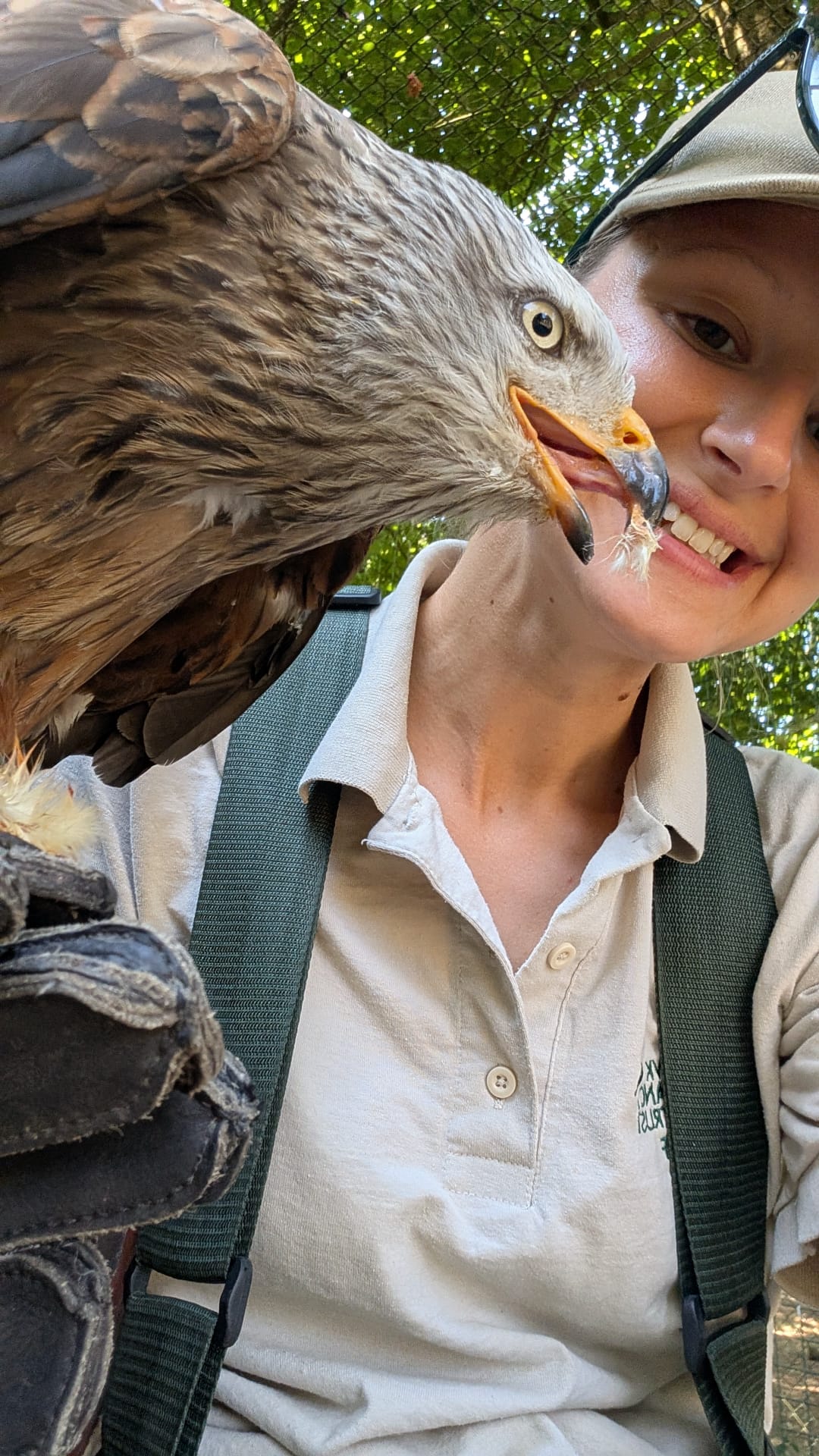
One of the most memorable and emotional part of the day came after we had enjoyed the first flying display of the day – Wings of Africa. What better way to bring the children even closer to the world of birds, than to meet and fly one of our beautiful birds. This was a surprise for the students, and a very special treat, arranged with the school in advance, as we do not usually have school groups flying the birds themselves. The excitement and emotion from the students at this precious moment was truly magical and will remain one of the highlights in my career. I am unashamed to say that I too found the experience emotional, to see the wonder and joy in a child’s face as they stand shoulder to shoulder with one of nature’s beautiful creatures.

We were delighted to achieve “Highly Commended” in the BIAZA Accessibility Awards for the project, which was the icing on the cake to an already fulfilling project. The award funding will be allocated towards future projects focussing on visual impairment provision at the Trust, following the learnings and success of our day with Toynbee School. The students at Toynbee School have certainly inspired me to explore new ways of how we can engage people of all levels of vision with our important conservation work.
What is the story with owl eye colour?

Posted on: by

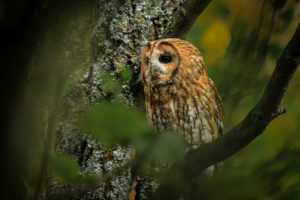
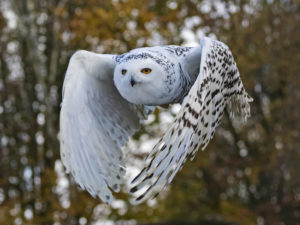
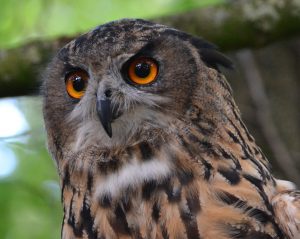
If you’ve ever spent time watching owls, be that in the wild or in human care, in the UK or overseas, one of the things you’ll no doubt notice is just how different their eyes can be. At the Hawk Conservancy Trust, we have some wonderful examples. Sweeney Todd, our Snowy Owl, has striking bright yellow eyes that seem to glow against her white feathers. Molly, our Eurasian Eagle-Owl, stares out with vivid orange eyes, while Troy, our Tawny Owl, has deep, dark brown eyes.

So why are they so different?


For years, one of the most common explanations has been that an owl’s eye colour reflects when it is most active. The theory suggests that owls with yellow eyes are adapted for brighter conditions and tend to hunt during the day, orange-eyed species are most active at dawn and dusk (crepuscular), and dark brown or black-eyed owls are specialised for hunting at night because their eyes absorb more light.

It sounds neat and tidy, but nature rarely is.

The truth is that we don’t actually know for certain why different owl species have different eye colours. While the popular theory has some appeal, there are simply too many exceptions for it to be considered a definitive explanation.

For example, one study found that almost 60% of owl species considered strictly nocturnal have dark irises. That might seem to support the theory, but it also means that more than 40% of nocturnal owls don’t fit the pattern. Likewise, nearly 30% of owl species that are active during the day or at dawn and dusk also have dark eyes.

It’s a bit like the old spelling rule many of us learnt at primary school: “I before E except after C.” It’s a useful guideline until you discover there are so many exceptions that it quickly falls apart. Owl eye colour appears to be much the same – perhaps an interesting trend, but far from a universal rule.

That said, there may be some evolutionary clues.

Researchers have suggested that changes in an owl’s activity pattern over evolutionary time may have influenced changes in iris colour. This idea appears to hold up a little better when looking at the two main owl families.

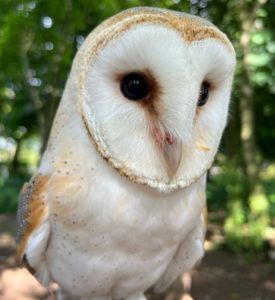
Willow the Barn Owl

The Tytonidae family, which includes Barn Owls and Bay Owls, consists almost entirely of nocturnal species, and they all have dark eyes. In contrast, the much larger Strigidae family, which includes almost every other owl species, displays a remarkable variety of eye colours alongside a wide range of activity patterns.

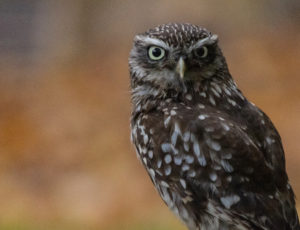
Even within the UK’s owl species, however, there are exceptions. Tawny Owls and Long-eared Owls are both predominantly nocturnal, yet Tawny Owls have dark eyes while Long-eared Owls have bright orange eyes. Then there’s the Little Owl, with its pale yellow eyes, which seems to fit the traditional theory by being partly active during the day, but it is also perfectly capable of hunting at night.

Mozzarella the Little Owl

So, if activity patterns don’t tell the whole story, what else might explain these colourful eyes?

Across birds in general, eye colour is often thought to have evolved for one of two main reasons: to improve survival or to communicate information to other birds.

The activity-pattern theory falls into the first category, suggesting eye colour provides an advantage in different lighting conditions. Another possibility belongs in the second category.

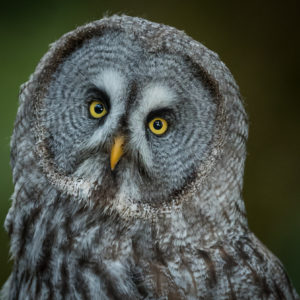
Walter the Great Grey Owl

In some owl species, scientists have suggested the pigments responsible for yellow and orange eye colours are influenced by compounds obtained through their diet. If that’s the case, the richness of an owl’s eye colour could potentially reflect its health or, in breeding birds, a parent’s ability to find enough food to raise its young successfully.

However, once again, this is unlikely to be a universal explanation. It may apply to some species, but certainly not to all.

In the end, owl eye colour remains something of a mystery. While researchers continue to investigate the role of evolution, behaviour and diet, there is still no single explanation that works for every species.

So next time you meet Sweeney Todd, Molly or Troy, take a moment to appreciate their remarkable eyes. They may be different shades, but each one is a reminder that nature often refuses to fit into the neat little boxes we’d like to create.

If you want to hear more then check out this episode of the Trust’s Nature’s a Hoot podcast, hosted by Tom Morath, investigating more about owls, their head turning and their eyes!

Meeting the Trust’s personalities – Let’s hear from Sophie from the Bird Team

Posted on: by
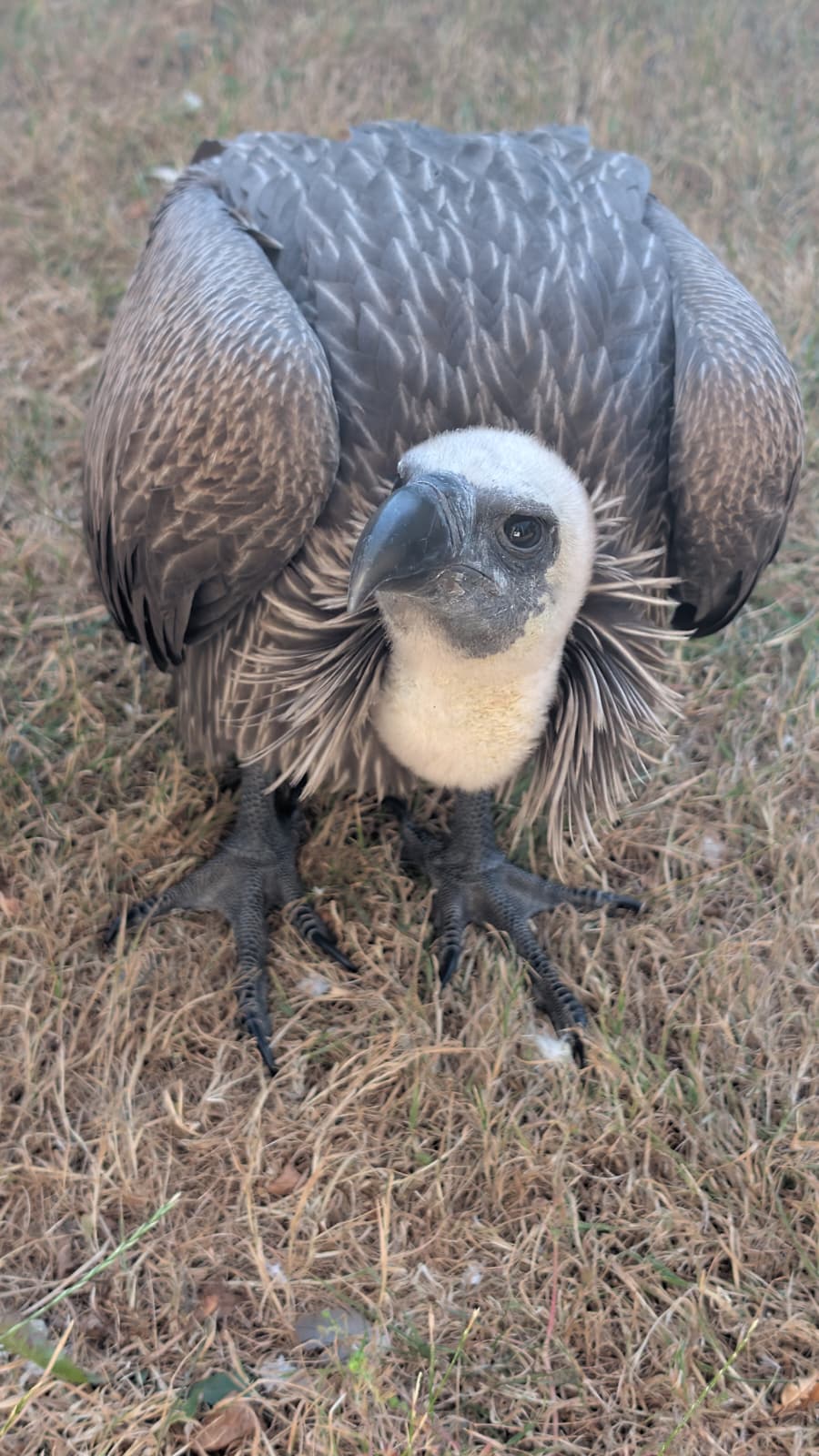
Sophie shares a passionate update about her experience on the Bird Team and the birds she has been caring for. She also shares a little bit about Norbert (this year’s White-backed Vulture chick) and how he is growing in confidence, learning new things and widening his wings.


“I have been helping at the Trust since 2017, when I first came as a work experience student. Since then, I have continued to be involved in between my other roles in zoological collections and overseas in South Africa, and this summer I have joined the team as a Bird Team member.

Throughout my time at the Trust over the years, one of my favourite parts of working here has always been having the opportunity to be a voice for animals that cannot speak for themselves. Every day, as members of the Bird Team, we are incredibly fortunate to spend time with these remarkable birds, observing them not just in flight but in the quieter moments too. It is in those moments that you begin to appreciate each bird as an individual.


Over time, you start to notice the little things. Some birds approach something new with quiet curiosity, taking a moment to observe before making their move. Others are bold and decisive, while a few prefer to sit back and watch the world unfold around them. These subtle differences are part of what makes working alongside them so rewarding, and they’re often something that surprises people when they join us for an experience day.

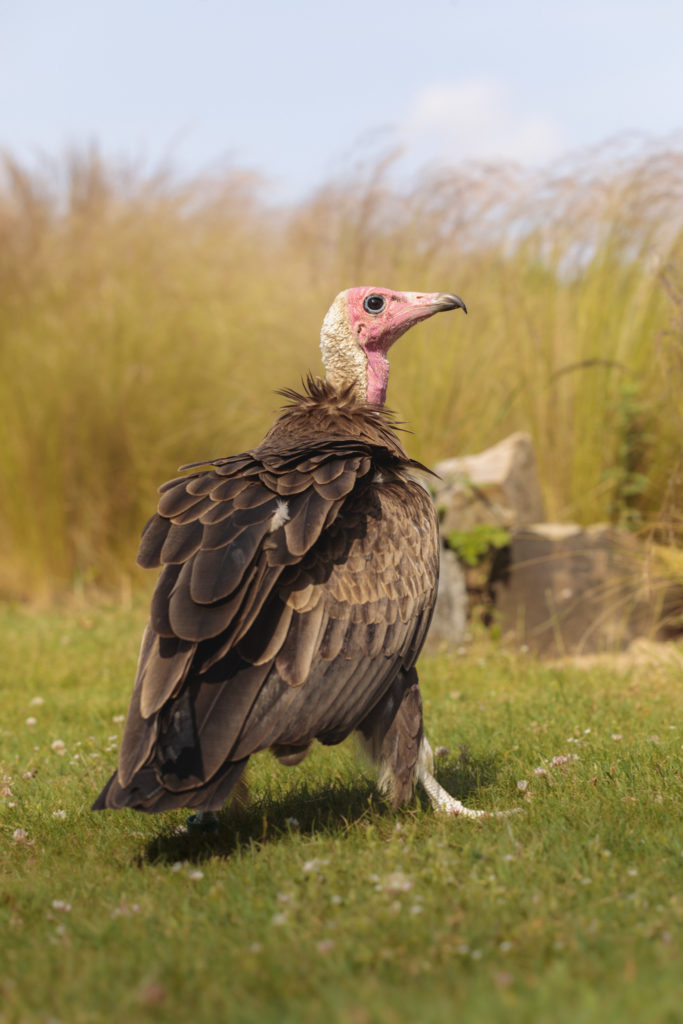
As Bird Team members, we also have the privilege of seeing how these individual traits often reflect the natural behaviours of each species. Our Hooded Vultures, for example, are endlessly curious. During an experience day, they’ll often spend time investigating guests, hopping over to see what someone is doing or examining anything new that catches their attention. It’s easy to smile at these moments, but they also provide the perfect opportunity to translate those individual personalities into an explanation of why that curiosity is so important in the wild. Hooded Vultures use these inquisitive behaviours to investigate potential food sources, watch the behaviour of other vultures and scavengers, and assess whether it is safe to approach a carcass. Their social awareness and willingness to explore are key adaptations that help them survive.


It’s these moments that make meeting the birds so special, connecting the birds we know and love every day with a wider picture and being able to reflect that to people who come and visit us. Rather than simply watching a flying display, guests begin to understand why a bird behaves the way it does, and that, as a member of the Bird Team, is truly why we love to do what we do. Every interaction becomes an opportunity to connect what they are seeing in front of them with the natural history of the species, bringing the bird’s story to life in a way that a book or documentary never quite can, and I think it surprises many guests who join us just how strong some of these personalities can be.

Recently, I had guests with me during a vulture restaurant feed as part of a full-day experience, in which we took some food down to our vulture colony. In this colony is one of our newest members of the team, Norbert, this year’s White-backed Vulture chick. Norbert was born in February so is still a young bird. As I explained to the guests, we had been incredibly lucky to watch Norbert learn how to fly. We first saw him performing lots of flapping and stretching behaviours, and then one day found him at the other end of the aviary, seemingly as surprised as we were that he had made it there. At this stage he was delightfully clumsy as he learned how to use his wings, developing all these natural behaviours he had learnt from his parents living alongside him.

Norbert found the confidence and began, with some assistance from his “dad”, exhibiting behaviours such as pushing the much larger White-headed Vultures (who they share the aviary with) away from the food, making himself seem larger with calls and widening his wings. It was an exciting example of how vultures can go from caring individuals to typically bold characters that enable them to survive. It was really a unique experience to share with others.

Experience days offer the rare opportunity to slow down and really observe the birds. Standing just metres away from an owl as it glides silently overhead, or watching a hawk lock onto its next perch, allows people to notice behaviours that might otherwise go unseen. Those close encounters naturally lead to conversations about the adaptations that make birds of prey such successful hunters and the work that helps conserve them.

It’s often these quieter moments, rather than the spectacular flights alone, that leave the greatest impression. They create a connection that extends far beyond the experience itself. When people connect with wildlife, they begin to care about its future, and if someone leaves with a deeper appreciation for birds of prey and a greater understanding of why their conservation matters, then we’ve achieved something incredibly special. It is truly one of my favourite parts of getting to work with these birds and the Trust”.

A little bit of chirping at Global BirdFair 2026!

Posted on: by

As ever, July brought with it Global BirdFair, and we went along, joining thousands of fellow bird enthusiasts to celebrate and discuss all things birds!

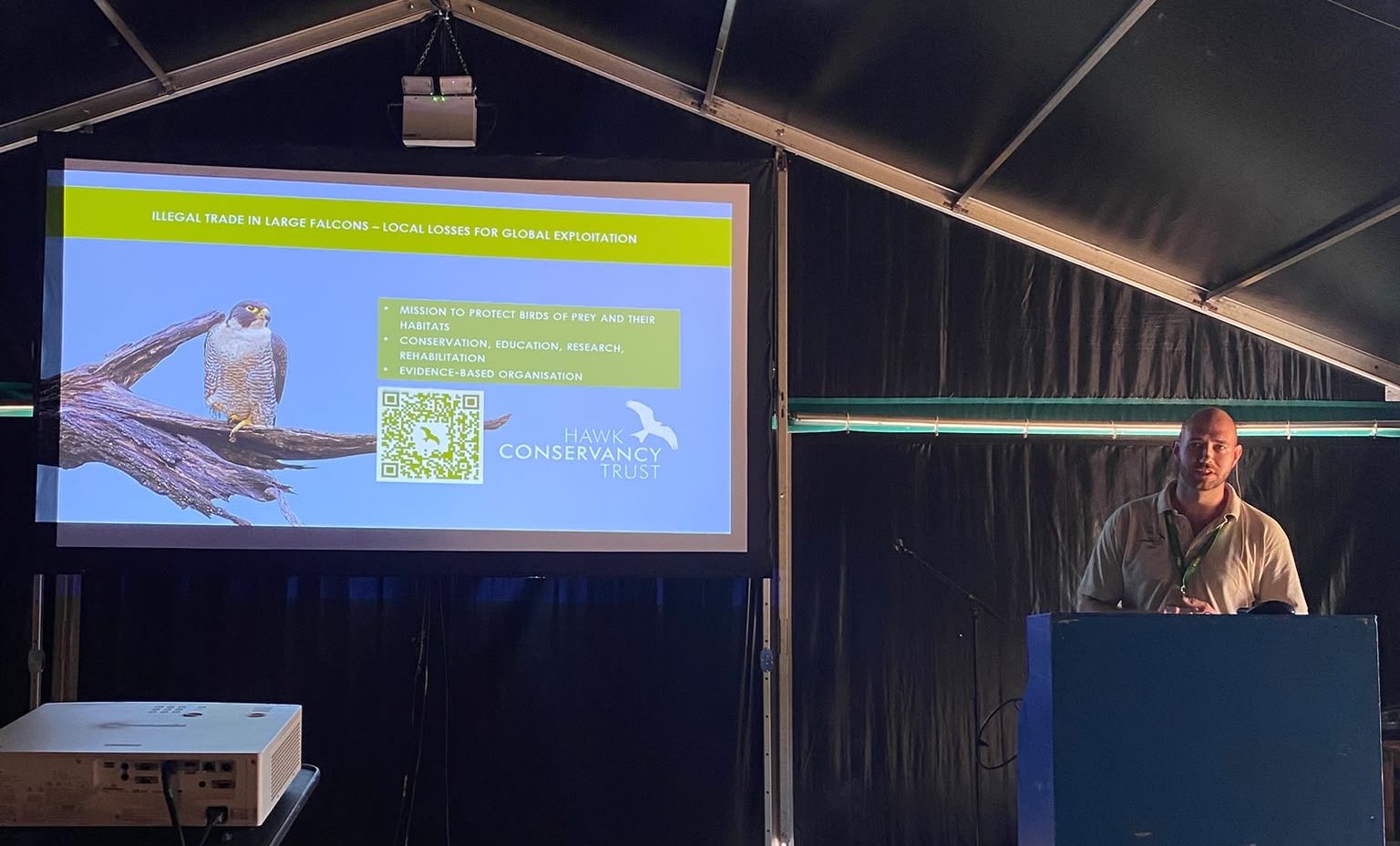
As an international bird of prey conservation charity, we couldn’t miss the opportunity to share the work we’re doing around the world. Our Conservation and Research Coordinator, Dr Jamie McKaughan, gave two talks over the weekend. The first highlighted the status of vultures in Pakistan and the conservation challenges they face, reflecting on nearly 30 years of our work in the country. The second explored the challenges falcon conservation faces from the illegal wildlife trade, drawing on our recent publication on digital trade (watch this space for more on that!).

We caught up with Jamie when he was back…

“It was great being back at Global BirdFair this year. One of the best things about BirdFair is catching up with friends from around the country, and sometimes the world, and often making new friends there too – the joy of being surrounded by so many like-minded individuals with similar passions can be infectious. It was also great to catch some members of the Trust there again, whose support of the Trust generally, but also attendance at my talks and the live podcast episode we recorded was greatly appreciated as always!

Jamie talking at Global BirdFair 2026

Catching up with others is not just good for the soul in a conservation world that can be disheartening if you think about it too long, but it also gives an opportunity to check in with the bigger picture. Last year for example, everyone I spoke to in the proverbial raptor nest box game(!) was experiencing terrible nesting numbers and success rates countrywide. While that was not a positive for the species we are striving to conserve – it is valuable information and context when it comes to these types of occasions and trends, and allows us to broaden our questions or considerations to reasons beyond the borders of our own study areas. Thankfully this year, that scenario has been turned on its head and cavity nesting birds of prey appear to be doing extremely well in many parts of the country, so long may that continue!

This year we were lucky to have colleagues from SAVE (Saving Asian Vultures from Extinction) at the event, some of which had travelled from India to be there, so it was really great to see them and catch up with them in person. Having long been part of the SAVE consortium to help conserve and recover vultures across South Asia, it is great to have such opportunities to touch base in person with some fellow vulture lovers! It was especially well-timed too, given my talk on day one was on the progress and challenges of vulture conservation in Pakistan!

On that topic, BirdFair also provides a great opportunity to talk about the conservation work we are doing to an audience that we may not always reach. We do a good job of communicating our work to our members and visitors, but it can be more difficult to share those stories more widely with people who may be less familiar with who we are and the impact of our work. We often let the work speak for itself, but events like BirdFair give us the chance to showcase the longevity of our commitment to what we do and the difference our conservation efforts are making.  It also helps to raise awareness of the challenges and successes across the countries and species we work with, and engage with people who could become future supporters, partners or advocates for birds of prey and our conservation work. Ultimately, broadening that awareness helps strengthen support for our conservation ambitions and enables us to achieve even more for birds of prey in the years ahead.”

Jamie also joined Tom Morath, host of the Hawk Conservancy Trust’s Nature’s a Hoot podcast, for a live episode in front of an audience of fellow bird lovers drawing in the audience with some myth-busting fun and games!

Nature’s a Hoot live from Global BirdFair 2026

“As part of the myth busting, we talked about owl eye colour, bird of prey vision and the nuances of some long-spoken myths! For example, it is likely that many hawks have similar vision to ours, but also some are very different to us and to each other, like Harris’ Hawks, Red-tailed Hawks and Cooper’s Hawks, that vary in their visual acuity despite all being hawks – being hawk-eyed means different things depending on the hawk! Meanwhile, a similarly nuanced topic is owl eye colour, myths of which we also busted… to a degree anyway! For more on that, check out our recent blog too. We at least had one thing that was more categorical – Kestrels hunting voles using the UV light reflected from their urine… debunked pretty robustly by a study in 2013, and supported by several other studies since – but I will let you catch the full explanation of that, along with all the other podcast fun I had with Tom, in the Live at Global BirdFair podcast episode coming soon!”


©2026 Hawk Conservancy Trust