



X

Protecting Peregrine Falcons

Posted on: by

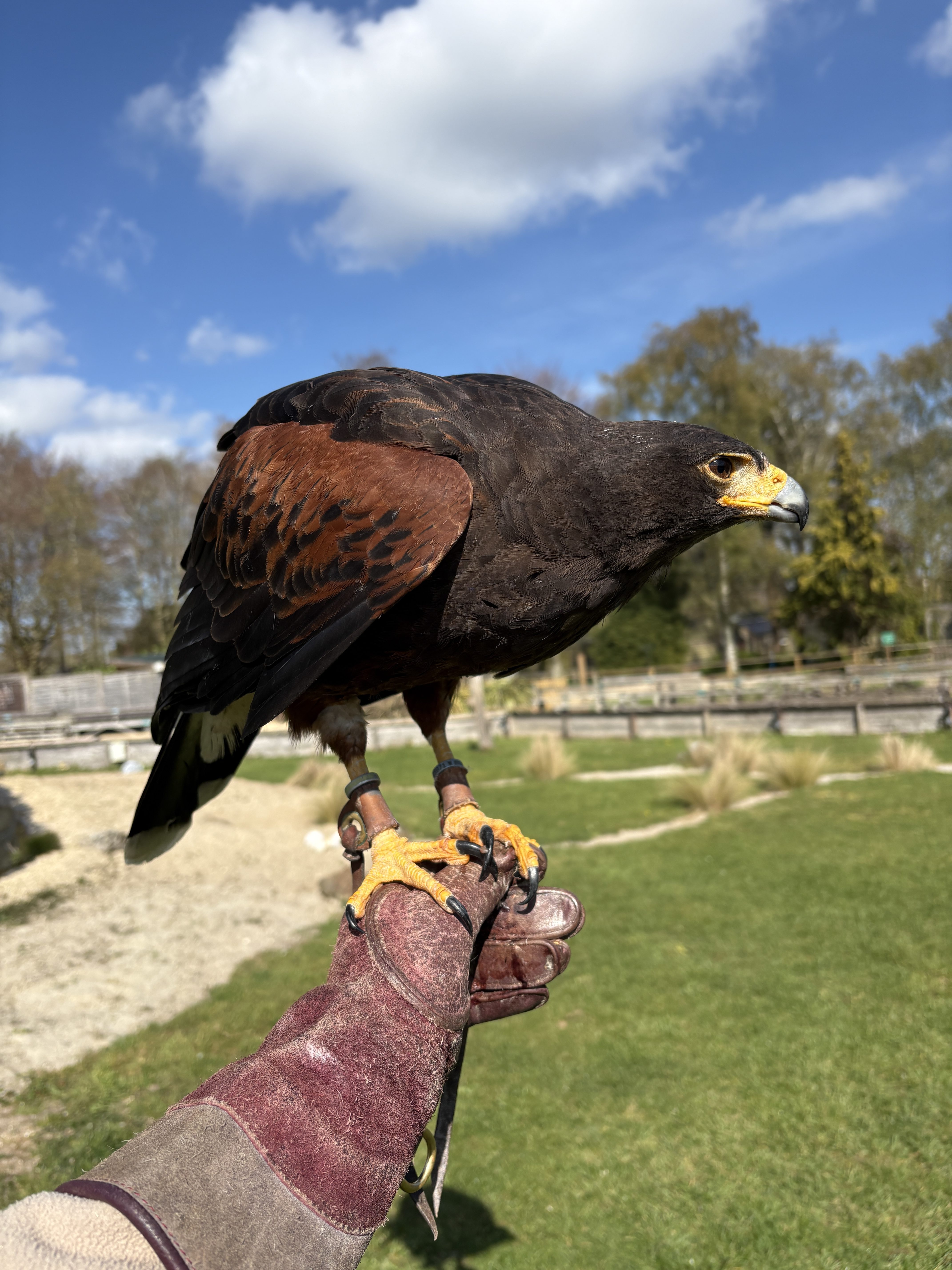
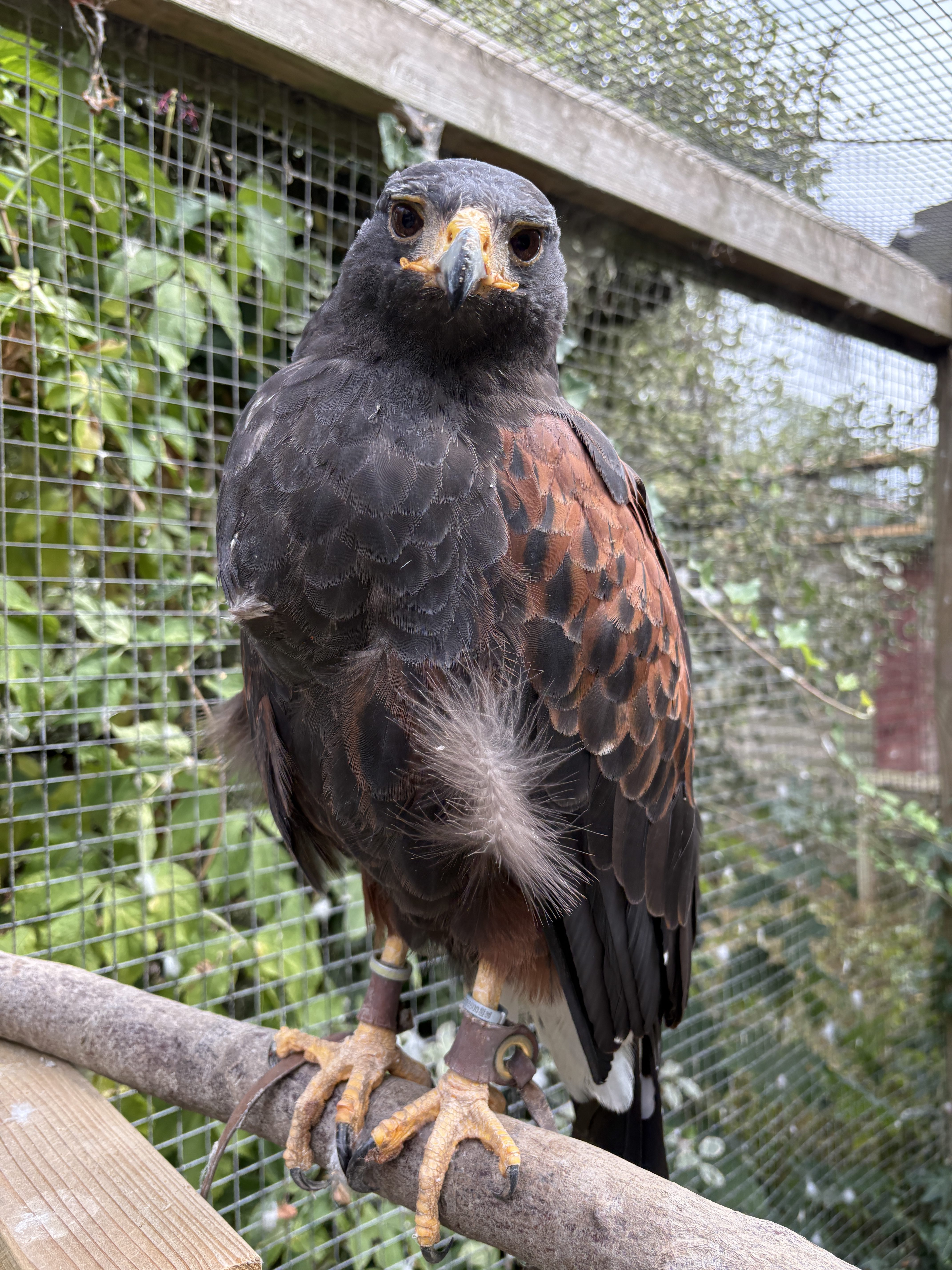
CITES CoP20 took place towards the end of 2025. One of the proposals discussed was whether to lower Peregrine Falcons from CITES Appendix 1 to Appendix 2, and ultimately the discussion resulted in them staying on Appendix 1.

But where did this proposal come from and what would it have meant for Peregrines?

Let’s start with what CITES and these appendices are… CITES is the Convention on International Trade in Endangered Species of Wild Fauna and Flora – a bit of a mouthful, hence the widespread use of CITES! Fundamentally, it is an international agreement between governments to regulate the trade of wild animals and plants and ensure that this trade does not threaten these species’ survival in the wild.

Appendix 1 lists species at risk from trade and (mostly) these are species that are threatened with extinction. CITES  prohibits any international trade of those species listed on Appendix I, effectively providing the highest level of protection possible (in terms of trade). Appendix 2 lists species not necessarily listed as threatened but that might become so if the trade in that species is not controlled and regulated. So, Appendix 2 essentially allows trade of the species but requires meeting stringent permit requirements, ultimately with the aim of preventing trade becoming a threat to the species. It is important to note that CITES is not meant to be an indication of the conservation status of a species; that’s what the IUCN Red List of Threatened Species is for.

So, where did the proposal to move Peregrine Falcons from Appendix 1 to Appendix 2 come from?

In short, the proposal stems from Peregrines being listed as ‘Least Concern’ on the Red List, following one of the most renowned conservation success stories ever, where they recovered from near extinction in the 1970s due to environmental contaminants to their current population of up to 499,000 mature individuals, which is said still to be increasing, and their wide global distribution (one of the most widely distributed birds globally, with a presence on every continent except Antarctica).

Despite the favourable conservation status of Peregrines, our Head of Conservation, Research and Education, Dr Campbell Murn, and Africa Projects Manager (and Co-chair of the IUCN Species Survival Commission’s Vulture Specialist Group), André Botha, contributed to convincing the Convention on Migratory Species Raptor TAG’s decision to reject the proposed CITES downlisting, and subsequently the voting of CITES parties at CoP20 to follow suit.

So, if everything appears pretty positive for Peregrines, why reject the proposal? What is the problem?

Ultimately, while on the face of it, things do look positive for a species now listed as Least Concern following their global recovery from pesticides and persecution, there are several elements that this headline summary glosses over. Namely – data reliability in many parts of their range is still very poor and many of the same threats still remain for the species.

So, data-wise, one of the biggest concerns surrounding the proposed downlisting was the uneven quality of the data behind their IUCN Red List status. In fact, around 63% of countries assessing Peregrine populations report their status as “unknown,” particularly across South America, Africa, and Australasia, with much of the optimism around their populations coming from well-studied populations in Europe and North America. The gaps in data run even deeper when looking at subspecies information, with at least 11 of the 19 recognised subspecies lacking sufficient data, including highly vulnerable groups such as the Cape Verde Peregrine, which may already be Critically Endangered and facing dangerously low genetic diversity. On top of that, unreliable methods, like the potential double-counting of certain migratory populations, raise further doubts about whether global population trends are being portrayed accurately.

The other concern relates to threats… Even where Peregrines have made encouraging recoveries, ongoing threats continue to put pressure on populations. Sudden demographic declines linked to avian influenza have been documented in multiple regions, reminding us that progress can be fragile and trends can change dramatically for the worse. Alaska has reported notable reductions in breeding pairs, while wintering populations in Canada and the USA have also shown worrying downturns. Across Europe, too, warning signs are emerging with breeding numbers having dropped in some areas, mortality rates appearing to be climbing, and a growing share of breeding pairs consisting of immature birds – often a signal that established adults are disappearing and the population is under stress.

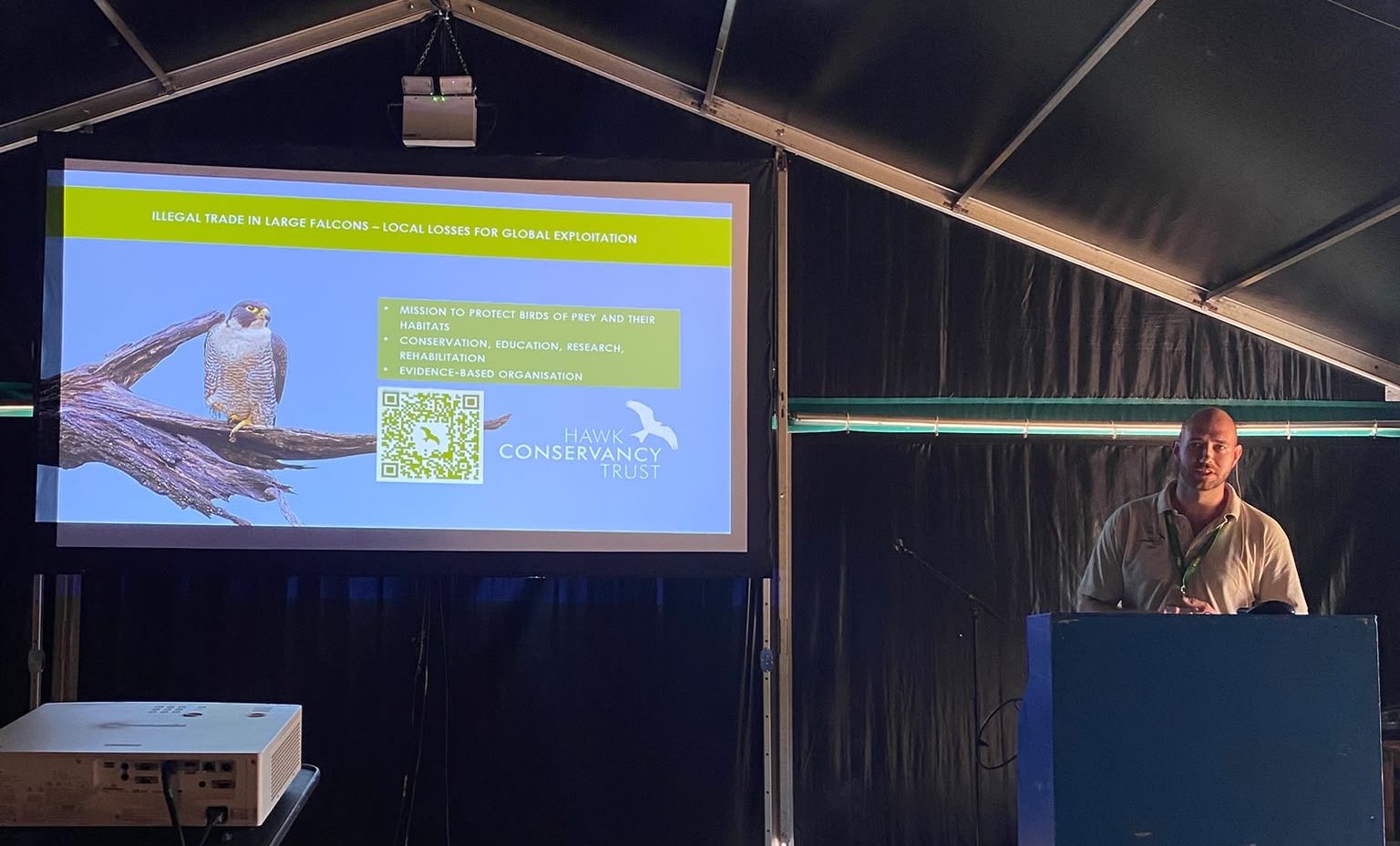
This also all falls within a larger discussion about the trade in large falcons….

One of the main concerns about relaxing regulations is that it could exacerbate an expanding and largely unquantified illegal trade in large falcons – the focus of the remainder of this article.

A particularly notable threat to a species being downlisted from Appendix 1 to 2, albeit hard to quantify, would be the likely increase in the already damaging illegal trade and trafficking of falcons. Illegal trade in Peregrine eggs, nestlings, and adult birds continues to threaten wild populations, especially in regions where enforcement is weak or under-resourced. The concern is that a downlisting could re-ignite demand for wild-caught birds for the international trade, intensifying existing pressures on vulnerable populations. Even in Europe, where legal protections are comparatively strong, illegal activities such as nest robbing remain a widespread problem that is difficult to control.

The UK is no exception to this, with a troubling rise observed in Peregrine chicks disappearing from remote nests and cliff ledges. Investigations by police and conservation groups suggest that demand is being driven both directly by markets in the Middle East seeking high-performance racing birds and by breeding facilities attempting to secure wild parent stock to meet a booming export market. The colder climate of northern Europe is considered ideal for creating tough, fast birds, and British-bred birds from established lines are generally considered more reliable.

While falconry remains a Bedouin hunting tradition, in some parts of the Gulf, falconry has increasingly evolved into a symbol of wealth and prestige among the modern elite and has become a multimillion-dollar industry – with a Peregrine sold last year for upwards of $400k. The growth of the captive breeding industry reflects the growing demand for the UK’s Peregrines. There are now about 160 breeding facilities in the UK – a dramatic increase from roughly 27 in the 1980s, with many of these facilities having commercial links to Middle Eastern buyers. DNA testing has also confirmed that some wild-caught birds are being used within breeding centres, and police reports show that more than half of the facilities inspected show some form of non-compliance, in one form or another.

So, what next?

Taken together, these challenges paint a more complicated picture than simple recovery narratives suggest. While Peregrines have made remarkable comebacks in certain regions, substantial data gaps, emerging risks, and ongoing exploitation mean that many populations remain far from secure. A decision about changing any protection status must grapple with these uncertainties to avoid undermining decades of progress.

As we have seen with so many species before, including Peregrines, rebuilding populations is far harder, far slower and often far more expensive than preventing the decline in the first place. The future of large falcons will depend not on past recovery stories, but on the choices made now to prevent exploitation from resurging.

The Hawk Conservancy Trust is committed to conserving birds of prey and their habitats and will continue to support these birds in whatever ways we can. Learn more about our conservation efforts here.

Caroline Nokes MP visits the Hawk Conservancy Trust

Posted on: by

We were delighted to welcome Caroline Nokes, MP for Romsey and Southampton North, now our local MP, to the Hawk Conservancy Trust on Friday 21 March, as part of her visits for English Tourism Week.

We were thrilled to be acknowledged as one of the most prominent tourist destinations in the constituency and recognised for our contribution to conservation, education, rehabilitation and research of birds of prey and their habitats.

Caroline Nokes met some members of the team at the Trust to hear more about our work, including our conservation projects in her constituency and overseas, our engagement with schools and inspiring the next generation of conservationists, and our future plans to continue our mission to conserve birds of prey and their habitats.

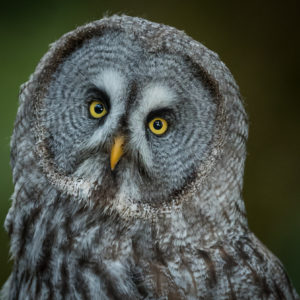
Mrs Nokes watched the ‘Woodland Owls’ display with the team and met Walter, one of our Great Grey Owls for a closer encounter, after the display.

In an article released by The Office of The Rt Hon Caroline Nokes MP, the Trust was recognised for “Supporting the local economy through tourism and environmental engagement…[and] has earned a reputation both nationally and internationally for its innovative conservation programmes and educational outreach”.  The article reported Mrs Nokes to have “praised the Trust’s role in boosting employment and offering unique volunteering opportunities, contributing to both the environment and the community. She reiterated the importance of recognising and supporting institutions like the Hawk Conservancy Trust as the tourism and environmental sectors continue to develop”.

Following the visit, Caroline Nokes MP, said “The Hawk Conservancy Trust is a fantastic example of how tourism and conservation can go hand in hand. It’s one of our constituency’s greatest assets, not just for the incredible experience it offers to visitors, but for the important work it does in conserving and rehabilitating birds of prey. English Tourism Week is a perfect time to shine a spotlight on this exceptional organisation.”

Penny Smout, our CEO, said “It was delightful to meet Caroline and share insights into our recent achievements as well as our future ambitions. We are grateful for her time and support, and knowledgeable discussion about the challenges we face. Although Caroline has been a visitor to the Trust and is aware of our work, it was a fabulous opportunity to discuss our projects in more detail and we look forward to working together to conserve birds of prey and their habitats”.

Top five things this Easter

Posted on: by

Five things to get egg-cited about at the Hawk Conservancy Trust!

Fly over to see us here at the Hawk Conservancy Trust this Easter. Bring the whole family along to enjoy a jam-packed day watching our new display, cracking our Easter trail, plus activities running from first thing in the morning through until the very end of the day. Easter is a popular time to visit, so pre-booking your ticket is recommended to guarantee your visit on your chosen date.

(more…)

Welcome Stilton!

Posted on: by

An impressively sized Steppe Eagle is settling into his new home here at the Hawk Conservancy Trust.

Visitors to the Trust have already been meeting the new resident and learning his name is ‘Stilton’, in line with the bird of prey charity’s 2024 cheese-based naming theme.  However, this migratory species is named after its preferred breeding habitat – the Steppe region of Eastern Europe and Central Asia.Stilton is a magnificent example of these dark brown eagles, which can be between 71 and 81cm tall, weigh from 2.4 to 4.9kg (the same as an average Yorkshire Terrier) and have a wingspan typically extending up to two metres!

Sadly, the Steppe Eagle is globally Endangered and its population is estimated to have declined by around 60% since 2010. Habitat loss and electrocution on powerlines are the big problems, and in Europe, the Steppe Eagle is Critically Endangered.

We are hopeful that Stilton will join experiences and flying displays this year for our summer season.  These activities not only enable the public to witness the real-life beauty of wildlife but also serve to raise awareness of the need to continue our vital conservation and research work.

Talking about Stilton’s skills as an ambassador for all Steppe Eagles, Bird Team member Jennie Marshall said: “He has a really lovely character – very chatty and well-mannered. Birds of prey are often pretty wary when meeting new people for the first time, so on our first face-to-beak meeting, I wasn’t expecting him to be immediately comfortable with me. However, the first thing he did was jump onto my gloved hand to say hello!

“Stilton really is a rising star. It will be amazing to see how he progresses and it’s great that visitors can follow his journey – from seeing him in his aviary right now right through to his debut in flying displays.”

Stilton has been settling well into his aviary near the Woodland Area. He’s a very chatty chap, so make sure you swing by to say hello on your next visit.


A tribute to Nigel Lewis

Posted on: by

We are sad to share the news that Hawk Conservancy Trust Vice-President Nigel Lewis passed away on 14 November. Nigel became the Trust’s Vice-President on 24 July 2009, after working closely with Life President and Founder Ashley Smith. We remember him fondly for his dedication to conservation, especially his work at the forefront of Barn Owl conservation, and his mentorship to other conservationists, bird ringers, and local communities.

Nigel spent many years of his life working to conserve Barn Owls in Suffolk, before moving to Wiltshire in 1983.  After moving, he carried on working with this species in the south of England for more than 30 years. Throughout this time, Nigel oversaw the recovery of Barn Owl populations across Salisbury Plain. Working largely of his own accord, in the early years of his work it was often just him and his wife, Betty, who would climb up trees to install heavy Barn Own boxes into place. In those early days, many of the nest boxes were made from re-purposed ammunition boxes! One one point, Nigel and Betty were featured on the Really Wild Show with Chris Packham, now the Trust President.

Alongside his work with nest boxes, Nigel was also a mentor to many young (and not so young!) bird ringers and conservationists. He worked hard to engage his local communities with the work being done to improve habitats for Barn Owls, and encouraged those around him to get involved in protecting these beautiful birds.

In 2006, he reached out to the Hawk Conservancy, asking for volunteers to help support his work by making Barn Owl boxes for him. Life President and Founder Ashley Smith wanted to recognise his incredible contribution to conservation, so asked him to become Vice President in 2009. Ashley described Nigel as:

“A wonderful man and passionate conservationist – he was at the forefront of Barn Owl conservation. Through his lifelong endeavours, he helped inspire many other individuals and organisations such as the the Hawk Conservancy Trust to implement similar projects. We will always be thankful for his advice and support.”

The Trust’s Raptor Nest Box Project, which started in 2008 with 38 nest boxes, was inspired by Nigel and his work. Throughout the timeline of this project, Nigel worked closely with our UK Conservation Biologist Dr Matt Stevens. Speaking about Nigel, Matt said:

“Nigel was very witty, knew when to be stern, but was always very fair.  We shared a lot of stories and information, and a lot of laughs, during our weekly Thursday meet-ups each year from April to August, where we would work together to monitor owls and Kestrels around Salisbury Plain. He’ll be missed as a teacher as well as a friend to a lot of people in the conservation community.”


Life’s a hoot for new recruits

Posted on: by

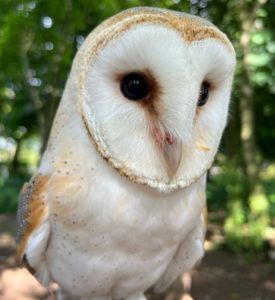
Barn Owl chicks join conservation display team!

At just nine weeks old, a pair of Barn Owl chicks have swooped into a new home at the Hampshire-based bird of prey charity, the Hawk Conservancy Trust.

While getting ready to take their places on the charity’s flying display team, the fluffy-faced youngsters are embarking on a gentle induction scheme to settle them in, bond with the human members of the Bird Team and earn their stripes.

It is hoped by spring next year, the pair should be ready to become fully fledged ambassadors within the daily displays that help the charity connect birds of prey with the public at its visitor centre near Andover in Hampshire.

By that time they will also have been named, as the Trust is about to launch a public vote to select favourite monikers from a cheese-themed shortlist.  Anyone wishing to get involved can have their say by visiting the Trust’s social media channels.

By showcasing their natural behaviours, a variety of stunning owls and other birds of prey at the charity give visitors the chance to witness their incredible flying and hunting abilities and to learn how, with support, the Trust is working to help conserve these beautiful birds in the wild.

Barn Owls are the most easily spotted owls in the UK as their low-level hunting at dawn and dusk means sharp-eyed commuters can often catch a glimpse as they pass open fields. However, long-term habitat loss is putting pressure on these favourites of British wildlife.

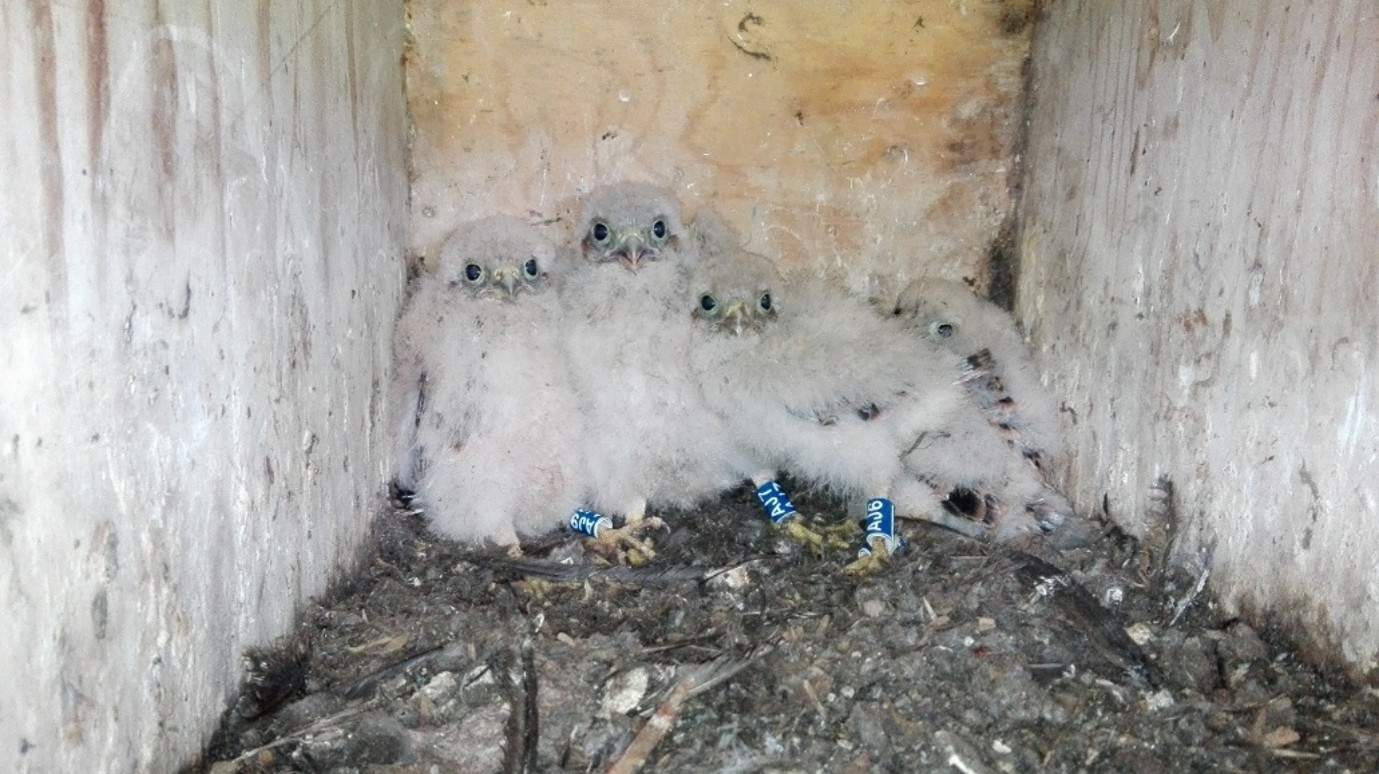
As a result, Barn Owls are one of the many bird of prey species that the Hawk Conservancy Trust focuses on supporting in the wild. Its Raptor Nest Box Project now provides over 1500 nest boxes throughout southern England to assist Barn Owls, Little Owls, Kestrels and Tawny Owls.

In 2023, at least 198 Barn Owl chicks fledged from nest boxes in the project. Right now the last few remaining nest boxes of the year are being checked by the Trust as Barn Owls often rear two broods so need monitoring later into autumn.

Photos: Mike Halliwell, Neil Saunders (@hamilton_farm)

Celebrating Nature with Chris Packham and Megan McCubbin

Posted on: by

What a wild night we had on 29 June. After months of planning, days (and nights!) of pre-show preparation by dozens of staff and volunteers and a lot of wishing for good weather, Chris and Megan’s Night of Nature finally arrived. The sun shone over the Hawk Conservancy Trust – Reg’s Wildflower Meadow was alive with a certain hum, a buzz of energy – and not just from the bees!

Visitors enjoyed the evening sun, some wandering the grounds with an ice cream, others partaking of our freshly prepared barbeque food and glasses of prosecco. We were also joined on the evening by Alex McGarry, Trust Artist in Residence. Guests could admire some of her previous work, and also watch as she created a new piece as the evening unfolded. This painting, immortalising the special event, was the top prize for the evening’s fundraising raffle, alongside a bottle of limited edition Poet Laureate sherry, donated by Simon Armitage.

To begin the main feature of the evening, as everyone settled in their seats, we were joined by Emily Hunt, the Young Poet Laureate for Warwickshire, as she gave a reading of her new poem – Sunset Flight. This poem had been written especially by Emily for the Trust and, specifically, this event. Emily’s words captured the spirit of the evening and the work we do at the Trust. Each bird  making an appearance in the meadow that evening was given a moment – a teaser for what was to come. The final stanza was enough to make the hairs on the back of your neck stand on end:

‘Our hearts full of feathers, beaks and wings

This magic which brings us together

For those who wheel, swoop and sing.”

The evening was hosted by our own Tom Morath (Deputy Head of Living Collection and host of our podcast, Nature’s a Hoot) and, against the backdrop of Reg’s Wildflower Meadow, Tom welcomed everyone to the evening and introduced the headline acts – presenter, writer and cherished friend of the Trust Megan McCubbin, and tireless advocate for nature: Trust President Chris Packham. Each of them recounted fond memories from visiting the Trust. Megan’s first trips here were when she was still in primary school – trips that later inspired owl pellet dissection birthday parties! Chris recounted his first visit and a chance meeting with Trust founder, Reg Smith, as he allowed Chris to get a little closer to the Peregrine Falcon he was attempting to photograph. Chris said “Reg saw past my bleached, blonde quiff and studded leather jacket and saw a shared passion for birds of prey and welcomed me in when not many others would have done.”

Tom, Chris and Megan were also joined in the meadow by Dr Zoe Randle from Butterfly Conservation as we took a closer look at some of Reg’s Wildflower Meadow’s smaller residents – the beautiful butterflies and moths. It’s sometimes tricky to demonstrate how these tiny insects to such a large audience – so we hatched a plan! Upon arrival into Reg’s Wildflower Meadow, guests were met with a large, 5m x 3m screen (expertly installed by Viv and Q from our volunteer team and who have a mind for the technical). With a camera close by, we could show the whole audience something tiny, enlarged on the screen.

Zoe brought some moths along – including the elegant White Satin Moth, Elephant Hawk Moth and Poplar Hawk Moth. Butterfly Conservation also presented us with an enormous puppet version of a Marsh Fritillary Butterfly– a beautiful representation of this native species. Zoe also demonstrated the defence mechanism of the Puss Moth caterpillar, bringing along a puppet version. Megan was asked to don a Blue Tit mask (the bird being a regular predator of the caterpillar) and was subsequently squirted by the puppet with its ‘formic acid’ (water from the in-built water pistol!).

Next we were onto the real stars of any of our shows here at the Trust – the birds. We introduced Scout, our Eurasian Kestrel, and demonstrated her hovering behaviour as Chris recounted his personal experiences and connection with the species. We delved into the world of small mammals and the role they play in the food chain, ultimately becoming lunch for larger predators like birds of prey. Charlie, our beautiful Barn Owl, quartered over the meadow, ever-so-delicately melting the hearts of all who watched – this natural behaviour captured in the fading summer light.

As beautiful as he is, Charlie is also adept at demonstrating his natural hunting behaviour and at this point, Tom set Megan the challenge to become a Barn Owl’s lunch. With an AstroTurf pad, fitted with a beeper that Charlie is trained to locate, Megan hid herself in the meadow. As Charlie got closer, following the beeper, Megan was allowed a prey’s-eye-view of a Barn Owl. And so were we as Megan video-called Tom who sent the images to the screen. Charlie pounced down, ‘caught’ Megan and continued with his flight. Definitely a highlight of the evening as Charlie concluded the first half.

The second half of the evening began as two lucky guests were selected to ask Chris and Megan their questions – “When does a cuckoo know it’s a cuckoo?” and “What’s the most interesting animal you have ever seen?” – if you wanted the answers, you had to be there!

Kiara, our Steller’s Sea Eagle, was up next. As the newest member of the flying team at the Trust, we were uncertain about how she might react to the biggest audience she’s yet to see here. As she took off, just behind the audience, we got one wonderful glimpse of her enormous wings, before she took up residence in a tree near the bottom of the park for the rest of the evening where she watched the proceedings unfold! Maybe next time…

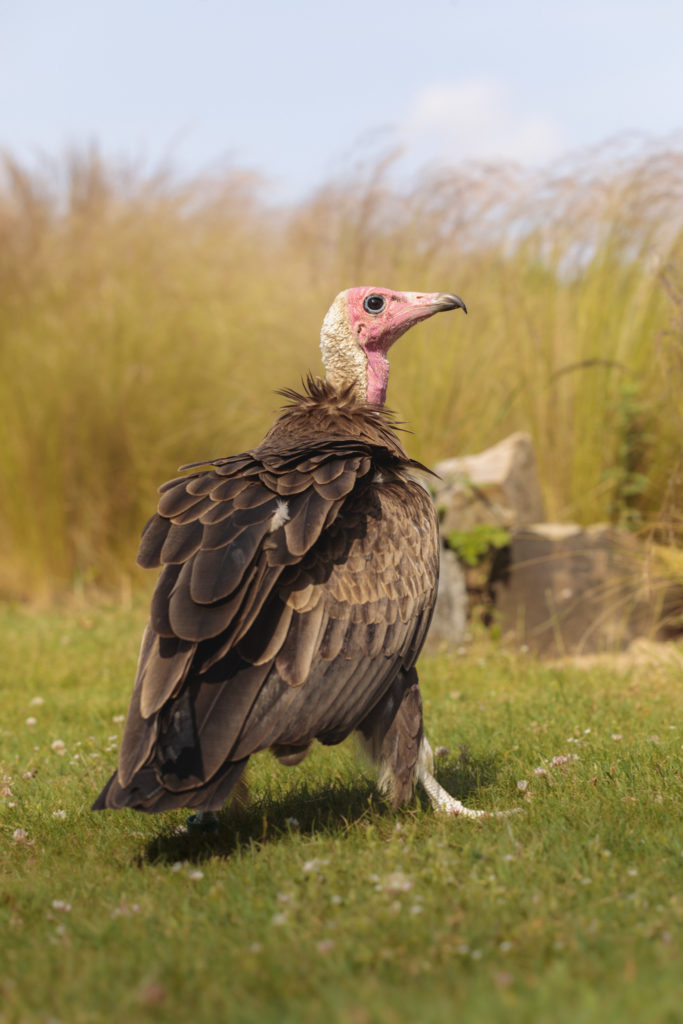
Next, Fagin, our Hooded Vulture took centre stage, and he flew to both Chris and Megan right over the heads of the entire audience. Fagin is known for cutting it fine as he skims overhead so this is always an exciting experience. All the while though, the important message of vulture conservation was the focus. A large part of why fundraising events like this one are needed at the Trust is to support the work we do with Critically Endangered vulture species like the Hooded Vulture. They’re expert scavengers and so to demonstrate, Chris invited Megan to try something he’d had the chance to do before at the Trust – become dinner for the vultures. Suiting up with our ‘bait suit’ (a jacket covered in tasty vulture food) and a pair of goggles for safety, Megan gave a Shakespearean ‘death scene’ in the meadow before Fagin and his friends flew over to make the most of the opportunity!

For one final time, our amazing birds took to the wing for an epic finale. Our Hooded Vultures were joined by our entire team of Black Kites – wheeling and swooping around the meadow as only they can – set against the backdrop of the last fading light of this beautiful summer evening.

A huge thank you to everyone involved in this event and a special thanks to Chris Packham and Megan McCubbin for their support of the Trust’s work. It allows us to raise vital funds for our conservation and research work to help us to achieve our mission – the conservation of birds of prey and their habitats. Now it’s time to start planning the next one. Watch this space…

Goodbye Delta

Posted on: by

At 11 years old, we said a sad goodbye to Delta, our Barn Owl, recently. Many of you will remember Delta from her captivating and mesmerising appearances with her brother, Charlie, as she flew across Reg’s Wildflower Meadow, on summer afternoons and evenings – a memorable and emotive moment for many. Delta will also be remembered for her quartering flights in the Woodland Arena, gracefully floating in and out of the trees. On occasion, she would also wander off to catch her own lunch in the Savannah Arena during the Woodland Owls display!

Over the years, she has been a special part of some couples’ weddings at the Trust and her legacy will live on in their photographs and memories. As a UK species, she has been a real ambassador in inspiring young and old to care for the wildlife on our doorsteps and the work we do to conserve Barn Owls.

As she moved into her later years, Delta was being treated for a heart condition which was causing a decline in her health. She made appearances in our displays up until only a few months ago and flew so elegantly. Whilst we were aware that heart failure was a possibility, we are still saddened to see her go. She peacefully passed away at the Trust. The team here will miss her, she has been a part of many of their lives for so long.


Cost of living need not ground school trips!

Posted on: by

We’re delighted to share that we have secured special funding to ensure school visits to the Hawk Conservancy Trust can still take flight with visit bursaries for deserving pupils from across the Hampshire region.

For some children, trips to places like the Trust are beyond their reach because financial pressures on schools and the cost-of-living crisis are making it harder for parents to support educational trips.  The Trust says this is detrimental to children’s experiences, their learning and to the charity’s mission to help the future of our planet by inspiring conservation through education.


Chief Executive Penny Smout said: “Our visitor centre near Andover is all about shining a light on the incredible world of birds of prey; our work to conserve them; and spreading the word to inspire more people to appreciate the wonders of wildlife and the need to look after it. One of our aims is to encourage pupils, from all walks of life, to follow a career path in conservation and that spark can come from a school visit. At the same time, we have research to show just how valuable being close to nature is for the wellbeing of us humans. Our hope is that with this funding, we can help bring all of those benefits to children who often don’t get the chance to experience such things.”

The Trust has been supported by the financial services company Investec to provide funds to enable the charity to support education in several ways.

Investec’s support has enabled us to specially design “Explore Nature” days. These will be offered to children who might not normally be in a position to visit to do so and meet our resident birds, experience our multiple daily flying displays and learn about the species, their habitats and conservation through fun workshops with our expert team.

We have also been awarded a separate grant from the Association for the Study of Animal Behaviour (ASAB) for a travel bursary to help fund transport costs for state-funded schools where high fuel and coach hire prices might be a financial barrier to some schools.

We’d love to hear from schools who feel they have pupils who could benefit from participation in “Explore Nature” days or bursary support.

Anyone wishing to learn more about educational visits to the Hawk Conservancy Trust should visit our Education webpages here.

Meet Jenny!

Posted on: by

Jenny Abery has joined the Hawk Conservancy Trust’s Education team as our brand new Principal Educator! We are delighted to have Jenny on board. She joined us at the beginning of May and has already been getting busy working with our Bird Team on our educational visits! Read more from Jenny:

‘Thank you for the warm welcome to the Hawk Conservancy Trust, I am thrilled to be a part of the team and am very excited to get stuck into the new role.

Since graduating from the University of Southampton in 2016, I have had many different roles, including working in other collections, outdoor education in the New Forest National Park, Ecology, and managing nature reserves. My passion has always been in conservation education, reconnecting people with the natural world and raising awareness of the threats which many species face.

I have been coming to the Trust since I was a child and have long admired the conservation work and mission. A group of birds which really drew me here is our amazing vultures, and the vital conservation and education work the Trust undertakes to preserve these important species. Changing people’s perceptions of these beautiful birds which have often been villainised in the past and raising awareness of their plight is a challenge I have always enjoyed. It is a prime example of just how important conservation education is in the long-term protection of species and their habitats.

I first became passionate about the natural world through sharks, another misunderstood and often feared species. I clearly have an affinity for the misunderstood and underappreciated of the natural world, but those that clearly need all the attention and protection we can give. The work the Trust already does to promote these wonderful animals is inspiring, and certainly piqued my excitement to come and work somewhere which embodies my values and passion for wildlife.

My role will encompass everything involving education delivery. Conservation education is embedded in everything we deliver here at the Trust and is vital to our national and international conservation efforts. In my first month, my focus has mainly been on the school visits, upcoming events and compiling new Super Top Trump cards for our Top Trumps Trail, but my long-term aim will also be to develop a long-term education strategy for the Trust. Through my role I hope to continue the fantastic work of the Trust to raise the profile and awareness of the amazing birds we work with.’

©2026 Hawk Conservancy Trust